





Best Mesh Routers for Large Homes Updated August 2026

Best Mesh Routers for Large Homes
2026 Buyer's GuideUpdated August 2026
Sort by:
1

10.0

Deco 7 Pro Tri-Band WiFi 7 BE10000 Whole Home Mesh System 6-Stream 10 Gbps
Speed: Up to 10Gbps
Coverage Area: Up 7600 sq ft
Bands: Tri (2.4GHz, 5GHz, & 6GHz)
Ports: 4 × 2.5G Ethernet ports and 1 USB port per unit
Components: 3 routers

10.0

1
Deco 7 Pro Tri-Band WiFi 7 BE10000 Whole Home Mesh System 6-Stream 10 Gbps
Speed: Up to 10Gbps
Coverage Area: Up 7600 sq ft
Bands: Tri (2.4GHz, 5GHz, & 6GHz)
Ports: 4 × 2.5G Ethernet ports and 1 USB port per unit
Components: 3 routers
2

9.9

TP-Link Deco X55 AX3000 WiFi 6 Mesh System - Covers up to 6500 Sq.Ft, Replaces Wireless Router and Extender, 3 Gigabit Ports pe...
Speed: Up to 3Gbps
Coverage Area: Up to 6500 sq ft
Bands: Dual (2.4GHz & 5GHz)
Ports: 3 gigabit ethernet pet unit
Components: 3 routers
Compare

9.9

2
TP-Link Deco X55 AX3000 WiFi 6 Mesh System - Covers up to 6500 Sq.Ft, Replaces Wireless Router and Extender, 3 Gigabit Ports pe...
Speed: Up to 3Gbps
Coverage Area: Up to 6500 sq ft
Bands: Dual (2.4GHz & 5GHz)
Ports: 3 gigabit ethernet pet unit
Components: 3 routers
3

9.7

TP-Link BE6500 Dual-Band WiFi 7 Router (BE400) – Dual 2.5Gbps Ports, USB 3.0, Covers up to 2,400 sq. ft., 90 Devices, Quad-Core...
Speed: Up to 6.5 Gbps
Coverage Area: Up to 2400 sq ft
Bands: Dual (2.4GHz & 5GHz)
Ports: 2x 2.5G Ports + 3x Gigabit Ports
Components: 1 router
Compare

9.7

3
TP-Link BE6500 Dual-Band WiFi 7 Router (BE400) – Dual 2.5Gbps Ports, USB 3.0, Covers up to 2,400 sq. ft., 90 Devices, Quad-Core...
Speed: Up to 6.5 Gbps
Coverage Area: Up to 2400 sq ft
Bands: Dual (2.4GHz & 5GHz)
Ports: 2x 2.5G Ports + 3x Gigabit Ports
Components: 1 router
4

9.6

TP-Link Deco 7 Pro BE63 Tri-Band WiFi 7 BE10000 Whole Home Mesh System- 6-Stream 10 Gbps, 4x2.5G Ports Wired Backhaul, 4X Smart...
Speed: Up to 10Gbps
Coverage Area: Up to 5800 sq ft
Bands: Tri (2.4GHz, 5GHz, & 6GHz)
Ports: 4x 2.5G WAN/LAN & 1 USB per unit
Components: 2 routers
Compare

9.6

4
TP-Link Deco 7 Pro BE63 Tri-Band WiFi 7 BE10000 Whole Home Mesh System- 6-Stream 10 Gbps, 4x2.5G Ports Wired Backhaul, 4X Smart...
Speed: Up to 10Gbps
Coverage Area: Up to 5800 sq ft
Bands: Tri (2.4GHz, 5GHz, & 6GHz)
Ports: 4x 2.5G WAN/LAN & 1 USB per unit
Components: 2 routers
5

9.4

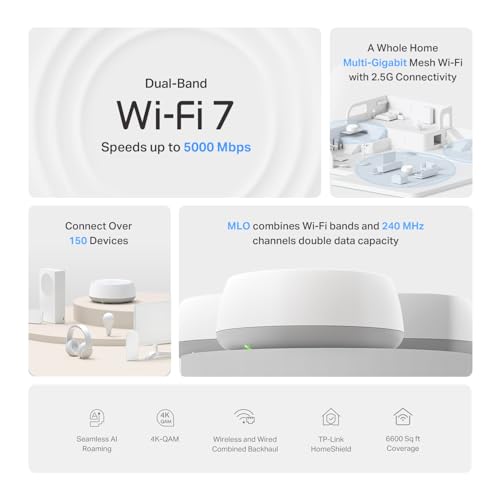
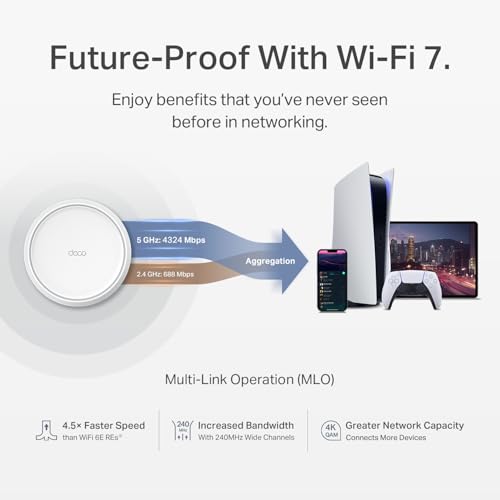
Deco 7 Dual-Band BE5000 WiFi 7 Mesh Wi-Fi System 4-Stream 5 Gbps, 240 Mhz
Speed: Up to 5Gbps
Coverage Area: Up to 6600 sq ft
Bands: Dual (2.4GHz & 5GHz)
Ports: 2 gigabit ethernet per unit
Components: 3 routers
Compare

9.4

5
Deco 7 Dual-Band BE5000 WiFi 7 Mesh Wi-Fi System 4-Stream 5 Gbps, 240 Mhz
Speed: Up to 5Gbps
Coverage Area: Up to 6600 sq ft
Bands: Dual (2.4GHz & 5GHz)
Ports: 2 gigabit ethernet per unit
Components: 3 routers
6

9.2

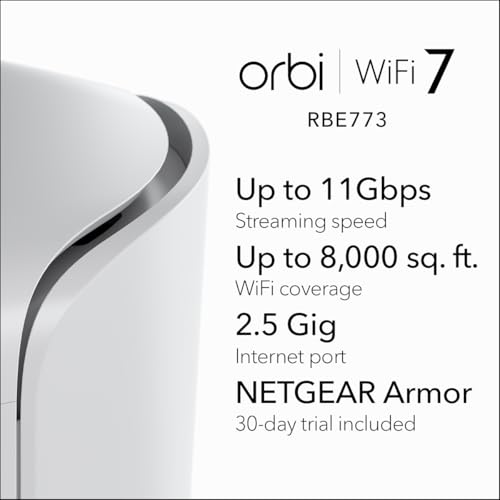
NETGEAR Orbi 770 Series Tri-Band WiFi 7 Mesh Network System (RBE773) - Router + 2 Satellite Extenders, Security Features, Up to...
Speed: Up to 11Gbps
Coverage Area: Up to 8000 sq ft
Bands: Tri (2.4GHz, 5GHz, & 6GHz)
Ports: 3 gigabit ethernet
Components: 1 router + 2 extenders
Compare

9.2

6
NETGEAR Orbi 770 Series Tri-Band WiFi 7 Mesh Network System (RBE773) - Router + 2 Satellite Extenders, Security Features, Up to...
Speed: Up to 11Gbps
Coverage Area: Up to 8000 sq ft
Bands: Tri (2.4GHz, 5GHz, & 6GHz)
Ports: 3 gigabit ethernet
Components: 1 router + 2 extenders
7

8.9

TP-Link Deco XE75 AXE5400 Tri-Band WiFi 6E System - Wi-Fi up to 7200 Sq.Ft, Engadget Rated Best for Most People, Replaces WiFi ...
Speed: Up to 5.4Gbps
Coverage Area: Up to 7200 sq ft
Bands: Tri (2.4GHz, 5GHz, & 6GHz)
Ports: 3 gigabit ethernet per unit
Components: 3 routers
Compare

8.9

7
TP-Link Deco XE75 AXE5400 Tri-Band WiFi 6E System - Wi-Fi up to 7200 Sq.Ft, Engadget Rated Best for Most People, Replaces WiFi ...
Speed: Up to 5.4Gbps
Coverage Area: Up to 7200 sq ft
Bands: Tri (2.4GHz, 5GHz, & 6GHz)
Ports: 3 gigabit ethernet per unit
Components: 3 routers
8

8.8

TP-Link Deco X55 AX3000 WiFi 6 Mesh System - Covers up to 2500 Sq.Ft., Replaces Wireless Router and Extender, 3 Gigabit Ports, ...
Speed: Up to 3Gbps
Coverage Area: Up to 2500 sq ft
Bands: Dual (2.4GHz & 5GHz)
Ports: 3 Gigabit Ports
Components: 1 router
Compare

8.8

8
TP-Link Deco X55 AX3000 WiFi 6 Mesh System - Covers up to 2500 Sq.Ft., Replaces Wireless Router and Extender, 3 Gigabit Ports, ...
Speed: Up to 3Gbps
Coverage Area: Up to 2500 sq ft
Bands: Dual (2.4GHz & 5GHz)
Ports: 3 Gigabit Ports
Components: 1 router
9

8.7

TP-Link Deco X55 AX3000 WiFi 6 Mesh System - Covers up to 4500 Sq.Ft, Replaces Wireless Router and Extender, 3 Gigabit Ports pe...
Speed: Up to 3.0Gbps
Coverage Area: Up to 4500 sq ft
Bands: Dual (2.4GHz & 5 GHz)
Ports: 3 gigabit ethernet per unit
Components: 2 routers
Compare

8.7

9
TP-Link Deco X55 AX3000 WiFi 6 Mesh System - Covers up to 4500 Sq.Ft, Replaces Wireless Router and Extender, 3 Gigabit Ports pe...
Speed: Up to 3.0Gbps
Coverage Area: Up to 4500 sq ft
Bands: Dual (2.4GHz & 5 GHz)
Ports: 3 gigabit ethernet per unit
Components: 2 routers
Compare
10

8.5

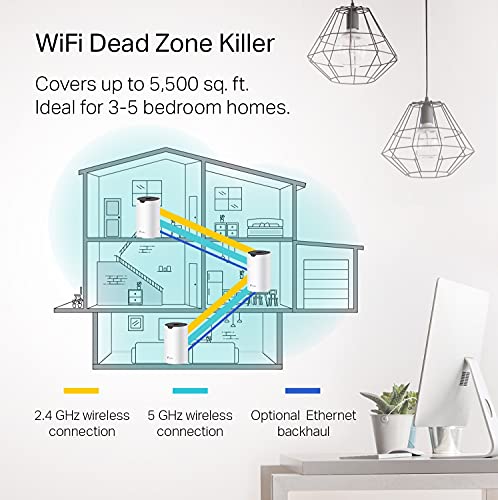
TP-Link Deco S4 Mesh AC1900 WiFi System - Up to 5,500 Sq.ft. Coverage, Replaces WiFi Router and Extender, Gigabit Ports, Works ...
Speed: Up to 1.3Gbps
Coverage Area: Up to 5500 sq ft
Bands: Dual (2.4GHz & 5GHz)
Ports: 2 gigabit ethernet per unit
Components: 3 routers
Compare

8.5

10
TP-Link Deco S4 Mesh AC1900 WiFi System - Up to 5,500 Sq.ft. Coverage, Replaces WiFi Router and Extender, Gigabit Ports, Works ...
Speed: Up to 1.3Gbps
Coverage Area: Up to 5500 sq ft
Bands: Dual (2.4GHz & 5GHz)
Ports: 2 gigabit ethernet per unit
Components: 3 routers

Our Top Choice

1

10.0

Deco 7 Pro Tri-Band WiFi 7 BE10000 Whole Home Mesh System 6-Stream 10 Gbps
Speed: Up to 10Gbps
Coverage Area: Up 7600 sq ft
Bands: Tri (2.4GHz, 5GHz, & 6GHz)
Ports: 4 × 2.5G Ethernet ports and 1 USB port per unit
Components: 3 routers

10.0

1
Deco 7 Pro Tri-Band WiFi 7 BE10000 Whole Home Mesh System 6-Stream 10 Gbps
Speed: Up to 10Gbps
Coverage Area: Up 7600 sq ft
Bands: Tri (2.4GHz, 5GHz, & 6GHz)
Ports: 4 × 2.5G Ethernet ports and 1 USB port per unit
Components: 3 routers

Compare Features

Coverage Area
Best Overall
1. TP-Link Whole Home Mesh System (Deco BE63)
TP-LINK Preview TP-LINK Preview
TP-LINK
at Amazon
2. TP-Link Deco AX3000 Mesh WiFi 6 System
TP-LINK Preview TP-LINK Preview
TP-LINK
at Amazon
3. TP-Link Archer BE6500 Dual-Band Wi-Fi 7 Router
TP-LINK Preview TP-LINK Preview
TP-LINK
at Amazon
4. TP-Link WiFi 7 BE10000 Mesh WiFi System
TP-LINK Preview TP-LINK Preview
TP-LINK
at Amazon
5. TP-Link Dual-Band BE5000 WiFi 7 Mesh System
TP-LINK Preview TP-LINK Preview
TP-LINK
at Amazon
6. Netgear Orbi 770 Series Wi-Fi 7 Mesh System
NETGEAR Preview NETGEAR Preview
NETGEAR
at Amazon
7. TP-Link Deco AXE5400 WiFi 6E Mesh System
TP-LINK Preview TP-LINK Preview
TP-LINK
at Amazon
Best Value
8. TP-Link Deco AX3000 WiFi 6 Mesh
TP-LINK Preview TP-LINK Preview
TP-LINK
at Amazon
9. TP-Link Deco X55 AX3000 Mesh System
TP-LINK Preview TP-LINK Preview
TP-LINK
at Amazon
10. TP-Link Deco S4 Mesh WiFi System
TP-LINK Preview TP-LINK Preview
TP-LINK
at Amazon
Deal
-18% -21% -36% -11% -16% -7% -18% -7% -26%
Deal -18% -21% -36% -11% -16% -7% -18% -7% -26%
Speed
Up to 10Gbps Up to 3Gbps Up to 6.5 Gbps Up to 10Gbps Up to 5Gbps Up to 11Gbps Up to 5.4Gbps Up to 3Gbps Up to 3.0Gbps Up to 1.3Gbps
Speed
Up to 10Gbps Up to 3Gbps Up to 6.5 Gbps Up to 10Gbps Up to 5Gbps Up to 11Gbps Up to 5.4Gbps Up to 3Gbps Up to 3.0Gbps Up to 1.3Gbps
Coverage Area
Up 7600 sq ft Up to 6500 sq ft Up to 2400 sq ft Up to 5800 sq ft Up to 6600 sq ft Up to 8000 sq ft Up to 7200 sq ft Up to 2500 sq ft Up to 4500 sq ft Up to 5500 sq ft
Coverage Area
Up 7600 sq ft Up to 6500 sq ft Up to 2400 sq ft Up to 5800 sq ft Up to 6600 sq ft Up to 8000 sq ft Up to 7200 sq ft Up to 2500 sq ft Up to 4500 sq ft Up to 5500 sq ft
Bands
Tri (2.4GHz, 5GHz, & 6GHz) Dual (2.4GHz & 5GHz) Dual (2.4GHz & 5GHz) Tri (2.4GHz, 5GHz, & 6GHz) Dual (2.4GHz & 5GHz) Tri (2.4GHz, 5GHz, & 6GHz) Tri (2.4GHz, 5GHz, & 6GHz) Dual (2.4GHz & 5GHz) Dual (2.4GHz & 5 GHz) Dual (2.4GHz & 5GHz)
Bands
Tri (2.4GHz, 5GHz, & 6GHz) Dual (2.4GHz & 5GHz) Dual (2.4GHz & 5GHz) Tri (2.4GHz, 5GHz, & 6GHz) Dual (2.4GHz & 5GHz) Tri (2.4GHz, 5GHz, & 6GHz) Tri (2.4GHz, 5GHz, & 6GHz) Dual (2.4GHz & 5GHz) Dual (2.4GHz & 5 GHz) Dual (2.4GHz & 5GHz)
Ports
4 × 2.5G Ethernet ports and 1 USB port per unit 3 gigabit ethernet pet unit 2x 2.5G Ports + 3x Gigabit Ports 4x 2.5G WAN/LAN & 1 USB per unit 2 gigabit ethernet per unit 3 gigabit ethernet 3 gigabit ethernet per unit 3 Gigabit Ports 3 gigabit ethernet per unit 2 gigabit ethernet per unit
Ports
4 × 2.5G Ethernet ports and 1 USB port per unit 3 gigabit ethernet pet unit 2x 2.5G Ports + 3x Gigabit Ports 4x 2.5G WAN/LAN & 1 USB per unit 2 gigabit ethernet per unit 3 gigabit ethernet 3 gigabit ethernet per unit 3 Gigabit Ports 3 gigabit ethernet per unit 2 gigabit ethernet per unit
Components
3 routers 3 routers 1 router 2 routers 3 routers 1 router + 2 extenders 3 routers 1 router 2 routers 3 routers
Components
3 routers 3 routers 1 router 2 routers 3 routers 1 router + 2 extenders 3 routers 1 router 2 routers 3 routers
How we rank

The order above is not editorial opinion, and it is not paid placement. It comes from what shoppers across our network actually do - which mesh routers for large homes they compare, and which they ultimately buy. We re-rank as new data comes in, so the long-term favorites have to keep earning their spot against new entrants. The full method, including how we make money.

Mesh Routers for Large Homes Buyer's Guide

For a large home, the core tradeoff is not just peak Wi‑Fi speed; it is whether the mesh can keep fast, stable backhaul between nodes while pushing usable signal through long distances, floors, garages, offices, and awkward layouts. Shoppers should focus on node placement flexibility, wired or dedicated wireless backhaul, band compatibility for older smart devices, and whether roaming stays stable as people move around the house.

Speed

Speed matters because it affects how smoothly your connection handles streaming, video calls, gaming, downloads, and multiple people using the network at once. Look for a router with enough real-world throughput for your internet plan and home size, plus strong performance under load so it stays responsive when several devices are active. Be wary of relying only on headline speed ratings, which often reflect ideal conditions rather than what you’ll get through walls, distance, and everyday congestion.

For speed in a large home, prioritize a mesh system with enough nodes for the floor plan, strong backhaul options, and modern radios such as tri-band Wi‑Fi 6/6E or better if you have gigabit or multi-gig internet. Look for Ethernet ports on the main unit and satellites if you can use wired backhaul, because a node with weak wireless backhaul may show full Wi‑Fi bars while delivering poor real-world speed. Also check whether the system lets you tune backhaul, band steering, or node placement; in larger or multi-story homes, moving one node or changing backhaul behavior can matter more than the advertised maximum speed. Owner feedback supports this: many buyers report major speed upgrades over older mesh, router-and-extender, or single-router setups, with slower rooms, upstairs areas, offices, garages, and outbuildings seeing noticeable improvements after the mesh is positioned or tuned well.

Connectivity

Connectivity determines how reliably your router keeps phones, laptops, smart home devices, and streaming gear online at the same time. Look for a router that can handle your device count, maintain steady Wi-Fi across the areas you use most, and recover gracefully when devices move between rooms or bands. Watch out for routers that advertise high speeds but struggle with many simultaneous clients or drop connections under everyday load.

For connectivity, make sure the mesh handles both modern devices and legacy 2.4 GHz smart-home gear without forcing everything through aggressive band steering that some devices cannot join. Large homes also need smooth roaming between nodes, so look for controls such as separate guest/IoT networks, device steering options, channel selection, and the ability to disable or adjust features if cameras, printers, thermostats, or older laptops struggle. Be cautious if your home has thick walls, detached spaces, or nodes placed at the edge of range, because strong signal bars do not always mean the node has a healthy path back to the main router. Owner sentiment is mixed in exactly this area: many households regain connectivity in rooms that previously struggled, but others report dropouts, roaming issues, 5 GHz joining problems, pod/node disconnects, or devices that need settings adjustments before they stay online.

Reliability

Reliability matters because a router that drops connections, needs frequent reboots, or struggles under normal household use can make even fast internet feel frustrating. Look for evidence of stable performance over long periods, especially with multiple devices connected, and watch out for reports of random outages, overheating, firmware bugs, or settings that need constant tweaking.

For reliability in a large home, buy for stable whole-home operation rather than headline specs: choose enough nodes to avoid overextended links, place satellites where they still have a strong connection to the main unit, and prefer wired backhaul for critical offices, gaming rooms, cameras, or media centers. Check whether the system has a mature app, reliable firmware updates, automatic recovery after power or internet outages, and enough ventilation for always-on use; instability in one node can disrupt an entire wing of the house. Also consider whether the system supports the number of wired, wireless, and smart-home devices you actually run at the same time. Owner reports are broadly positive when systems are placed and configured well, with many describing stable streaming, video calls, gaming, cameras, and smart-home performance throughout the house, though some users still encounter glitches, app errors, or instability in less cooperative setups.

Value

You want a router that delivers the speed, coverage, and reliability your home actually needs without paying for features you won’t use. Look for value for money by comparing real-world performance, port options, security and parental controls, mesh expandability, and ease of setup against the cost. Watch out for very cheap routers that may lack range or updates, as well as premium models whose advanced features only matter for demanding networks.

For value, judge the mesh by the coverage problem it actually solves: a two-pack may be enough for an open layout, while a large, dense, multi-story, or detached-space home may need a three-pack or wired backhaul to avoid buying twice. Do not overpay for features your internet plan cannot use, but do not underbuy with a cheap dual-band kit if the satellites must communicate wirelessly over long distances; weak backhaul can waste the speed you are already paying for. Also factor in whether the system can replace rented provider equipment, reduce the need for separate extenders, or avoid upgrading to a higher internet tier just to fix poor in-home distribution. Owner feedback generally supports strong value when a mesh kit replaces older routers, extenders, or rental gear and improves usable Wi‑Fi across the home, though some buyers still weigh multi-node kits against cheaper conventional routers or more expensive premium models.