




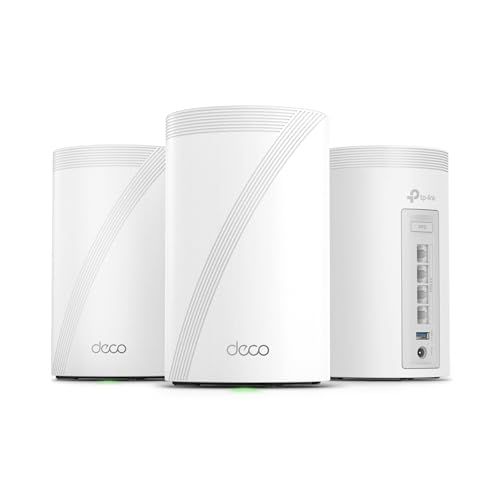
- Speed: Up to 10Gbps
- Coverage Area: Up 7600 sq ft
- Bands: Tri (2.4GHz, 5GHz, & 6GHz)
- Ports: 4 × 2.5G Ethernet ports and 1 USB port per unit
- Components: 3 routers





TP-Link Whole Home Mesh System
Overview and Real-World Performance

The TP-Link Whole Home Mesh System is designed for people who want reliable Wi‑Fi everywhere in the house without juggling multiple network names, dead zones, or finicky extenders. Instead of relying on one powerful router to punch signal through walls and floors, a mesh system uses multiple nodes placed around your home to create a single, seamless network. In day-to-day use, this approach tends to feel less like “managing Wi‑Fi” and more like simply having internet that works wherever you happen to be, whether that’s in a back bedroom, an upstairs office, or a finished basement.
In typical households, the most noticeable improvement is consistency. Streaming in one room while someone else is on a video call and another person is gaming is where a mesh setup can shine, because the system can spread devices across nodes and reduce the burden on any single access point. Roaming between nodes is usually smooth, meaning your phone or laptop can move from room to room without dropping the connection or forcing a reconnect. Actual top speeds will vary based on your specific TP-Link model, your internet plan, home construction, and where you place each unit, but the more important win for many buyers is stable performance across the entire coverage area rather than the highest speed measured next to the main router.
Setup is generally friendly, often guided through a mobile app that walks you through plugging in the first node, adding satellites, naming the network, and setting a password. TP-Link’s app experience tends to be straightforward for beginners while still giving intermediate users enough control to manage connected devices, set parental controls, or create a guest network. Firmware updates are also a practical consideration: the best experience comes from keeping the system current, as updates can improve stability, security, and device compatibility over time.
Factors to Consider Before Buying
The first factor to consider is coverage needs, and this is usually the most important. Square footage is only part of the story; wall materials, floor layout, and interference matter just as much. A smaller home with open spaces may do well with fewer nodes, while a tall home with dense plaster, brick, or concrete may need more units or more careful placement. If you routinely see weak signal in the same areas, that’s a sign that your priority should be coverage consistency rather than chasing peak throughput numbers.
The second most important factor is your internet speed and what you actually do online. If your plan is modest and you mostly browse, stream, and attend occasional video calls, many mesh configurations will feel excellent. If you pay for very fast broadband, move large files locally, or frequently game while multiple 4K streams are running, you’ll want to pay closer attention to model capabilities such as Wi‑Fi generation, backhaul options, and overall capacity. Some TP-Link mesh systems support dedicated backhaul or can use Ethernet backhaul, which can dramatically improve performance between nodes in challenging layouts. If you can run Ethernet between nodes, that often delivers the most consistent results and can be more impactful than buying a higher-tier wireless model.
A third factor is device count and network load. Smart homes add up quickly: phones, laptops, streaming sticks, TVs, cameras, smart speakers, doorbells, thermostats, and bulbs can push you into dozens of connected devices. Mesh systems are built for this, but not all models handle high-density environments equally well. If you have a lot of devices, look for a system known for strong multi-device stability, and consider whether features like QoS help prioritize video calls or gaming traffic when the network is busy.
Another key consideration is placement flexibility and aesthetics. Mesh nodes usually sit out in the open for best performance, so size, appearance, and the availability of convenient power outlets matter. A system that looks fine on a shelf or console table is more likely to be placed well, and good placement often beats raw specifications. Also consider whether each node has Ethernet ports for wired devices like a desktop PC, game console, or smart TV. A mesh system that fits your wiring needs can reduce Wi‑Fi congestion and improve overall responsiveness.
Security and controls are worth weighing, especially for families or home offices. TP-Link systems often include network management features such as guest networks and parental controls, but the depth of those controls can vary by model. If you need robust scheduling, content filtering, or per-device time limits, confirm those features match your expectations before you buy. For remote work, it’s also useful to know whether the system supports stable VPN passthrough and how well it handles multiple simultaneous video meetings.
Finally, total cost includes more than the sticker price. Consider how many nodes you truly need, whether you might expand later, and what kind of support and firmware lifecycle you can expect. The best purchase is the one that solves your coverage problem with a little headroom for growth, without paying extra for capabilities you won’t use.
Common Questions
Will a TP-Link Whole Home Mesh System replace my existing router? In most cases, yes. The mesh system typically acts as your router and Wi‑Fi network together. Some setups also allow an access point mode if you prefer to keep your existing router doing routing duties.
How many nodes do I need? That depends on layout more than just square footage. If your home has multiple floors, dense walls, or a long footprint, adding nodes can improve reliability. The goal is not maximum nodes, but the right placement so each unit has a strong connection to the rest of the system.
Is mesh better than a Wi‑Fi extender? For whole-home coverage, mesh is often better because it typically uses one network name and manages roaming more intelligently. Extenders can work for a single dead spot, but they often create separate networks or reduce performance in ways that are noticeable.
Can I use Ethernet with the mesh system? Many TP-Link mesh systems support Ethernet backhaul, allowing nodes to communicate over wired connections. If you can run Ethernet, it can significantly improve speed consistency and reduce wireless interference between nodes.
Will this help with buffering and video calls dropping? It often can, especially if your current problem is weak signal in parts of the house. If the issue is your internet service itself or congestion on the ISP side, a mesh system can’t fix that, but it can reduce Wi‑Fi-related drops and improve stability throughout your home.
As a whole, the TP-Link Whole Home Mesh System is a practical upgrade for households that value consistent coverage and an easier, more unified Wi‑Fi experience. The most important purchase considerations are coverage realities and node placement, followed closely by matching the system’s capacity to your internet plan and device load. If you choose the right size kit and place it thoughtfully, the result is usually less troubleshooting and more reliable connectivity where you actually live and work.