What to Know About UV Phone Sanitizers
Posted on Tuesday, April 28, 2026
To keep this site free for consumers, we receive compensation for customer referrals.
What to Know About UV Phone Sanitizers
UV phone sanitizers are compact devices designed to reduce microbial presence on frequently handled items using ultraviolet light. As mobile phones are handled throughout the day and placed on various surfaces, they can accumulate residues that are not always visible. Understanding how UV phone sanitizers function and where they fit into daily routines can help clarify their role in modern hygiene practices.
These devices are part of a broader category of UV-based sanitation tools, adapted for small personal items. Their growing presence reflects increased awareness around surface cleanliness and the challenges of maintaining it consistently in everyday environments. Before evaluating available options, it helps to understand how this category works and what it is designed to address.
The Role of UV Phone Sanitizers in Daily Life
Mobile devices are among the most frequently touched objects in daily routines. They travel between different environments, including public spaces, work areas, and personal living spaces. This constant exposure creates conditions where surface buildup can occur over time.
UV phone sanitizers aim to provide a structured, repeatable way to address this buildup without relying on liquids or wipes. For users seeking a low-maintenance approach to device hygiene, these tools offer an alternative that integrates into daily habits with minimal effort.
How UV Phone Sanitizers Work
UV phone sanitizers typically use ultraviolet-C (UV-C) light, a specific wavelength known for its interaction with microorganisms. When items are placed inside the device, UV-C light is emitted for a set duration, targeting exposed surfaces.
The process is generally contained within an enclosed chamber to limit light exposure outside the device. This design allows for consistent coverage across the item’s surface, depending on placement and internal configuration. Cycle times can vary, but most are designed to complete within a short period.
Types and Design Variations
UV phone sanitizers are available in several formats, each reflecting different usage preferences and space considerations.
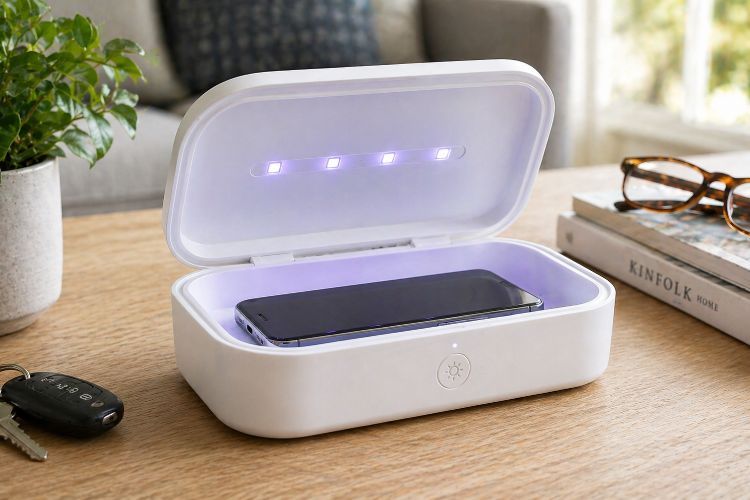
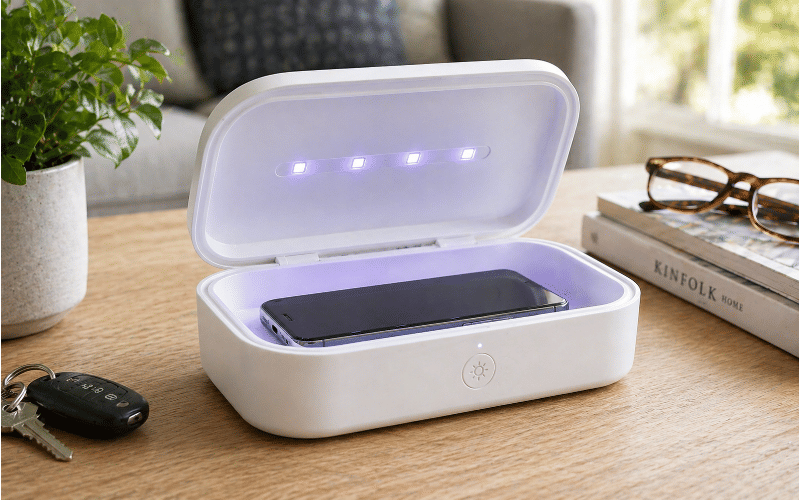
Enclosed box-style units are among the most common. These typically feature a lid and internal lighting system, allowing users to place a phone inside and initiate a cleaning cycle. Their design often accommodates additional small items such as keys or earbuds.
Portable or travel-friendly versions focus on compactness and ease of transport. These may have simplified designs and are intended for use in multiple environments, including workplaces or shared spaces.
Some configurations incorporate additional functionality, such as charging compatibility or multi-item capacity. These variations highlight how the category continues to adapt to evolving user expectations.
Key Features to Evaluate
- Chamber Size: Determines whether the sanitizer can accommodate different phone sizes or additional items.
- Cycle Duration: Influences how quickly the device completes a sanitation cycle and fits into daily routines.
- Light Placement: Affects how evenly UV light is distributed across surfaces inside the chamber.
- Power Source: Includes options such as rechargeable batteries or direct power connections.
- Safety Mechanisms: Enclosed designs and automatic shutoff features help manage exposure during operation.
Practical Performance Considerations
Real-world use of UV phone sanitizers depends on consistent habits and proper placement of items within the device. Since UV light works on exposed surfaces, positioning plays a role in overall effectiveness. Some users may choose to run multiple cycles or reposition items for more comprehensive coverage.
Maintenance is typically minimal, though keeping the interior clean and ensuring unobstructed light sources can support consistent operation. These devices are generally designed for ease of use, requiring only basic interaction once set up.
Why This Category Has Gained Attention
Heightened awareness around hygiene has contributed to increased interest in tools that support routine cleanliness. Phones, being handled frequently and rarely cleaned as often as other personal items, have become a focal point in these discussions.
UV phone sanitizers address a specific gap: the ability to sanitize small electronics without introducing moisture or abrasive materials. This makes them particularly relevant for users who want to maintain device condition while incorporating hygiene practices into their routines.
Trade-Offs and Limitations
While UV phone sanitizers offer convenience, they operate within certain constraints. Their effectiveness depends on direct exposure, meaning shadowed or covered areas may not receive the same level of treatment. This highlights the importance of understanding how to use the device rather than relying on assumptions about full coverage.
They also complement, rather than replace, broader hygiene practices. Regular handwashing and surface cleaning remain important components of overall cleanliness, with UV sanitizers serving as an additional layer within that system.
Where UV Phone Sanitizers Fit Best
This tends to make the most sense for people who use their phones all over the place—on public transit, at work, while traveling, or in shared environments. It can also be a practical option for anyone who doesn’t want to use sprays or wipes directly on their device.
In homes where multiple devices or small items get passed around, having space to sanitize more than one thing at a time can be useful. At the end of the day, whether it fits comes down to how easily it works with your daily routine and how much convenience you’re looking for.
Making Sense of Your Options
Understanding how UV phone sanitizers function and what they are designed to do can simplify the evaluation process. Rather than focusing on individual models, it is often more helpful to consider how different features align with personal habits and usage patterns.
With a clear sense of how this category fits into everyday life, comparing available options becomes more straightforward. For more structured guidance and category insights, you can explore additional resources on our website to support your evaluation process.

Related Blog Posts