Choosing the Right Projector for Your Space
Posted on Sunday, April 05, 2026
To keep this site free for consumers, we receive compensation for customer referrals.
Choosing the Right Projector for Your Space
Projectors have evolved into flexible display solutions used across home entertainment, work environments, and outdoor settings. From casual movie nights to dedicated viewing rooms, they offer a scalable way to create large-format visuals without relying on fixed screens. Understanding how different projector types and features align with your space is essential before making a decision.
Choosing the right projector involves more than image size. Factors like lighting conditions, room dimensions, and intended use all influence how well a projector performs. A closer look at these variables helps clarify what to prioritize when evaluating available options.
How Projectors Function in Different Environments
Projectors work by casting light through or off imaging components to create a display on a surface. The quality of that image depends on brightness, contrast, resolution, and how the projected light interacts with the surrounding environment.
In darker indoor settings, projectors can deliver clear and immersive visuals with fewer brightness demands. In contrast, brighter rooms or outdoor spaces require higher light output to maintain visibility and image clarity. Understanding these environmental differences is key to narrowing down suitable configurations.
Types of Projectors and Their Applications
Projectors are available in several formats, each suited to different spatial and usage needs.
Standard Throw Projectors
These projectors are positioned several feet away from the display surface. They are commonly used in larger rooms where there is enough distance to achieve the desired image size without distortion.
Short Throw Projectors
Short throw models can produce large images from a shorter distance. This makes them suitable for smaller rooms or spaces where placement flexibility is limited.
Ultra Short Throw Projectors
Designed to sit close to the wall or screen, these projectors minimize shadows and reduce the need for ceiling mounts. They are often used in multipurpose living areas where space efficiency is important.
Portable Projectors
Compact and easy to move, portable projectors are designed for flexibility. They are often used for casual viewing, travel, or outdoor entertainment where setup needs to be quick and adaptable.
Key Features to Evaluate
When selecting a projector, several technical and practical features shape the viewing experience.
- Brightness: Measured in lumens, brightness determines how well the image holds up in ambient light. Higher brightness is generally needed for outdoor use or well-lit rooms.
- Resolution: This affects image sharpness and detail. Higher resolutions are more suitable for larger screens or detailed content.
- Contrast Ratio: The difference between light and dark areas impacts depth and clarity, especially in darker viewing environments.
- Throw Distance: The distance required to achieve a specific image size influences placement and room compatibility.
- Connectivity: Input options determine how easily the projector integrates with media devices, streaming sources, or external audio systems.
- Built-In Audio: Some projectors include speakers, though external audio solutions may provide a more immersive experience.
Using Projectors for Home Entertainment
Projectors are often used to create a cinematic experience at home. In dedicated media rooms, they can produce large images that fill the viewer’s field of vision, enhancing immersion for movies, shows, and gaming.
In shared living spaces, flexibility becomes more important. Projectors that are easy to set up and store can accommodate occasional viewing without requiring permanent installation. This makes them suitable for households that want a balance between functionality and space preservation.
Outdoor Viewing Considerations
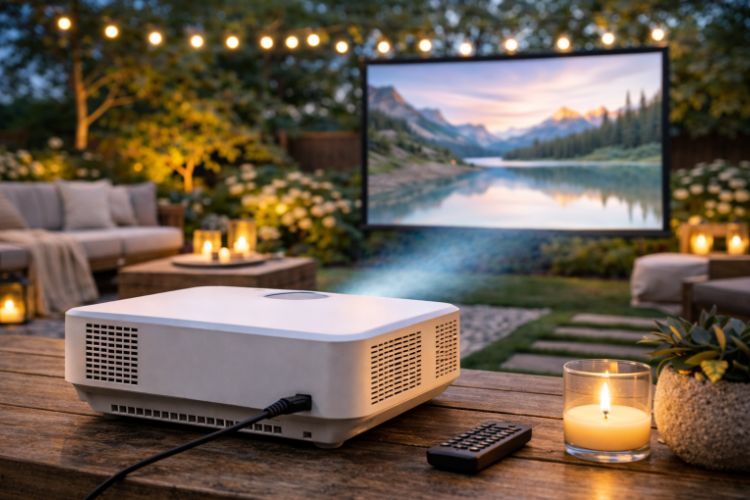
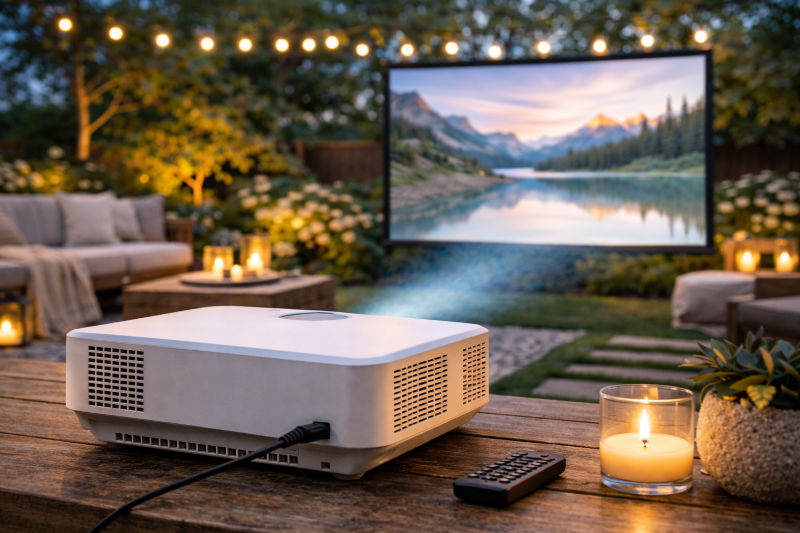
Projectors can also be used effectively in outdoor environments, offering a way to extend entertainment beyond indoor spaces. Backyard movie nights, social gatherings, and seasonal events are common scenarios where projectors are used outside.
Outdoor use introduces additional variables. Ambient light from streetlights or twilight conditions can affect image visibility, making brightness a key consideration. Portable designs and simple setup features are often preferred in these situations, as they allow for quick adjustments and easy storage after use.
The projection surface also plays a role. While walls or temporary screens can be used, surface texture and color can influence image quality. Planning for a consistent and suitable surface helps improve the overall viewing experience.
Performance and Usability in Everyday Settings
In daily use, factors like startup time, fan noise, and interface design can influence how convenient a projector feels. Some models prioritize quick setup and intuitive controls, while others focus more on image performance and customization.
Placement flexibility is another consideration. Ceiling-mounted setups offer a permanent solution, while tabletop or portable configurations allow for more adaptable use across different rooms or environments.
Trade-Offs and Practical Constraints
Projectors offer large-scale visuals, but they also come with certain limitations. Ambient light sensitivity can affect image clarity, especially in rooms without controlled lighting. This may require adjustments to the viewing environment for optimal results.
Space planning is also important. Achieving the desired image size depends on having enough distance between the projector and the display surface. In smaller rooms, this may limit available options or require alternative projector types.
Audio performance can vary, and built-in speakers may not always match the scale of the visual experience. External audio solutions are often considered to complement the display.
Where Projectors Fit Best
Projectors are well suited for users who prioritize large, flexible displays over fixed screens. They are commonly used in home entertainment setups, shared living areas, and outdoor spaces where adaptability is important.
For those who frequently host gatherings or enjoy media in different environments, portable or easy-to-move projectors can provide added convenience. In more permanent setups, higher-performance models may align better with consistent viewing needs.
Bringing It All Together
Choosing the right projector for your space involves balancing environmental factors, technical features, and intended use. Whether for indoor entertainment or outdoor viewing, understanding how these elements interact helps clarify what to look for.
With a clear sense of your space and viewing habits, evaluating projector options becomes a more structured process. For more category insights and guidance, visit our site to continue exploring how different display solutions fit into your broader needs.

Related Blog Posts