


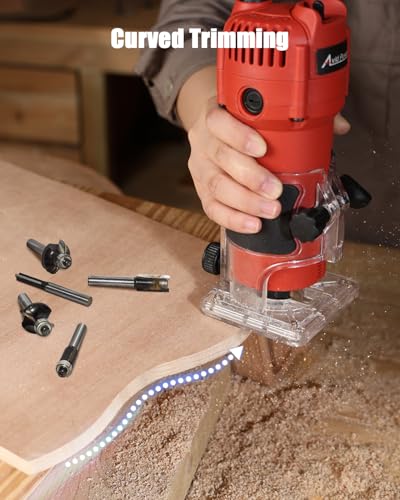



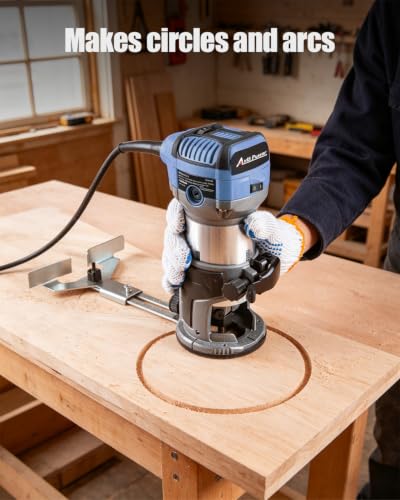


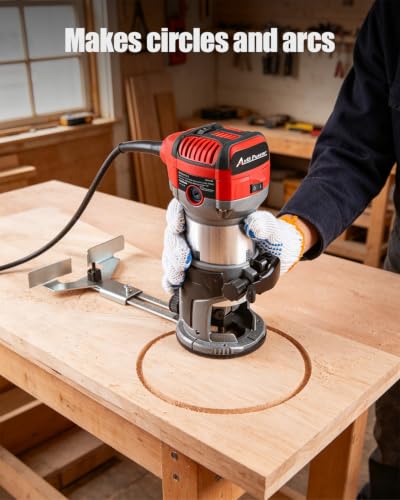





We also considered 10 others:


Our Top Choice
The order above is not editorial opinion, and it is not paid placement. It comes from what shoppers across our network actually do - which wood routers they compare, and which they ultimately buy. We re-rank as new data comes in, so the long-term favorites have to keep earning their spot against new entrants. The full method, including how we make money.
Wood Routers Buyer's Guide
Wood routers are a balance between cutting muscle and control: the same tool must spin a sharp bit fast enough for clean hardwood cuts while staying stable, precise, and safe in your hands or router table. The biggest buying concerns are depth repeatability, secure bit holding, and choosing the right base and motor size for edge profiling, joinery, template work, or table-mounted routing.
Cutting Power
A wood router has to keep bit speed stable while removing material cleanly, especially in hardwood, end grain, or wider profiles. Too little power causes burning, chatter, and multiple cleanup passes, while uncontrolled power can make the tool harder to manage safely.
Match the motor and collet to the cuts you actually plan to make: a compact trim router is best for roundovers, chamfers, hinge mortises, laminate trimming, and light template work, while larger fixed/plunge routers are better for hardwood dados, raised panels, pattern routing, and router-table use. Look for variable speed so larger bits can be slowed safely, soft start so the tool does not twist at startup, and enough torque that the bit does not bog down in dense wood; avoid using oversized bits in small palm routers or forcing deep passes in one cut. Owner feedback strongly favors routers that feel powerful enough for hardwood and standard routing without strain, and compact models are praised when they still have enough cutting ability for small projects and shaping work.
Depth Precision
Routing errors are often depth errors: a fraction too deep can ruin joinery, edges, or inlay fit. A precise, repeatable adjustment system matters more as projects move from simple edge profiles to dados, mortises, templates, and router-table cuts.
For joinery, inlays, dadoes, mortises, and router-table work, prioritize a depth system with micro-adjustment, a firm depth lock, readable scales, and repeatable stops. Plunge bases should move smoothly without side play, fixed bases should dial in height predictably, and table setups benefit from above-table adjustment or a base that can be adjusted precisely while mounted. Owners repeatedly praise straightforward, fine-grained depth adjustment for precision work, including table use, but also flag depth control and setup guidance as watch-outs when adjustment is unclear or not dependable.
Base Options
The base determines how the router meets the workpiece, not just how it feels in hand. Different bases solve different routing problems, so versatility can prevent buying a second tool too soon.
Choose the base style around the work: fixed bases are stable for edge profiles and table mounting, plunge bases are safer and cleaner for stopped grooves, mortises, fluting, and interior cutouts, and compact palm bodies excel where one-handed control and visibility matter. A combo kit can be the most flexible choice if the motor swaps quickly and both bases lock solidly; just make sure the plunge action is smooth, the fixed base is not sloppy, and the base accepts the guides or table plate you intend to use. Owner sentiment supports the usefulness of fixed-plus-plunge combinations, with buyers valuing two practical setups that can be swapped quickly.
Control Stability
A router is a high-speed cutting tool, so small control problems can become burned edges, gouges, kickback, or ruined templates. Stability, visibility, and secure locks are especially important for beginners and for cuts where the bit is partially hidden.
Look for a router that starts smoothly, has comfortable grips, a clear sightline to the bit, a stable sub-base, and controls you can reach without shifting your hands. Bit changes should be secure and simple, with a dependable collet, spindle lock or two-wrench access, and no tendency for the bit, base, or depth mechanism to slip under vibration. Owners praise smooth running, controlled soft start, easy handling, and beginner-friendly variable speed, but they also report watch-outs around stability, parts slipping, and the need for clearer setup instructions.
Build Durability
Routers operate at very high RPM, so bearing quality, collet precision, and base rigidity directly affect both cut quality and safety. A tool that feels solid at first can still disappoint if locks loosen, bearings wear quickly, or adjustments drift under vibration.
Inspect the build around the bearings, collet, base clamps, plunge posts, height-adjustment threads, and motor housing because these are the parts that take vibration, dust, and side load. Prefer tight machining, minimal runout, a collet that grips evenly, replaceable wear parts, and dust collection that keeps chips out of adjustment mechanisms; be cautious of routers with reports of early bearing, bit-holding, or slipping failures. Owner feedback is positive when routers feel well made, sturdy, accurate, and reliable over long use, but durability is not uniformly reported and some users mention early failures.
Kit Value
A router’s true usefulness depends on the ecosystem around it: bases, guides, bushings, collets, and dust collection determine what cuts are practical. Good accessories can save frustration, while low-value extras can distract from weak core performance.
Evaluate the kit by whether the extras match real woodworking tasks, not just by how many pieces are in the box. Useful additions include a plunge or fixed base, edge guide, dust port, guide-bushing compatibility, centering cone, wrench access, spare collets, and a case; included bits are convenient for learning but should be treated as starter accessories and replaced with quality bits for demanding cuts. Owners often see strong value when a router combines power, usability, a solid feel, and useful included accessories, especially for DIY and beginner use.
1,000,000+ shoppers use Buyer's Guide every week to find the best products and services online.

Helping millions of users make smarter purchases online.


