










We also considered 10 others:


Our Top Choice
The order above is not editorial opinion, and it is not paid placement. It comes from what shoppers across our network actually do - which router lifts they compare, and which they ultimately buy. We re-rank as new data comes in, so the long-term favorites have to keep earning their spot against new entrants. The full method, including how we make money.
Router Lifts Buyer's Guide
A router lift is a precision upgrade only if it matches your table and router motor; otherwise, it becomes an expensive fitting project. The sharpest buying concerns are plate and motor compatibility, repeatable above-table height control, and enough rigidity that the bit height stays true under load.
Fit Match
A router lift is only useful if its plate drops cleanly into the table and its carriage safely clamps the router motor you plan to use. Small mismatches in plate size, corner radius, motor diameter, or mounting hardware can turn a precision upgrade into a drilling, shimming, or return problem.
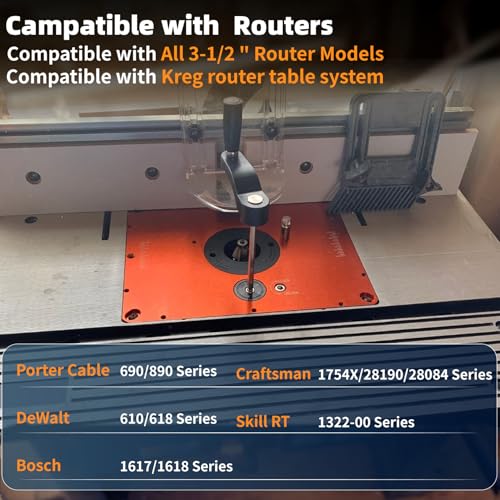
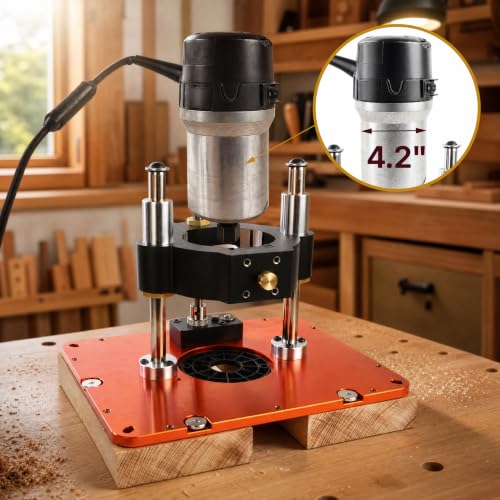
Start by matching three things before judging anything else: the insert-plate footprint and corner radius, the router motor diameter, and whether the lift is meant for a removable cylindrical motor rather than a plunge base. For many small-shop setups, compatibility with common 3-1/2-inch router motors is especially valuable because it can upgrade an existing table without forcing a router replacement; also check whether reducer collars, adapter pads, or special hardware are included or required. Avoid assuming “standard plate” means universal fit—leveling screw locations, table lip depth, and fence clearance can all affect whether the plate sits flush and safe. Owner feedback strongly supports prioritizing fit: buyers repeatedly praised lifts that dropped into existing tables cleanly, accepted a wide range of motor sizes, and avoided extra adapter purchases, while mixed reports mention setup delays when hardware fit was not quite straightforward.
Precision Lift
The main reason to buy a router lift is repeatable bit-height control from above the table. Fine adjustment matters for joinery, profiles, and multi-pass cuts because even a small amount of backlash or creep can show up directly in the workpiece.
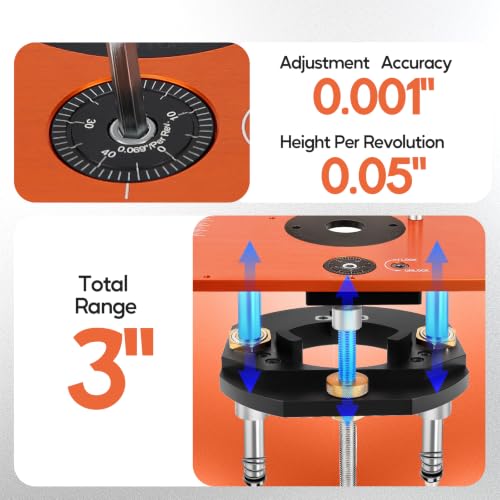
Look for a lift with smooth above-table micro-adjustment, minimal backlash in the crank, a secure height lock or mechanism that resists vibration creep, and enough vertical travel to raise the collet for bit changes while still lowering large bits safely below the insert. A good lift should let you sneak up on height in tiny increments without the carriage jumping, binding, or drifting after the router is powered on. Be cautious with mechanisms that feel gritty, have play in the lead screw, or require under-table fiddling to make final height corrections. Owner sentiment lines up clearly here: adjustment accuracy, smooth crank action, controllable precision, and easier above-table fine tuning were among the strongest positives across the category.
Rigid Build
A router lift carries a heavy motor while resisting vibration, downward pressure, and side loads from the cutter. Flatness and rigidity affect cut quality, safety, and whether the bit stays aligned with the fence and tabletop over time.
Prioritize a thick, flat machined plate, a stiff carriage, solid posts or guide rails, and a clamping system that holds the motor without twisting it out of square. Check that the plate can be leveled flush with the table and that it will not sag under the router’s weight, especially with larger motors or raised-panel-style bits. Failure modes to avoid include a bowed insert plate, loose carriage play, flex during climb-prone cuts, and vibration that loosens height settings. Owners repeatedly singled out solid machining, sturdy construction, flat aluminum plates, substantial feel, and confidence-inspiring materials as reasons they trusted a lift during routing work, though some durability impressions were not completely unanimous.
Setup Time
Router lifts are precision assemblies, but the first experience is often mechanical setup: fitting the plate, clamping the motor, leveling the insert, and aligning access holes. Clear hardware and setup aids reduce the chance of a lift that technically fits but takes hours to make usable.
Choose a lift that includes the correct mounting collars or clamps, plate-leveling hardware, clear access to the height-adjustment socket, and a template if trimming or drilling is expected. Before installation, confirm whether the table needs a rabbet, corner modification, or new screw holes, and dry-fit the router motor so the power switch, speed control, and cord orientation remain accessible. Watch for mixed hardware bags, vague screw matching, or instructions that skip table-specific details; these are not just annoyances, because a poorly leveled plate can catch stock at the bit opening. Owner reports generally describe installation as fast and straightforward, especially with common motors and included templates, but they also show that some buyers needed extra time sorting hardware or resolving small fit frustrations.
Table Workflow
A lift changes the rhythm of router-table work by moving height control and many bit-change steps above the surface. The best choices reduce under-table reaching while still keeping the router secure, accessible, and easy to lock down before cutting.
For real shop use, look for above-table height adjustment, enough lift range to expose the collet for bit changes, removable insert rings sized for different bit diameters, and controls that are easy to reach without interfering with the fence or workpiece. The safer workflow is to unplug the router, raise the motor for access, change the bit with good wrench clearance, lower to the desired height, lock or verify the setting, and then cut—avoid designs that force awkward under-table body position for routine adjustments. This matters most when making repeated passes, changing profiles, or working in a compact shop where bending under the table constantly slows the job. Owners consistently support this priority, saying above-table height changes, smoother bit changes, and easier daily operation made routing tasks noticeably easier than stock table setups.
Lasting Value
Router lifts can feel like a serious upgrade because they sit between the table, router, and cutter. Value depends less on the lowest upfront spend and more on whether the lift improves accuracy, avoids replacing other equipment, and stays reliable through repeated adjustments.
Judge value by the whole system: whether the lift works with your current router and table, whether it gives enough precision to replace improvised under-table adjustments, and whether the materials are durable enough for the size of work you do. A lower-hassle lift that fits your existing setup can be the better buy than one that requires a new router, table modification, or extra adapters; conversely, paying for precision is wasted if your table opening or router motor is not a clean match. Owner sentiment is somewhat split on investment level, but the pattern is clear: many buyers felt the quality, construction, compatibility, and routing performance justified the purchase once installed, while some still viewed it as a significant commitment.
1,000,000+ shoppers use Buyer's Guide every week to find the best products and services online.

Helping millions of users make smarter purchases online.


