









We also considered 10 others:


Our Top Choice
The order above is not editorial opinion, and it is not paid placement. It comes from what shoppers across our network actually do - which router tables they compare, and which they ultimately buy. We re-rank as new data comes in, so the long-term favorites have to keep earning their spot against new entrants. The full method, including how we make money.
Router Tables Buyer's Guide
A router table turns a handheld router into a controlled shaping station, but only if the surface stays flat, the fence locks square, and the router mounts without improvisation. The sharpest buying risks are hidden compatibility problems and a table that feels sturdy at first but flexes, sags, or shifts when feeding stock.
Flat Build
A router table’s accuracy starts with the table surface and base rigidity. Even a good router will cut inconsistently if the top is not flat, the insert sits proud or low, or the stand moves while stock is being fed past the bit.
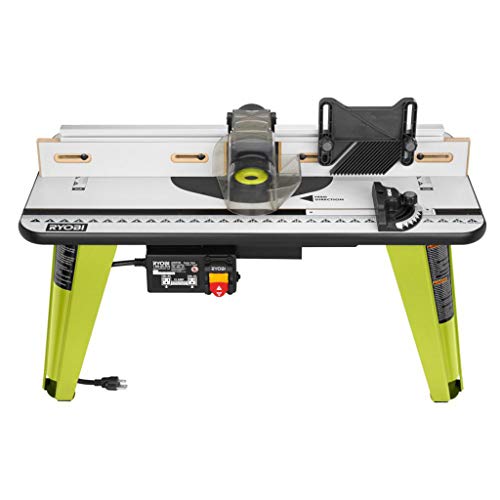
Look for a dead-flat top, a flush-adjustable insert plate, and legs or a base that can be clamped or bolted down; these matter more than cosmetic features. Cast aluminum, phenolic, or other rigid tops are usually safer bets than thin, sag-prone panels, especially if the table will live in a humid garage or carry a heavier router. Avoid tables where the plate cannot be leveled, the fence area dips, or the base racks when you push sideways into the bit. Owner feedback supports this priority: shoppers repeatedly valued a solid, quality benchtop feel, a flat aluminum top, sturdy construction, and durable metal-top designs over MDF or melamine alternatives.
Router Fit
Router-table compatibility is not just whether a box says “universal.” The router’s base-hole pattern, size, height-adjustment access, switch access, and bit-change clearance all determine whether the setup is practical and safe.
Before buying, confirm the exact router model against the mounting plate hole pattern, not just the router brand or a broad compatibility claim. Check whether the plate supports your fixed-base or plunge router, whether the collet can be reached for bit changes, whether above-table height adjustment remains usable, and whether the power switch can be reached without reaching under a spinning bit. Be cautious with “universal” mounting plates if you are not prepared to drill accurately and center the router yourself. Owner sentiment identifies compatibility as the main uncertainty: some routers mount well, including certain older or corded models, but not every router labeled compatible fits cleanly.
Fence Control
The fence and workholding system determine whether the table can make repeatable profiles, rabbets, dados, and edge treatments. A rigid table with a sloppy fence still produces wandering cuts and burn marks because the workpiece cannot be guided consistently.
Prioritize a fence that locks square without drifting, has independently adjustable faces, and can be set precisely without tapping it back and forth for every cut. For real routing control, look for featherboard mounting points, a usable guard, a starter pin for curved work if needed, and a miter gauge only as a secondary aid—not as the main way to guide long stock. Avoid flimsy fences, hard-to-tighten knobs, and accessories that block dust collection or bit visibility. Owners praised tables that offered precise, fast fence adjustments and useful included features such as an adjustable fence, featherboard, miter gage, and guard, which reinforces how central guidance and workholding are in this category.
Setup Ease
A router table is only as good as its setup, because small alignment errors show up directly in the cut. Clear assembly, labeled hardware, and simple calibration reduce frustration and make the table more approachable for occasional users and first-time projects.
Choose a table with clearly labeled hardware, accessible leveling screws, straightforward fence alignment, and enough room under the table to install and remove the router without scraping knuckles. Plan to spend time making the insert plate flush, squaring the fence, setting featherboards, and test-cutting scrap before using project stock. If the table ships with many similar screws or brackets, careful sorting matters because a small assembly mistake can create fence misalignment or plate rocking. Owner reports are mixed here: many find these tables easy to assemble and approachable for first router-table work, while others need extra time matching screws and sorting hardware.
Job Size
Benchtop router tables are best matched to the size and force of the work being done. Small trim, edge profiles, rabbets, and medium boards demand different support than large panels, raised-panel doors, or heavy production routing.
Match the table to the stock you actually route: a compact benchtop model is practical for small-shop edge work, template work, and small to medium boards, but large doors, long molding runs, or wide panels need more infeed/outfeed support and a heavier stand. Look for a stable footprint, rubber feet or clamp points, enough tabletop around the bit, and room to add auxiliary supports. Do not rely on a light table for aggressive cuts with large bits; take shallow passes and use guards and featherboards to keep hands away from the cutter. Owner feedback specifically supports benchtop tables as good small-shop tools with enough sturdiness for small to medium routing jobs.
Real Value
Good value in a router table comes from the parts that prevent upgrades later: a flat top, a dependable fence, safe workholding, and durable construction. A lower-cost table can become expensive if it needs a better fence, a replacement plate, or extra accessories to perform basic cuts safely.
Evaluate value by the usable system, not by the table alone: top material, fence quality, featherboards, guard, miter gauge, insert rings, dust-port compatibility, and whether your router mounts without extra parts. Paying for a durable metal top and competent fence can make sense if it prevents sagging, repeated adjustment, or immediate accessory purchases. Avoid bundles that look complete but include a weak fence, poor guarding, or a mounting plate that does not fit your router. Owner sentiment backs this view: buyers often felt durable metal-top options were worth paying for, value was viewed favorably overall, and included features such as an adjustable fence, featherboard, miter gage, and guard made tables feel more capable.
1,000,000+ shoppers use Buyer's Guide every week to find the best products and services online.

Helping millions of users make smarter purchases online.


