











We also considered 10 others:


Our Top Choice
Compare Features


The order above is not editorial opinion, and it is not paid placement. It comes from what shoppers across our network actually do - which toasters they compare, and which they ultimately buy. We re-rank as new data comes in, so the long-term favorites have to keep earning their spot against new entrants. The full method, including how we make money.
Toasters Buyer's Guide
Toasters look simple, but the real tradeoff is between browning control, slot fit, counter footprint, and durability of the heating mechanism. A careful buyer should focus less on style alone and more on whether the toaster can evenly handle the bread you actually eat—standard sandwich slices, bagels, waffles, sourdough, or long artisan loaves—without becoming a bulky or short-lived appliance.
Browning Control
A toaster is only worth keeping if it can brown predictably across the whole slice and across repeated cycles. Shade control matters because different breads, frozen items, and bagels need different heat exposure to avoid pale centers, scorched edges, or dry interiors.
Look for clearly graduated shade settings, consistent heating elements on both sides, and enough range to handle light toast, darker bagels, frozen slices, and thicker breads without repeated cycles. If you eat sourdough or homemade bread, evenness matters more than maximum heat: a toaster that browns the edges before the center is done will frustrate you every morning. Owner sentiment supports this as a top separator: buyers praised crisp-outside, soft-inside results and noticeable browning differences from shade controls, but some also reported under-toasted centers, slow cycles, or a break-in period before results evened out.
Slot Fit
Slot dimensions determine what the toaster can actually accept without jamming, trimming bread, or leaving part of a slice untoasted. The right slot layout depends on whether your household mostly uses standard bread or oversized bakery-style slices.
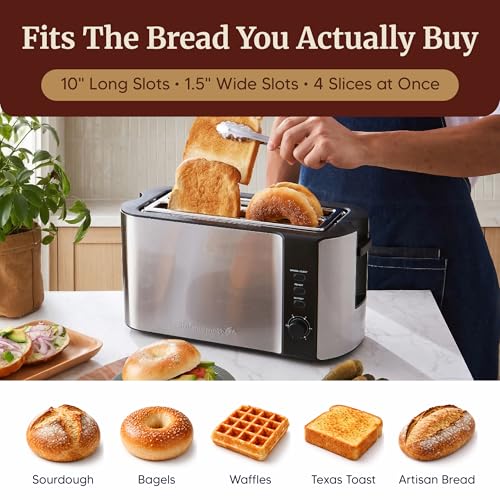
Match the slot shape to your bread habits: extra-wide slots are best for bagels, waffles, Texas toast, and thick homemade slices, while long slots are better for sourdough and artisan loaves that are too tall or wide for standard two-slot designs. If you often toast four slices, check whether the long-slot design can fit multiple standard slices at once without forcing you into a large four-slot body. Owner feedback strongly favors practical wide and long slots, especially for bagels, waffles, sourdough, large homemade bread, and oversized artisan slices that standard toasters struggle to fit.
Durability
Toasters fail most often when heating elements, levers, electronics, or internal contacts stop cycling correctly. Because they are used frequently and exposed to crumbs and heat, build quality matters even for a basic countertop appliance.
Prioritize a solid-feeling lift lever, stable crumb tray, consistent pop-up action, and heating elements that glow evenly across the slot; avoid models where controls feel flimsy or the carriage drags. For touch-screen or feature-heavy designs, remember that more electronics can add convenience but also create another possible failure point, so a good warranty and simple manual fallback controls are worth considering. Owner sentiment is notably cautious here: many buyers describe reliable day-to-day use and units that keep looking new, but durability is the repeated watch-out, with reports of some units stopping, breaking, or having heating elements that do not fully operate sooner than expected.
Easy Settings
Controls should make it easy to repeat yesterday’s toast without guessing. Useful settings are the ones that change the heating behavior for real foods, not just extra buttons that complicate a morning routine.
Choose controls that are readable at a glance, responsive, and easy to adjust in small shade increments; dedicated bagel, defrost, reheat, and cancel functions are genuinely useful if they match what you toast. For households with multiple preferences, look for clear indicators so one person can make light toast and another can make dark toast without trial and error. Owner feedback backs this up: touch controls and light-up screens were praised when they felt responsive and simple to adjust, and buyers liked easy-to-use designs that handled everyday items without fuss.
Counter Fit
A toaster lives on the counter in many kitchens, so its footprint can matter almost as much as its performance. The best shape is the one that fits your storage and workflow without blocking prep space or forcing awkward cord placement.
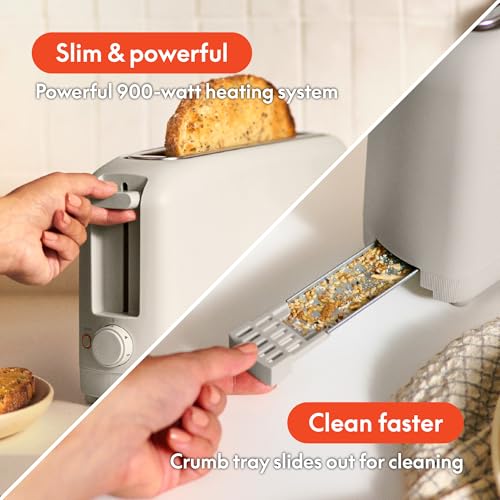
Measure both counter space and cabinet clearance before choosing between compact two-slot, slim long-slot, and bulkier four-slot layouts. Slim long-slot designs can be a smart compromise for small kitchens because they accept larger bread while taking up less visual and physical space than many boxy multi-slot models. Owner sentiment highlights this niche concern clearly: buyers appreciated narrow, modern shapes that saved counter and cupboard space, and long-slot designs that handled larger bread without needing a bulky appliance.
Kitchen Style
Appearance does not toast the bread, but it affects whether the appliance feels at home in an open kitchen. Materials, finishes, colors, and display style can make a toaster feel either cohesive or like clutter.
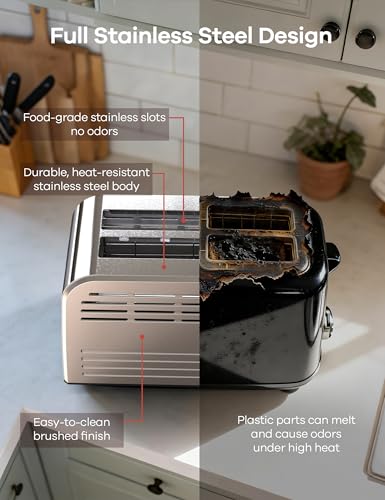
If the toaster will stay visible, look for a finish that matches nearby appliances and a shape that will still look clean after fingerprints, crumbs, and daily handling. Stainless finishes, retro colors, and illuminated controls can elevate the look, but they should not outweigh slot fit, browning consistency, or durability. Owner feedback shows style is a meaningful tiebreaker: shoppers praised sleek stainless designs, modern slim profiles, retro looks, attractive color options, and touch screens that made some toasters feel more premium and like better value.
Don't miss the latest sales on Toasters and more. Get the best Black Friday deals today!

1,000,000+ shoppers use Buyer's Guide every week to find the best products and services online.

Helping millions of users make smarter purchases online.