











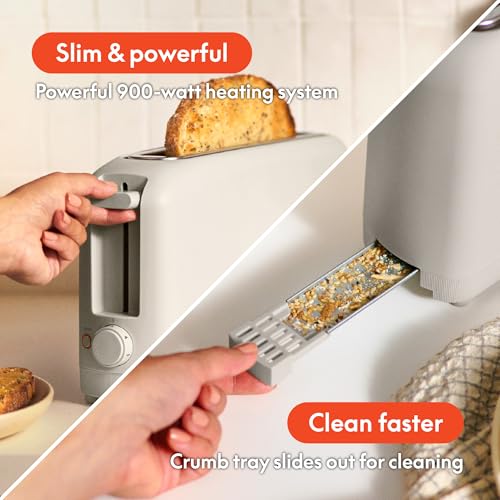


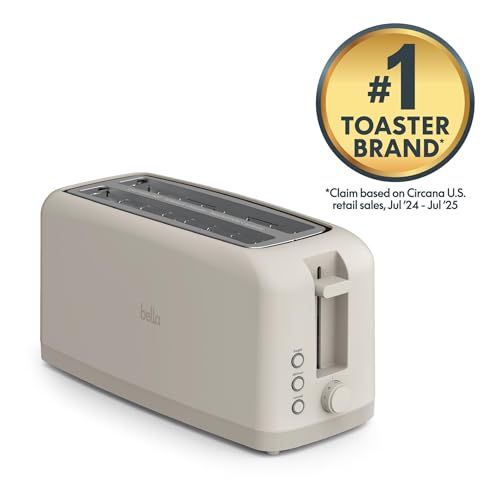


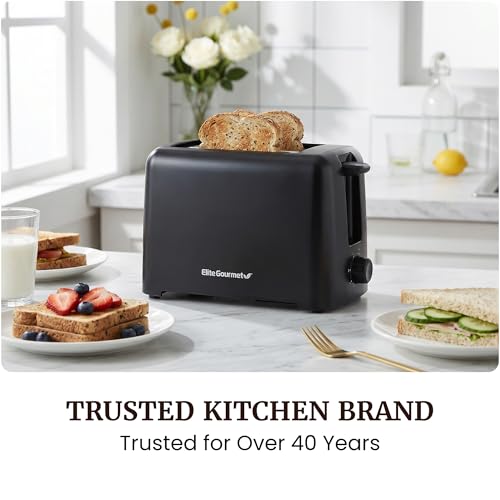


We also considered 10 others:


Our Top Choice
Compare Features


The order above is not editorial opinion, and it is not paid placement. It comes from what shoppers across our network actually do - which bread toasters they compare, and which they ultimately buy. We re-rank as new data comes in, so the long-term favorites have to keep earning their spot against new entrants. The full method, including how we make money.
Bread Toasters Buyer's Guide
Bread toasters look simple, but the real tradeoff is between a compact appliance that disappears on the counter and a slot layout that can actually handle bagels, sourdough, homemade slices, and four-piece breakfasts. The sharpest buying concerns are browning consistency, slot fit, and whether the heating elements and controls keep working after daily use.
Even Browning
A toaster is only useful if the same setting gives predictable results from one breakfast to the next. In this category, poor heat balance shows up as one pale side, a scorched edge, or a center that stays underdone even when the crust browns.
Prioritize a toaster with a clear shade dial, enough browning levels to fine-tune doneness, self-centering bread guides, and heating elements that cover the full height of the slot. If you toast both thin sandwich bread and thick artisan slices, avoid vague low-to-high controls with no repeatable markings, because different bread moisture and thickness make uneven heating more obvious. Owner feedback supports this as a key separator: many shoppers report accurate shade settings and noticeable browning differences, but negative and mixed feedback also points to uneven browning, darker results on one side, under-toasted centers, and consistency that is not guaranteed for everyone.
Slot Fit
Slot geometry matters more than headline slice count if your bread is not standard sandwich size. Long, extra-wide slots can reduce the need to force, trim, rotate, or toast oversized pieces in multiple passes.
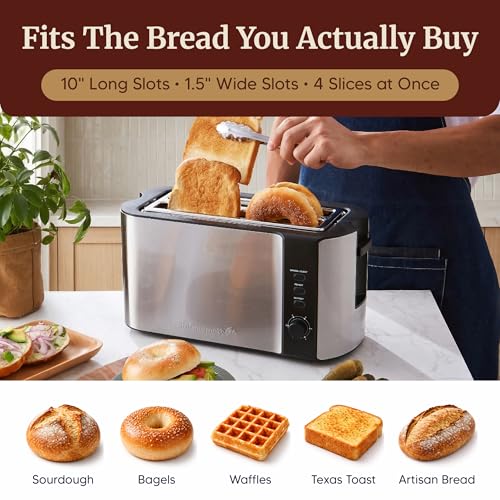
Match the slot layout to the bread you actually buy: choose extra-wide slots for bagels and thick homemade bread, long slots for sourdough or artisan slices, and a true four-slice layout if multiple people toast at once. Look for stated slot dimensions, self-centering racks, and enough slot depth that tall slices do not stick out excessively; avoid assuming that “two-slice” means it will fit broad bakery bread. Owner sentiment strongly supports this dimension, with long and extra-wide slots praised for four slices, bagels, sourdough, large homemade bread, and oversized artisan slices without requiring a bulky appliance.
Useful Controls
Bagel, defrost, reheat, and cancel buttons are valuable only when they change the cycle in a useful, understandable way. Controls also affect safety and frustration, because a weak lever or unreliable side can make an otherwise good toaster fail in daily use.
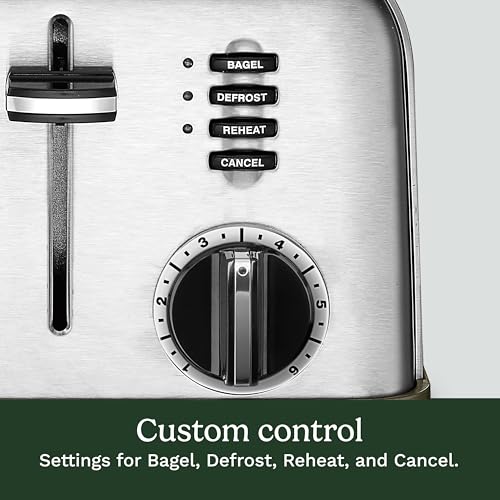
Look for a clearly labeled bagel mode, defrost for frozen bread, reheat for warming without heavy browning, a cancel button, high-lift removal, and separate controls if the toaster has independent sides. For bagels, the most useful mode directs more heat to the cut face rather than simply running a normal cycle longer; for households, independent controls prevent one person’s light toast from dictating everyone’s breakfast. Owner feedback says shade settings are often flexible and accurate, and multi-function designs can feel versatile, but it also flags control-related reliability issues, heating elements not fully operating, and one side shutting off on some units.
Build Reliability
Toasters combine heat, moving parts, springs, electronics, and crumb exposure, so early failure is a common category risk. A durable toaster should feel stable, latch cleanly, heat both sides consistently, and tolerate repeated cycles without weakening controls.
Check for a sturdy carriage, smooth lever action, stable feet, a removable crumb tray, heat-safe exterior design, and recognizable electrical safety certification. Watch for failure modes such as a lever that will not stay down, dead heating zones, one slot or one side quitting, rattly construction, or controls that feel loose out of the box. Owner sentiment is split here: some buyers describe dependable daily use, solid build, and continued proper operation after regular use, while several negative and mixed points warn that durability is a real watch-for, with some units breaking or stopping much sooner than expected.
Footprint & Finish
A toaster often lives on the counter, so size, cord placement, heat clearance, and finish all affect whether it is pleasant to own. The best fit is not always the smallest toaster; it is the one that fits your bread while still storing or sitting safely in your kitchen layout.
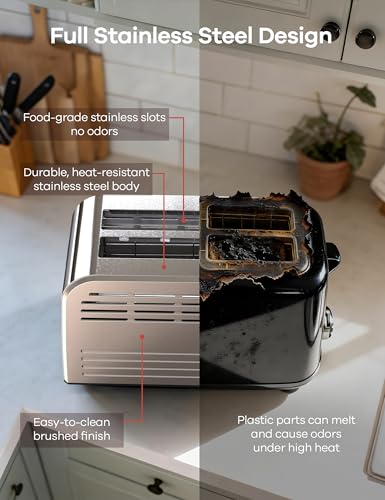
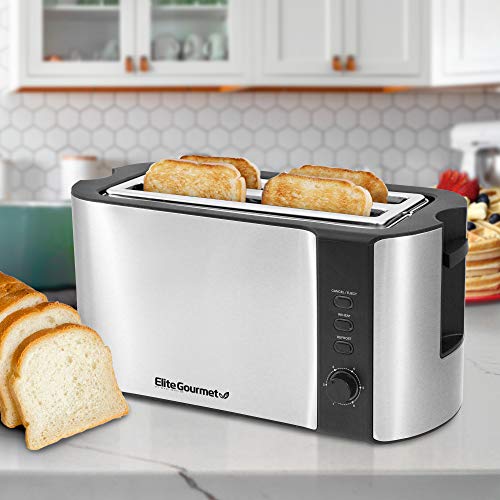
Measure counter depth, cabinet clearance, and storage space before choosing between a slim long-slot body, a standard two-slot toaster, or a wider four-slot design. Make sure there is room around vents and above the slots for heat, and consider whether the crumb tray can slide out in the direction your counter allows; a stainless or glossy finish may match appliances but can show fingerprints. Owner feedback backs the importance of this dimension, with compact stainless looks, clean matching finishes, and narrow modern shapes repeatedly praised for small kitchens, counter presence, and cupboard storage.
Value Fit
Value in a toaster is not just paying less; it is getting the right mix of slot fit, even heating, dependable controls, and acceptable build for your routine. Extra modes and premium finishes are worthwhile only if they solve a real use case in your kitchen.
Spend for the features that match your bread and household size first: long or extra-wide slots, consistent browning, useful modes, and dependable construction. Avoid paying mainly for appearance or extra buttons if you only toast standard slices, but also avoid the cheapest-feeling option if reviews point to early heating or control failures, because replacement hassle erases the initial savings. Owner sentiment generally sees reasonable value when performance, design, and basic reliability come together, but it is mixed when problems appear or when the upgrade over a basic toaster does not feel justified.
1,000,000+ shoppers use Buyer's Guide every week to find the best products and services online.

Helping millions of users make smarter purchases online.


