





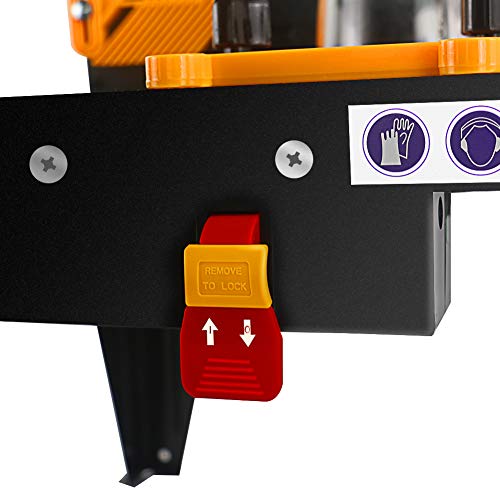

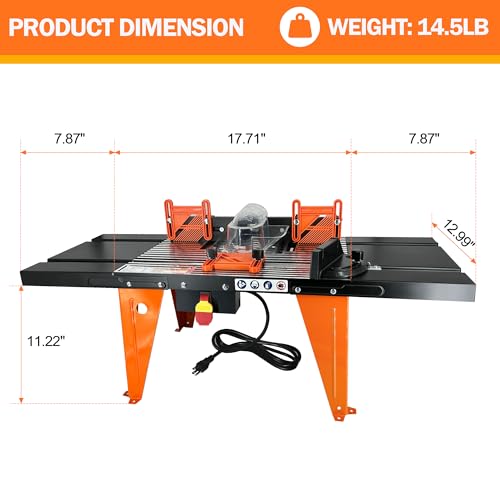
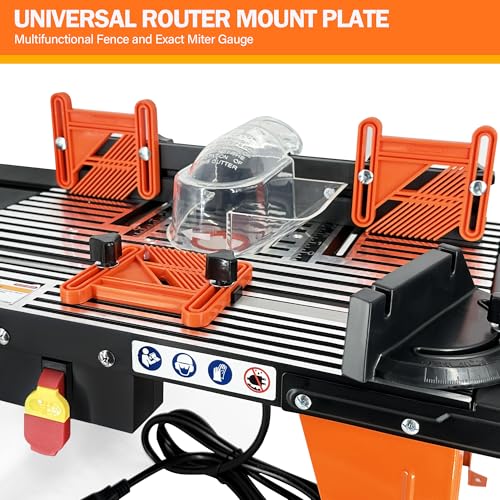


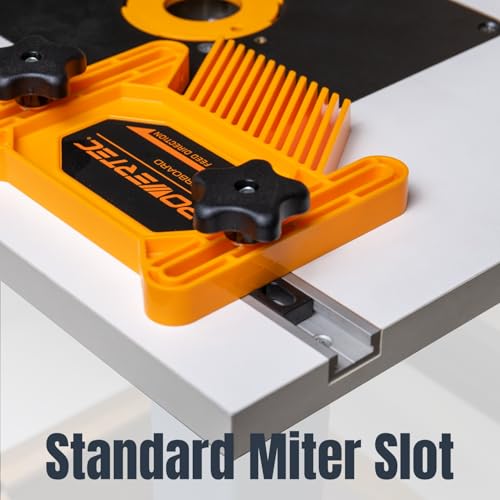

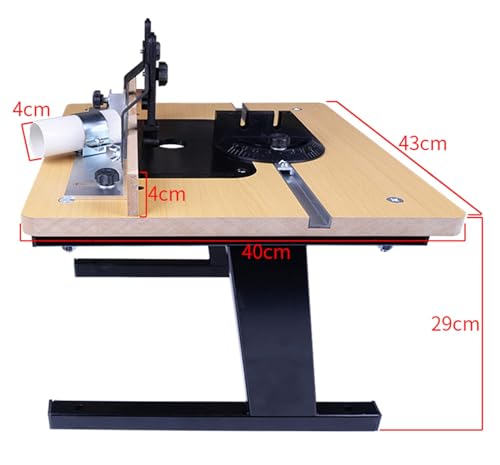


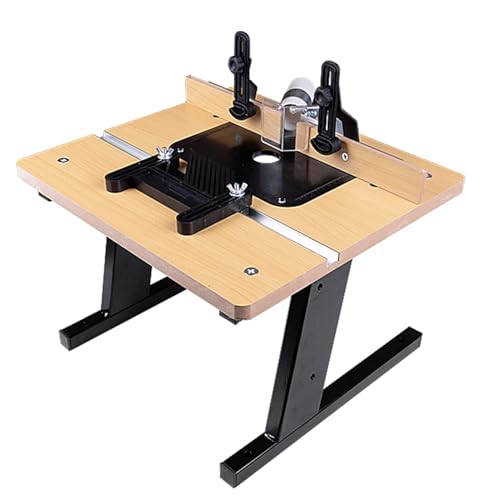
We also considered 10 others:


Our Top Choice
The order above is not editorial opinion, and it is not paid placement. It comes from what shoppers across our network actually do - which benchtop router tables they compare, and which they ultimately buy. We re-rank as new data comes in, so the long-term favorites have to keep earning their spot against new entrants. The full method, including how we make money.
Benchtop Router Tables Buyer's Guide
Benchtop router tables trade compact size and approachable setup for less mass, less workpiece support, and more dependence on careful alignment than full-size shop tables. The sharpest buying concerns are whether your router mounts securely, whether the top and fence stay accurate, and whether the hardware arrives complete enough to tune safely.
Router Fit
A router table is only as useful as the way it holds the router. Poor mounting can leave the bit off-center, the plate unlevel, or the router unsafe to adjust under load.
Start by confirming that the mounting plate or insert can actually accept your router base: check hole patterns, screw sizes, center opening, plate leveling hardware, and whether the table is intended for trim routers or larger fixed-base routers. Avoid assuming “universal” means no work; many benchtop tables require drilling, centering, or adapter hardware, and a missing screw or plate part can make the table unusable until replaced. Owner feedback supports this: satisfied users got the best results on trim-router and small-project work, while some buyers reported defective or missing mounting parts that made the table difficult to use without replacement components.
Table Accuracy
Small errors at the table or fence become visible as burn marks, uneven profiles, or inconsistent cuts. A compact router table can work well, but only if the surface and fence give the workpiece predictable support.
Look for a flat, rigid tabletop, a center plate that can be leveled flush, and a fence that locks square without flexing when pressure is applied. For clean edge profiles, rabbets, and grooves, the fence faces should stay coplanar, the bit opening should be appropriate for the cutters you use, and any miter slot or accessory track should run parallel enough to be useful. Owner sentiment points in the same direction: positive comments centered on a rigid center surface, a stable fence setup, and decent DIY-friendly table quality once the table was assembled and tuned.
Build Stability
Routing puts side load and vibration into the table, especially when feeding hardwood or using larger bits. A table that flexes, shifts, or arrives damaged can turn a simple routing pass into a calibration and safety problem.
Prioritize a base that can be clamped or bolted to the bench, feet that do not rock, and hardware that does not feel like it will strip after a few fence adjustments. Lightweight benchtop tables can be effective, but they need enough stiffness to resist vibration and enough mass or anchoring to keep the workpiece from pushing the table around. Owners reported that some units felt sturdy enough for small-shop use and gave a router a solid tabletop base, but durability and arrival condition were real watch-outs, with complaints about broken, damaged, or cheap-feeling parts.
Setup Tuning
Benchtop router tables often arrive as kits, and the final accuracy depends heavily on assembly. Clear adjustment points matter because fence alignment, insert height, and router centering all affect cut quality and safety.
Before routing, plan on a full setup pass: inventory the hardware, level the insert, square the fence, verify the router is centered, and test locking knobs under light pressure. A good benchtop table should allow normal tuning without improvised fixes; if you are willing to drill, shim, or replace hardware, a simpler table may still be acceptable. Owner feedback was mixed here: some buyers found setup easy and the table functional, while others ran into missing, defective, broken, or damaged components, and several comments suggest a bare-bones DIY feel that suits customization better than plug-and-play expectations.
Project Scope
The wrong size table can make routing awkward even if the motor has enough power. Workpiece support, table footprint, and router capacity determine whether a cut feels controlled or risky.
Match the table to the work: compact benchtop models are best for edge profiling, light rabbeting, small grooves, template work, and trim-router tasks on manageable stock. If you plan to run large panels, heavy doors, big raised-panel bits, or long boards without extra infeed and outfeed support, look for a larger, heavier setup instead. Owner sentiment reinforces that the happiest use case was trim-router and small-project routing, with sturdy-enough performance for typical small-shop projects rather than heavy production work.
Value Tradeoff
Value in this category is not just the initial purchase; it is how much usable accuracy and safety you get after assembly. A lower-frills table can be worthwhile for small projects if its limitations are clear before you buy.
Treat an entry-level benchtop router table as a compact routing station that may need tuning, not as a precision cabinet-style setup out of the box. Compare what is included—fence, guard, insert rings, dust port, mounting hardware, and usable adjustment points—because missing or weak accessories can erase the advantage of a simple buy. Owner reports support this value tradeoff: buyers liked the table once assembled and saw it as good for basic needs, but the bare-bones DIY character disappointed those expecting a more polished, ready-to-run table.
1,000,000+ shoppers use Buyer's Guide every week to find the best products and services online.

Helping millions of users make smarter purchases online.


