










We also considered 10 others:


Our Top Choice
The order above is not editorial opinion, and it is not paid placement. It comes from what shoppers across our network actually do - which reading lamps they compare, and which they ultimately buy. We re-rank as new data comes in, so the long-term favorites have to keep earning their spot against new entrants. The full method, including how we make money.
Reading Lamps Buyer's Guide
Reading lamps have to put enough light on the page or work surface without flooding the room, creating glare, or feeling harsh during long sessions. The biggest tradeoffs are beam control versus overall brightness, and secure placement versus flexibility—especially for bedside clips, headboards, and compact desks.
Light Quality
A good reading lamp should make text clear without forcing the eyes to fight glare, shadows, or a harsh hotspot. In this category, usable illumination matters more than maximum output because the light needs to land on a book, laptop, or small work area comfortably.
Look for bright, even illumination with a controlled beam that covers a page, keyboard, or small task area without spilling directly into your eyes or a partner’s side of the bed. For bedside reading, a focused but non-harsh beam is especially important; for desk use, wider even coverage helps avoid shadow bands across notebooks, laptops, and paperwork. Owners most strongly praised lamps that delivered bright, even lighting for desks, laptops, and small tasks, and also valued clip-on bedside lights that felt comfortable and effective rather than harsh.
Light Controls
Brightness and color temperature determine whether one lamp can serve both alert task work and relaxed evening reading. Fine control is valuable because eyes, rooms, and tasks change throughout the day.
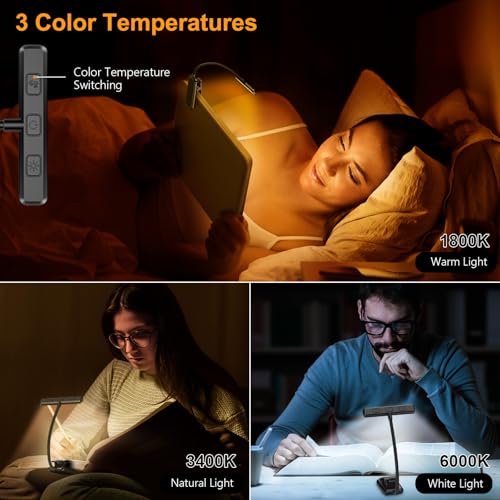
Choose a lamp with multiple brightness levels and color temperatures, ideally ranging from crisp white for detail work to warm dim light for winding down. Avoid lamps with only one harsh setting or coarse jumps between levels, since reading comfort often depends on small adjustments. Owner sentiment strongly favored wide color and brightness ranges, especially lamps that could shift from bright white task lighting to warmer, dimmer light, and shoppers found touch controls and dimming easy to tune to the task.
Aim & Reach
Reading lamps fail when the light cannot be aimed precisely where it is needed. Adjustable arms, goosenecks, and swiveling heads matter because the best angle changes between a book, laptop, craft task, and bedside position.
Prioritize an arm, neck, or light bar that moves smoothly and holds its position without drooping. For desks, a swiveling bar or adjustable arm should clear monitors and keep the base out of the work zone; for beds, a flexible neck should reach over pillows and aim at the page rather than the face. Owners praised adjustable arms and swiveling light bars for placing illumination exactly where needed while taking up little desk space, and flexible necks were seen as practical for regular bedside use.
Mount Security
The mount determines whether a reading lamp feels invisible or becomes a constant annoyance. Clip-on lamps in particular need enough grip for safety, but not so much pressure that they damage furniture or become hard to fit.
Match the mounting style to the actual surface: a desk base needs enough weight and footprint to resist tipping, while a clip needs jaw depth, padding, and spring tension suitable for the headboard, shelf, or furniture edge. Be cautious with thick, rounded, or upholstered headboards; a tight clip can leave indentations, fit poorly, or feel less secure even if it works well on thinner hard surfaces. Owners generally found strong clips secure on headboards and nearby furniture, but reported that stability depended on setup when the surface was thick or upholstered.
Daily Use
A reading lamp is handled often, so convenience features affect whether it stays pleasant to use every day. Controls, cords, and charging extras should simplify the setup rather than add clutter or new failure points.
For bedside use, check that controls are reachable from your normal reading position; cord-mounted or touch controls can be easier than a switch hidden on the shade or base. Decide whether plug-in reliability matters more than cordless flexibility, and look for cable length that reaches the outlet without pulling on the lamp. Owners appreciated cord-mounted controls and plug-in designs for dependable bedside use, and built-in USB charging was a well-liked desk convenience for keeping a phone, watch, or small device powered nearby.
Fit & Value
Reading lamps often live in visible places such as nightstands, desks, and headboards, so size and appearance matter alongside performance. The best value is not just a low cost; it is a lamp that fits the space, provides the right light, and avoids needing replacement or workarounds.
Look for a slim profile if desk space or bedside clearance is limited, and make sure the lamp’s shape will not block a monitor, crowd a nightstand, or protrude awkwardly from a headboard. A sleek lamp is only a good value if its light quality, controls, and mounting style match the way you read. Owners noted that slim, sleek designs and low cost could make a lamp feel like strong value, especially when paired with practical lighting and convenience features.
1,000,000+ shoppers use Buyer's Guide every week to find the best products and services online.

Helping millions of users make smarter purchases online.


