




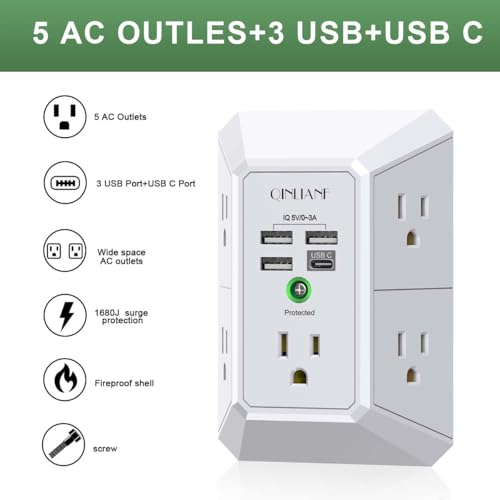


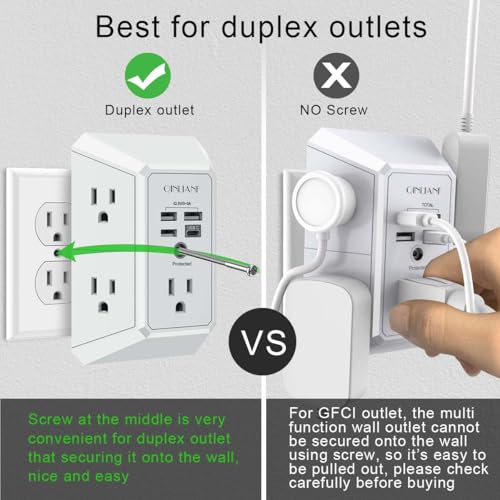


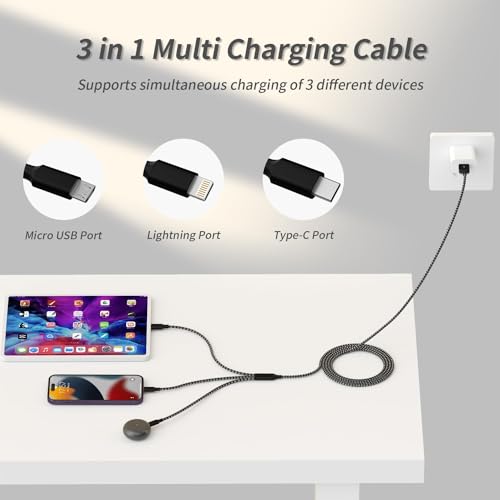


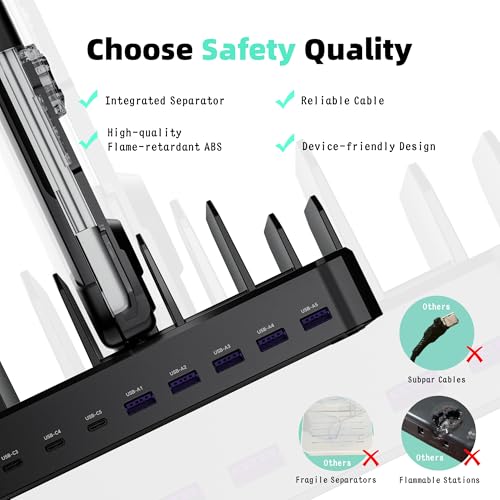


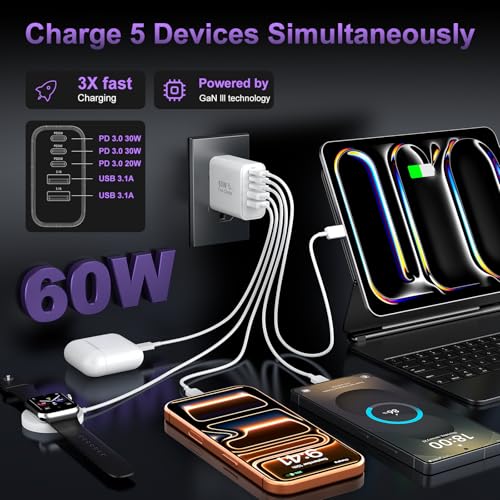


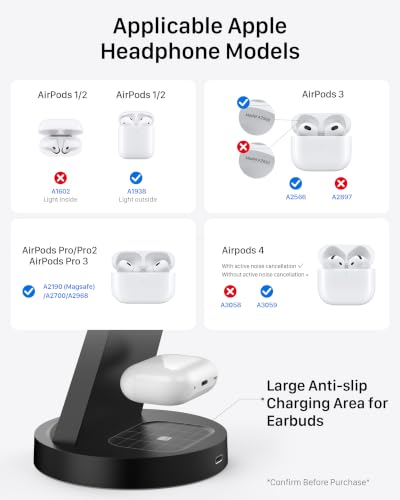


We also considered 10 others:


Our Top Choice
Compare Features


The order above is not editorial opinion, and it is not paid placement. It comes from what shoppers across our network actually do - which multi-device chargers they compare, and which they ultimately buy. We re-rank as new data comes in, so the long-term favorites have to keep earning their spot against new entrants. The full method, including how we make money.
Multi-Device Chargers Buyer's Guide
Multi-device chargers have to concentrate phones, tablets, earbuds, watches, and sometimes bulky wall plugs into one small area without overheating, tipping, or blocking usable outlets. The sharpest checks are physical stability, outlet/port spacing, and whether the build can handle constant cable tugging and repeated plug changes.
Build
A well-built power strip is more likely to hold up to daily plugging and unplugging, accidental bumps, and long-term use without cracked housing, loose outlets, or unreliable switches. Look for sturdy materials, a solid-feeling cord and plug, snug receptacles, and clean assembly with no rattling or flexing; be cautious of flimsy plastic, loose ports, or units that feel unusually light for their size.
Choose a multi-device charger with a rigid, heat-resistant shell, solid plug/cord strain relief, non-slip feet or enough weight to stay put, and a layout that keeps bulky adapters from covering neighboring outlets. For bedside, desk, or family charging hubs, a three-sided or well-spaced layout is especially useful because it reduces plug crowding; for travel, compactness matters, but avoid units so light that several connected cables can drag the base around. Owner feedback supports these priorities: buyers often describe well-built units as solid, sturdy, durable, and still reliable after months of use, and they like compact designs that fit hotels, wall outlets, and tight spaces while leaving room for larger plugs. The main caution from owner sentiment is stability—some lightweight bases are considered convenient, but others shift during daily use, which is a real annoyance when multiple devices are plugged in at once.
1,000,000+ shoppers use Buyer's Guide every week to find the best products and services online.

Helping millions of users make smarter purchases online.


