














We also considered 10 others:


Our Top Choice
The order above is not editorial opinion, and it is not paid placement. It comes from what shoppers across our network actually do - which hedge trimmers they compare, and which they ultimately buy. We re-rank as new data comes in, so the long-term favorites have to keep earning their spot against new entrants. The full method, including how we make money.
Hedge Trimmers Buyer's Guide
Buying a hedge trimmer is mostly a tradeoff between cutting capacity, reach, and fatigue: the tool must be strong enough for woody shrubs but light and controllable enough to use at arm’s length. The sharpest concerns are matching blade size and power to your hedges, then choosing a corded or cordless setup that will finish the job safely without jams, dead batteries, or awkward ladder work.
Cut Capacity
A hedge trimmer is only satisfying if its blade length, tooth spacing, and power match the shrubs in your yard. Too little capacity leads to ragged cuts, jams, and extra hand-pruning, while too much tool can feel bulky for simple shaping.
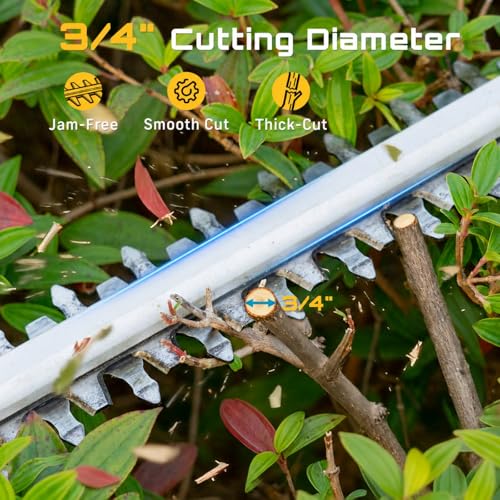
Match the trimmer to the thickest growth you actually cut: fine hedge shaping can use a smaller tooth gap, while woody shrubs need a wider cutting capacity and enough motor torque to avoid chewing or stalling. For most residential hedges, look for clean-cutting dual-action blades and a stated branch capacity around the size of your common stems; do not expect a hedge trimmer to replace loppers or a chainsaw on hard, dead, or oversized wood. Owner feedback strongly supports prioritizing cutting ability: buyers repeatedly praised clean, quick trimming on routine bushes, hollies, boxwoods, yews, fast-growing shrubs, small branches, and branches around half an inch or pinky-size, while also noting that thicker growth is only reasonable when it is not chainsaw-level material.
Power Runtime
Power source changes both how the tool cuts and how you move through the yard. Runtime, recharge options, and cord management can determine whether trimming is a single smooth job or a stop-and-start chore.
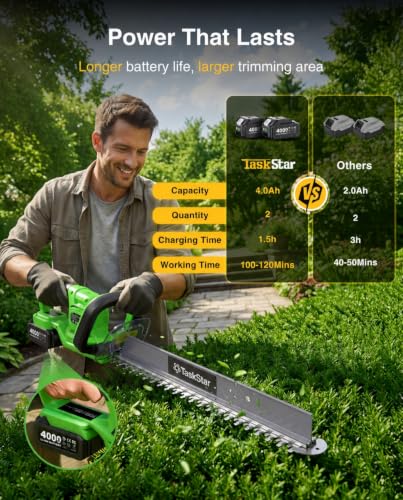
Choose corded if you have outlet access, long continuous trimming, and can manage a properly rated outdoor extension cord; choose cordless if you trim around trees, fences, decorations, or multiple yard zones where a cord becomes a hazard or nuisance. For cordless models, check battery platform compatibility, included battery count, charger type, and whether the runtime covers your whole route with reserve; a second pack matters more than a vague runtime claim. Owners commonly valued cordless convenience and reported enough charge to finish typical home trimming sessions, with especially positive comments when two batteries let them complete larger yard-work sessions without much concern about running out.
Handling Reach
Hedge trimming is tiring because the tool is often held out from the body or above shoulder height. A trimmer that looks powerful on paper can still be a poor choice if it is front-heavy, awkward to angle, or unsafe to control near the end of a reach.
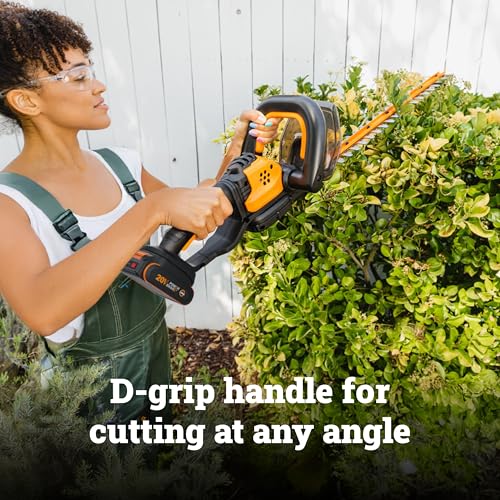
Before buying, picture the hardest positions: shoulder-height sides, hedge tops, corners near fences, and overhead shrubs. Favor a weight and balance you can hold away from your body without wrist strain, and look for a wraparound/front handle, secure two-hand control, rotating handle or head for vertical cuts, and a pole or telescoping option only when you truly need height because pole tools can feel heavier at full extension. Owner sentiment consistently backs this: lightweight and balanced designs were praised for reducing arm fatigue, helping users with back, shoulder, or arthritis concerns, working in tight spaces, and making overhead or longer sessions more manageable; adjustable heads and pole reach were also valued for hedge tops and tall shrubs without awkward body positioning or ladder use.
Job Fit
Hedge trimmers vary from compact detail tools to full-length hedge cutters, and each format has tradeoffs. The right blade length and attachment setup saves time; the wrong one can make tight shrubs awkward or large hedges painfully slow.
Size the tool to the job rather than assuming longer is always better: compact or 17-inch-class tools are easier for small and medium yards, shaping individual shrubs, and working around ornaments, while longer blades help flatten broad hedge faces but are less nimble. If you need grass edging, tree-shoot cleanup, or detail shaping, a shear/hedge attachment system can be useful, but the attachment lock should feel secure and the short blade should not be expected to handle oversized hedge renovation. Owners echoed this job-fit split: smaller lightweight tools were praised for tight areas and detail work, a 17-inch size was described as well suited to small and medium yard cleanup, and straightforward switching between grass shear and hedge-trimmer attachments made quick maintenance easier.
Build Safety
A hedge trimmer’s safety features are not optional extras because the blade is exposed and often used at awkward angles. Strong construction also helps the tool stay aligned, cut cleanly, and tolerate routine contact with dense shrub growth.
Look for a rigid blade bar, well-fitted guards, a reliable lock-off or two-hand trigger, a fast-stopping blade, and a sheath for storage and transport; these matter because hedge trimmers are used near hands, fences, hidden wire, and uneven ground. For corded use, plan for outdoor-rated cords, strain relief, and a GFCI-protected outlet; for any trimmer, wear eye protection, gloves, long sleeves, and inspect hedges for wire, stakes, nests, and debris before cutting. Sentiment support here centers on perceived construction: buyers described sturdy, well-made parts and reliable yard-maintenance performance, and some kits earned praise for including safety glasses, gloves, and useful maintenance extras.
Kit Value
The real cost and convenience of a hedge trimmer depend on what you must buy separately. Batteries, chargers, protective gear, and extensions can change whether a tool is ready for the yard or only part of a usable setup.
Compare the whole kit, not just the trimmer: confirm whether it includes batteries, charger, blade cover, pole extension, gloves or eye protection, and any tools needed for assembly or adjustment. For cordless buyers, an included second battery can be more valuable than a minor spec upgrade, while buyers already invested in a battery system should verify voltage and pack compatibility before choosing a bare tool or full kit. Owner feedback frequently framed strong value around complete, useful packages: buyers praised tools that felt high-quality for the money, cordless kits with two batteries, and bundles with extras such as pole extensions, gloves, safety glasses, and simple tools.
1,000,000+ shoppers use Buyer's Guide every week to find the best products and services online.

Helping millions of users make smarter purchases online.


