








We also considered 10 others:


Our Top Choice
The order above is not editorial opinion, and it is not paid placement. It comes from what shoppers across our network actually do - which pole hedge cutters they compare, and which they ultimately buy. We re-rank as new data comes in, so the long-term favorites have to keep earning their spot against new entrants. The full method, including how we make money.
Pole Hedge Cutters Buyer's Guide
Pole hedge cutters are all about trading ladder work for a longer, heavier tool with a powered blade at the far end. The best choice gives you enough reach and cutting capacity without becoming tiring or unstable overhead. Pay closest attention to usable extension, head-angle control, battery fit, and how the tool handles when fully extended.
Cutting Power
A pole hedge cutter has to cut cleanly at arm’s length, where extra passes are tiring and poor blade control can damage plants. Blade sharpness, tooth spacing, blade length, and motor strength determine whether the tool trims neatly or bogs down in thicker growth. The right cutter should match the branch size and hedge density you maintain most often.
For pole hedge cutters, prioritize a blade system matched to the growth you actually cut: a longer dual-action blade for flat hedge faces, a suitable tooth gap for the stated branch diameter, and enough motor power to avoid stalling in woody stems. Avoid treating a pole hedge cutter like a pole saw; it is best for hedges, shrubs, and small-to-moderate branches within its rated capacity, while thick limbs can jam blades, stress the motor, or leave ragged cuts. Owner feedback strongly supports making cutting ability a top filter: buyers repeatedly praised sharp blades, clean hedge work, effective trimming on tall hedges and high limbs, and strong results on overgrown growth, while also noting that normal shrubbery is where these tools tend to perform best.
Reach Control
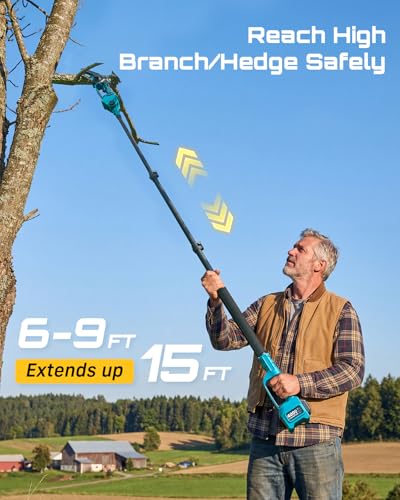
Reach is the reason to buy a pole hedge cutter, but usable reach matters more than maximum advertised length. A long pole must stay rigid enough to guide the blade, and the head angle must let the cutter meet the hedge face squarely. Good adjustability reduces ladder use and helps maintain safer body positioning.
Look for a telescoping pole with secure length locks and an articulating head that offers multiple positive stops, not just a loosely adjustable hinge. The best setup lets you cut hedge tops, vertical faces, and awkward backside growth from the ground while keeping the blade angle controlled; too little articulation forces unsafe wrist angles or ladder use, while a wobbly extension makes cuts less precise. Owners consistently valued adjustable pole length, quick length changes, multiple head angles, and the ability to handle tall hedges or tree tops without awkward positioning or ladder dependence.
Weight Balance
Pole hedge cutters amplify weight because the cutting head sits far from your hands. Poor balance can make the tool tiring, reduce accuracy, and tempt unsafe postures. Comfort over a full trimming session is often more important than how the tool feels for the first minute.
Check the tool’s full operating weight with battery installed, then think about how it will feel when fully extended; leverage makes even a moderately light pole cutter feel much heavier at the blade end. Favor balanced designs with two-hand grips, a usable shoulder strap or harness point, and controls you can hold without over-gripping, especially if you trim long hedge runs or work above shoulder height. Owner sentiment is notably split here: many found these tools lightweight, balanced, and manageable for regular yard maintenance, but weight at full extension and arm fatigue during longer sessions were also clear watch-outs.
Battery Fit
Cordless pole hedge cutters trade cord management for battery planning. Runtime depends on battery capacity, hedge density, blade load, and how continuously you cut. Compatibility with an existing battery platform can simplify ownership, while insufficient runtime can interrupt larger trimming jobs.
Match the battery system before you buy: confirm voltage, amp-hour size, charger type, whether batteries are included, and whether the tool works with batteries you already own. For larger yards, two compatible batteries can matter more than a single high headline runtime because you can rotate packs while one charges; for small hedges, lighter batteries may improve balance. Owners praised easy adoption when a cutter fit an existing battery platform and often liked long runtime or two-battery kits, but some reported mixed runtime expectations or wanted broader battery compatibility.
Build Quality
Pole hedge cutters put vibration and leverage through several moving joints. Durable construction keeps the blade aligned, the pole stable, and the head angle secure during repeated passes. A sturdier tool is also more confidence-inspiring when used overhead.
Inspect the structural details that take the most stress: pole joints, extension locks, head-angle detents, blade guard, handle housing, and battery connection. A pole cutter that flexes excessively, has sloppy pivot locks, or feels loose at the head can become harder to control and may wear quickly under overhead vibration. Owner feedback supports build quality as a meaningful separator, with multiple buyers describing well-built, well-engineered, sturdy, dependable tools that worked as expected for routine yard trimming rather than feeling flimsy.
Kit Value
In this category, value depends heavily on what is included and how ready the tool is for real yard work. Batteries and chargers can change the practical cost of ownership, while poor performance can erase any upfront savings. A good-value pole hedge cutter should be capable enough to reduce effort without requiring immediate upgrades.
Judge value by the complete trimming package, not just the bare tool: included batteries, charger, blade cover, shoulder strap, usable extension range, and whether the performance matches your hedge size. A low-cost kit is only a bargain if it has enough cutting power, runtime, and durability for your yard; otherwise, weak batteries or flimsy reach mechanisms can make overhead trimming slower and less safe. Owners often called capable, battery-included packages a strong value, especially when they handled overhead work well and felt well made for the money.
1,000,000+ shoppers use Buyer's Guide every week to find the best products and services online.

Helping millions of users make smarter purchases online.


