













We also considered 10 others:


Our Top Choice
The order above is not editorial opinion, and it is not paid placement. It comes from what shoppers across our network actually do - which cordless hedge trimmers they compare, and which they ultimately buy. We re-rank as new data comes in, so the long-term favorites have to keep earning their spot against new entrants. The full method, including how we make money.
Cordless Hedge Trimmers Buyer's Guide
Cordless hedge trimmers are a tradeoff between clean cutting power and the low weight that makes touch-ups easy instead of tiring. The sharpest buying concerns are matching the blade and tooth spacing to your actual hedge growth, then making sure the battery and handling suit the size of your yard rather than just the tool’s advertised capability.
Cutting Capacity
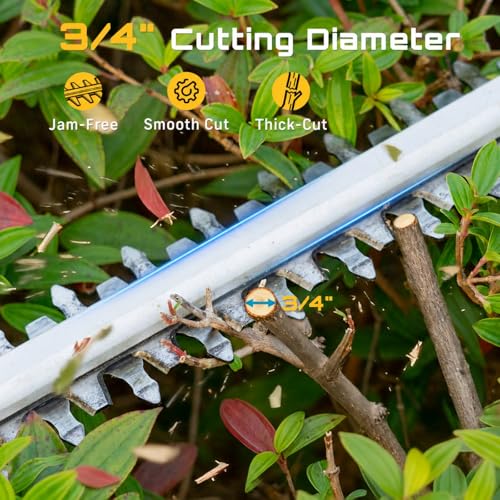
Cutting capacity determines whether the trimmer slices cleanly or stalls, tears, and drains the battery. In this category, blade length, tooth spacing, and motor strength matter more than headline convenience because hedges vary from soft new shoots to woody stems.
Start by matching blade length and tooth gap to the material you actually cut: short detail blades are best for rose deadheading, soft new hedge growth, grass edges, and small shrubs, while longer dual-action blades and wider tooth spacing are better for continuous hedges and thicker woody stems. Avoid expecting a compact cordless trimmer to replace loppers or a full-size gas/electric tool on mature branches; over-thick stems can stall the blade, chew leaves, or force unsafe twisting. Owner reports support this task-matching approach: buyers were happiest when using cordless trimmers for hedges, bushes, vines, thick grass, weeds, small hedge growth, and even some tougher growth when the tool’s cutting ability matched the job.
Battery Runtime
Cordless convenience disappears if the battery quits before the hedge is finished. Runtime depends on battery capacity, blade load, branch thickness, and stop-start use, so shoppers should think in terms of their yard size and trimming density.
Choose runtime around your trimming pattern: a small yard or touch-up routine can work well with a lighter battery, but larger hedges benefit from a spare pack, quick charger, or a battery platform you already own. Look for clear charge indicators and charging times, and avoid tools where the battery is built-in if you need uninterrupted sessions or eventual battery replacement. Owner sentiment backs battery as a real separator: buyers praised models that held a charge for small-to-medium yard jobs, included a second battery, charged quickly, or delivered around a half hour of steady light-duty trimming.
Weight & Control
A cordless hedge trimmer is often used with arms extended, so a small weight difference can become noticeable quickly. Good balance and grip control help keep the blade level, reduce fatigue, and improve the neatness of the cut.
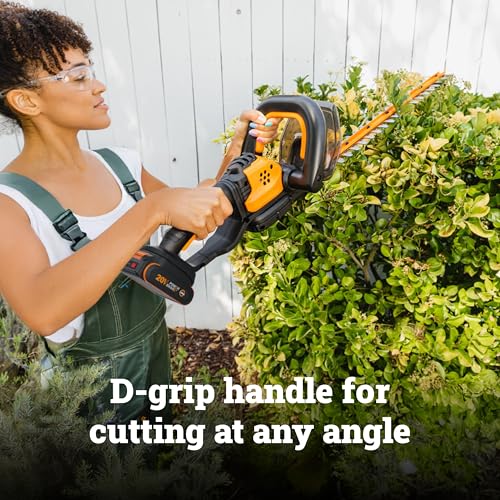
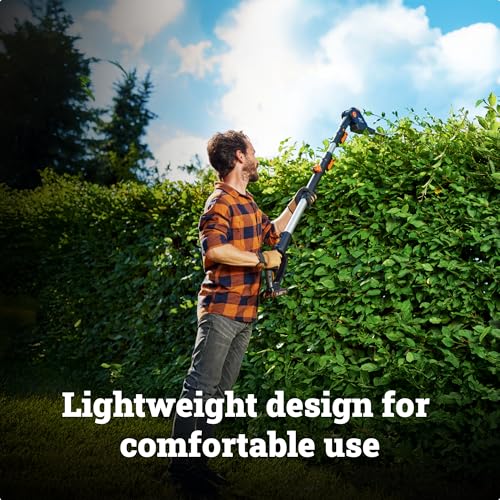
Prioritize low tool weight, balanced battery placement, and a grip you can hold at shoulder height without wrist strain, especially if you trim along borders, stairs, fence lines, or tall hedge faces. For full-size hedge trimming, two-handed control is safer and more stable; for tiny detail work, a compact handheld shape can be easier, but it should still have a secure grip and lockout. Owners repeatedly valued light, handheld designs because they were easy to control, less tiring, less intimidating, and simpler than pulling out a heavier yard tool.
Tight-Space Fit
Blade size is not automatically better when the work is detailed or crowded. A trimmer that fits the space gives cleaner control and reduces the chance of damaging nearby plants, fencing, or edging.
Think about where the blade must fit: narrow planters, fence corners, stair edges, borders, and small ornamental bushes often call for a compact trimmer or shorter blade rather than maximum reach. A long blade can be faster on a flat hedge face, but it becomes awkward around posts, pots, delicate flowers, and uneven landscaping, where accidental nicks are common. Owner feedback strongly favors compact tools for quick touch-ups, small areas, borders, stairs, landscape edges, planters, fences, and small bushes where a larger hedge trimmer would feel like too much tool.
Build & Safety
Hedge trimmers combine exposed cutting teeth with awkward outdoor positions, so safety features and stable construction are not optional extras. Better build quality also helps the blade track straight and keeps the tool feeling predictable as the battery and motor work under load.
Look for a rigid blade bar, secure blade attachment, protective sheath, hand guard, lock-off switch, and a trigger that cannot be bumped on accidentally. For interchangeable grass-shear or shrub-blade designs, check that blade swaps lock firmly with no wobble; loose mechanisms can hurt cut quality and create safety concerns. Owners mentioned good build quality for light-duty sessions and smooth operation, which matters because vibration, flex, and weak blade alignment become more obvious when trimming repeatedly.
Right-Sized Value
Value in this category comes from matching capability to yard size, not simply choosing the smallest or strongest tool. A trimmer that fits the job saves time and effort, while an undersized one can leave you finishing with other tools.
Buy for the work you will do most often: if your main need is quick maintenance on small hedges, shrubs, grass edges, and seasonal cleanup, a compact cordless tool can be a smarter fit than a heavy full-size trimmer. If you have long hedgerows, thick woody growth, or frequent shaping sessions, paying only for a small touch-up tool can be false economy because it may take too long or struggle. Owner sentiment supports this right-sized approach: buyers felt the tools were worth the money when they delivered smooth cutting, useful capability, and enough quality for light-duty yard sessions.
1,000,000+ shoppers use Buyer's Guide every week to find the best products and services online.

Helping millions of users make smarter purchases online.


