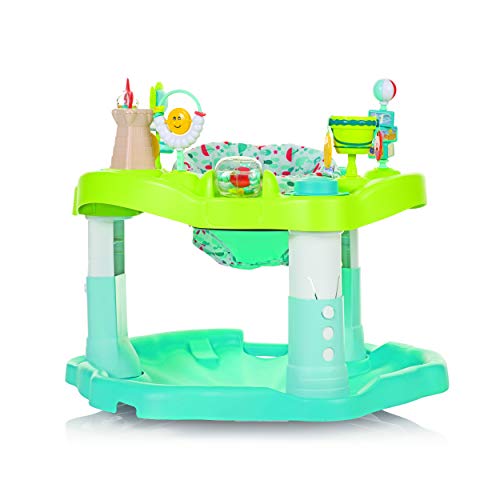
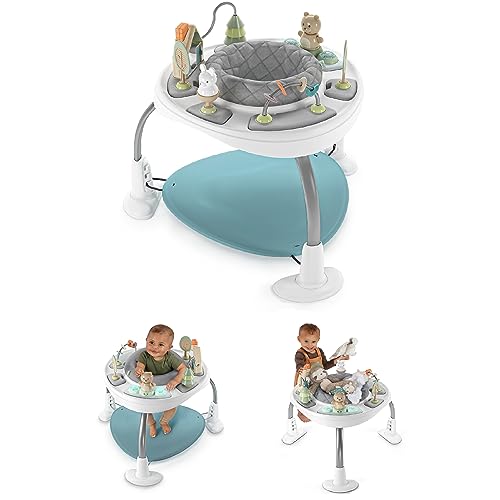
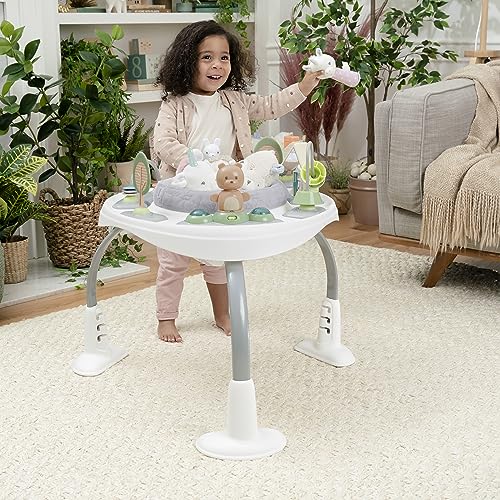
We also considered 10 others:
Our Top Choice
The order above is not editorial opinion, and it is not paid placement. It comes from what shoppers across our network actually do - which exersaucers they compare, and which they ultimately buy. We re-rank as new data comes in, so the long-term favorites have to keep earning their spot against new entrants. The full method, including how we make money.
Exersaucers Buyer's Guide
Exersaucers have to balance two opposing jobs: they should be exciting enough to occupy a baby, but stable and contained enough for bouncing, twisting, standing, and reaching. The sharpest buying concerns are secure locking parts and straps, correct height/foot positioning, and whether the seat and toys actually let the baby explore without constant adult repositioning.
Safety Build
An exersaucer has to contain a baby who may be leaning, bouncing, twisting, and pushing off before they have full balance. Small failures in locks, straps, legs, or seat attachment matter more here than they would on a passive baby seat because the child is actively loading the frame from different angles.
Choose an exersaucer with a wide, rigid base, positive-locking legs, a seat that clicks securely into place, and jumper straps or springs that cannot slip out under repeated bouncing. Check the stated age, weight, and developmental limits, and avoid any model where legs merely friction-fit, straps look thin or exposed, or the platform rocks when pushed from the side. Owner sentiment strongly favors activity centers described as sturdy, well made, stable, and safe-feeling for standing, spinning, and bouncing; the clearest warning is to inspect locking parts and jumper straps because some feedback flags parts that may not stay secured.
Baby Fit
Fit determines whether a baby can use the activity center comfortably and safely through a short but fast-changing stage. The best setup lets the baby’s feet meet the platform appropriately without forcing tiptoe bouncing, slumping, or awkward hip positioning.
Look for multiple height settings, an adjustable or stable foot platform, and enough seat support for a baby who can hold their head up but is not yet independently mobile. The ideal fit keeps the baby upright, lets feet make controlled contact, and leaves room to grow without the tray sitting too high under the arms. Owners specifically appreciate adjustable height settings because babies can grow into the seat and stay properly positioned as they get taller, and grow-with-me formats are repeatedly seen as better value when they extend the useful window.
Engagement
The main reason shoppers buy an exersaucer is to give a baby safe, contained play while caregivers get a short hands-free stretch. Good engagement comes from varied textures, cause-and-effect play, and reachable activities rather than simply adding more noise or clutter.
Prioritize a balanced tray: teethable pieces, spinners, rattles, mirrors, textured toys, and a few cause-and-effect features such as lights or music, ideally with volume control or an off switch. Avoid layouts where most toys sit out of reach until the seat rotates well, or where the sensory load is all electronic with little to grasp, mouth, twist, or bat. Owner feedback consistently says babies stay busy with toys, lights, sounds, music, bouncing, rotating seats, and movement-focused activities, with the best experiences keeping babies engaged for meaningful stretches without feeling overwhelming.
Movement Access
Exersaucers are different from static activity seats because babies use movement to explore the full tray. If the seat rotation is sticky or the bounce is poorly controlled, the baby may either get frustrated or load the frame unevenly.
Test or scrutinize the seat mechanism: it should rotate smoothly under a baby’s own effort, without wobble, grinding, or needing an adult to keep repositioning it. For jump-style models, look for controlled rebound rather than a loose slingy bounce, and make sure springs or straps are protected from pinching fingers. Owners like rotating seats, platforms, standing, spinning, and bouncing because they help babies reach more activities, but sentiment is mixed on rotation smoothness, so this is a key feature to verify rather than assume.
Setup & Clean
A baby activity center is handled daily, exposed to drool and snacks, and often moved between rooms. Easy assembly is not just convenience; it also affects whether locking parts, seats, and toys are installed correctly.
Favor tool-light assembly with clearly labeled legs, audible clicks at lock points, removable toys, a washable fabric seat, and smooth plastic surfaces that can be wiped quickly. Be cautious of designs with many crevices around toy mounts, hard-to-remove seat fabric, or legs that can seem inserted but not fully locked. Owner reports often praise quick, straightforward setup and easy wipe-clean construction, but there is also hit-or-miss feedback around some leg pieces, toys, or seat attachments taking extra effort or not locking securely.
Grows Along
The exersaucer stage can be brief, so longevity matters more than it does for many nursery items. Convertible designs can make the purchase more practical if they remain useful after the baby outgrows contained bouncing or standing play.
If space and budget are tight, look for a design that converts from saucer to play table, cruising support, or toddler activity surface, and check whether the included parts store on the unit or become loose accessories. Also consider footprint and visual design: a calmer-looking activity center with contained toys is easier to leave in a living room than a bulky, visually loud one. Owner sentiment strongly values 4-stage and grow-with-me designs, especially those that become an activity table with chairs, and also notes that simple, bright designs with varied toys can feel appealing without taking over the room.