We also considered 10 others:
Our Top Choice
The order above is not editorial opinion, and it is not paid placement. It comes from what shoppers across our network actually do - which baby activity centers they compare, and which they ultimately buy. We re-rank as new data comes in, so the long-term favorites have to keep earning their spot against new entrants. The full method, including how we make money.
Baby Activity Centers Buyer's Guide
Baby activity centers have to balance two competing jobs: safely supporting a fast-moving baby while offering enough play value to justify their limited developmental window. The sharpest buying concerns are secure locks and straps, stage fit as the baby grows, and whether the toys engage without overwhelming the room or the child.
Secure Support
An activity center is only as good as the way it holds a baby during bouncing, leaning, reaching, and twisting. Secure locks, stable legs, and dependable straps matter because small fit or latch failures can turn normal baby movement into a safety concern.
Prioritize a wide, stable base, positive-click leg locks, enclosed hardware, and jumper straps that cannot slip loose during bouncing. Check that the seat height lets the baby’s feet make safe contact with the floor rather than dangling or standing flat with locked knees, and avoid any unit where legs seem inserted but do not actually lock. Owner feedback strongly supports making this the first filter: sturdy, safe-feeling construction is praised, but the biggest negative watch-for is locking parts or jumper straps that may not stay secured, and some assemblies have leg pieces that fit without locking securely.
Engagement Mix
The best baby activity centers keep a child interested without relying only on noise or flashing lights. A balanced mix of movement, textures, reach-and-grab toys, music, and cause-and-effect play helps the center stay useful across moods and developmental stages.
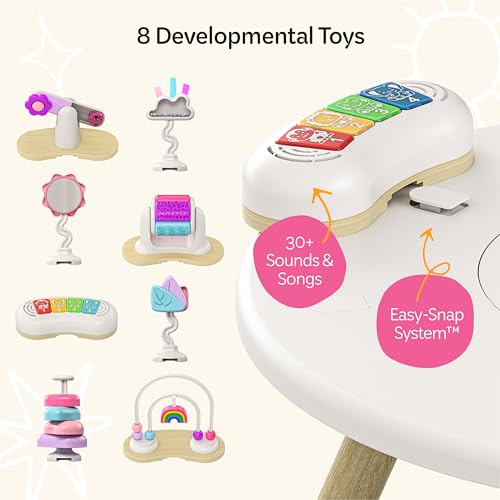
Look for a mix of manual toys, spinners, textured pieces, reach targets, and optional music or lights, not a center where every activity depends on batteries or loud electronics. For this category, the sweet spot is engaging but not chaotic: toys should be reachable from the seat, varied enough to support curiosity, and simple enough that the baby can trigger effects independently. Owner sentiment backs this up: activity centers with movement-focused, curiosity-building features are praised for keeping babies engaged for meaningful stretches without feeling overwhelming, and toys, music, lights, and activities are repeatedly credited with keeping babies busy.
Growth Range
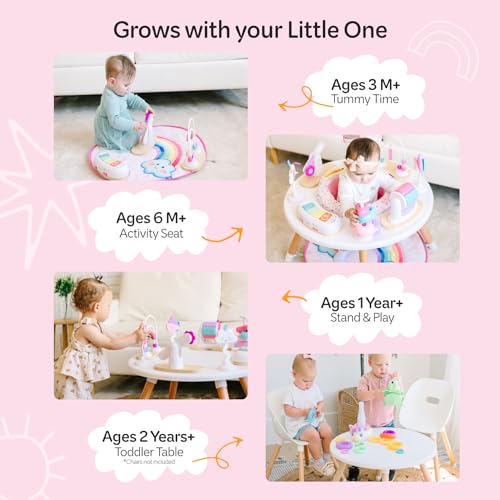
Baby activity centers can have a short usable window if they only work for one posture or stage. Convertible formats, height adjustment, and table-style reuse can make the product more practical as the baby grows.
Choose a center with clearly defined stages, multiple height settings, and a conversion path that still feels sturdy after the saucer or jumper phase. Check the age, weight, and developmental limits for each mode, and make sure the later-stage table or chair setup is genuinely usable rather than just a token conversion requiring easy-to-lose parts. Owners specifically value 4-stage convertible designs because they grow with the baby, and the grow-with-me format is viewed as stronger value when it continues beyond the saucer stage as an activity table with chairs.
Daily Durability
Babies pull, bounce, drool, lean, and repeatedly test every connection point. Durable materials and well-secured toy mounts help the activity center feel dependable during daily use rather than flimsy after a few sessions.
Inspect for a rigid frame, smooth molded edges, secure toy attachments, resilient seat fabric, and connectors that do not flex when the baby bounces or leans. A good center should tolerate repeated use, wiping, and tugging without wobbling, loosening, or developing sharp-feeling gaps around plastic joints. Owner feedback consistently praises well-made, sturdy-feeling builds, and notes that a nicely made activity center feels worthwhile when all parts arrive and function correctly.
Setup Fit
Even a well-designed activity center can become frustrating if setup is unclear or parts do not align securely. Assembly quality matters because it affects both convenience and confidence in the finished structure.
Before buying, look for clearly labeled parts, simple leg installation, visible lock indicators, and a footprint that fits your play area without blocking traffic. After assembly, push and lift gently at each leg and connection point; if a piece slides in but the lock will not engage, treat that as a failure rather than an inconvenience. Owners often appreciate quick, low-hassle assembly, but feedback is mixed because some units are hit or miss, especially when leg pieces fit yet will not lock securely; simpler, room-friendly designs are also viewed more positively.