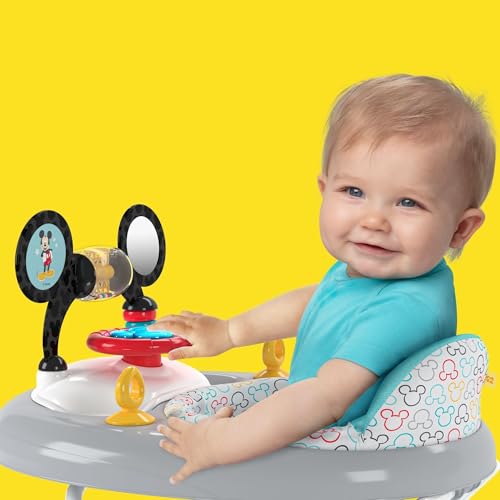
We also considered 10 others:
Our Top Choice
The order above is not editorial opinion, and it is not paid placement. It comes from what shoppers across our network actually do - which baby walkers they compare, and which they ultimately buy. We re-rank as new data comes in, so the long-term favorites have to keep earning their spot against new entrants. The full method, including how we make money.
Baby Walkers Buyer's Guide
Baby walkers live in a tricky middle ground: they need to entertain and support a baby who wants to move, while also limiting the speed, tipping, and access hazards that movement creates. The best pick is not just the cutest or busiest one; it is the one that fits your baby’s height, rolls appropriately on your floors, stays stable during reaching and bouncing, and cleans up easily after snacks and drool.
Stable Safety
A baby walker changes what a baby can reach and how quickly they can get there, so stability and controlled movement matter more than looks. A solid base and dependable frame help reduce wobbling, tipping, and sudden shifts when a baby pushes, bounces, or leans.
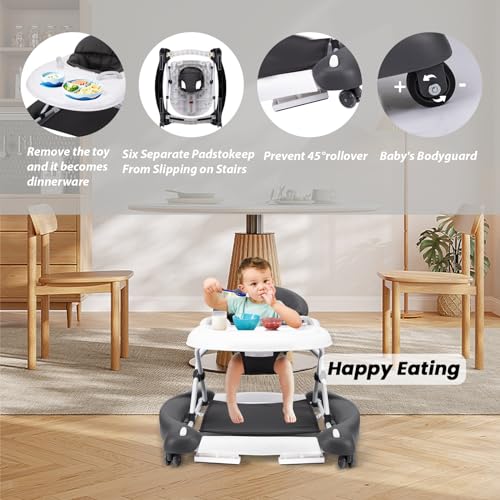
Prioritize a wide, low, sturdy base that is wider than the seat area, resists tipping when a baby leans to one side, and has bumpers or friction features that slow it at edges and thresholds. Avoid narrow, top-heavy frames, lightweight bases that flex, and any walker that can move freely near stairs, raised landings, cords, pet bowls, hot surfaces, or furniture a baby can now reach. Owner feedback strongly favors walkers that feel well-made, supportive, and safe once assembled, with sturdy bases and stable construction repeatedly called out; the caution is that experiences with movement, stability, and folding convenience can still vary, so the frame should be checked on your own floor before regular use.
Fit & Roll
A walker that is too tall, too low, or poorly matched to the floor can make movement awkward instead of supportive. Fit and rolling behavior determine whether a baby can explore comfortably without excessive leaning, dragging, or uncontrolled speed.
Look for multiple height settings that let your baby sit upright with knees slightly bent and feet making controlled contact with the floor, not dangling or forced onto tiptoes. Check the wheel design against your actual flooring: some walkers glide easily on hard floors but struggle on carpet, while very free-rolling wheels can move faster than expected. Owner sentiment supports this as a key separator: many families like smooth, supportive movement and easy height adjustment as babies grow, but others report mixed results with fit, gliding, or maneuverability.
Seat Support
The seat is where the baby’s weight is carried, so comfort is also a fit and support issue. A good seat should hold the baby upright without sagging, pinching, or becoming difficult to keep sanitary.
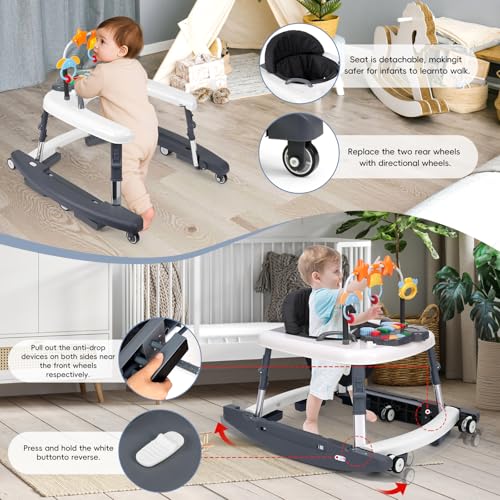
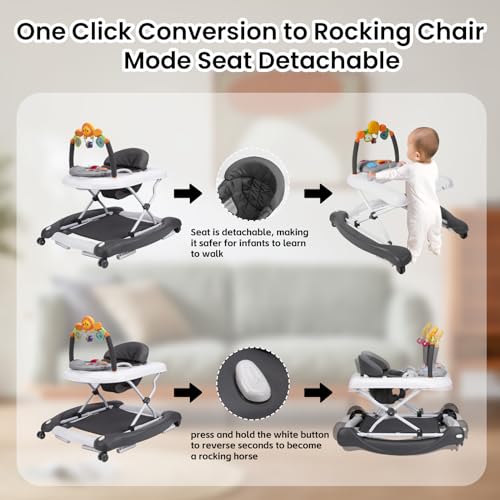
Choose a supportive seat with firm back support, smooth leg openings, secure stitching, and enough padding to prevent rubbing during short play sessions. A removable, washable seat pad is especially useful because walkers quickly collect crumbs, spit-up, and diaper-area messes; avoid seats that are hard to detach or have deep fabric seams that trap grime. Owners repeatedly praise comfortable, supportive seats and well-made construction, and height adjustment is also appreciated because it helps the seat stay useful as babies grow.
Play Modes
A walker often doubles as an activity station, so the play surface affects how long it remains useful during the day. Versatile toys and trays make the product easier to use for play, feeding, and short supervised moments without needing separate gear.
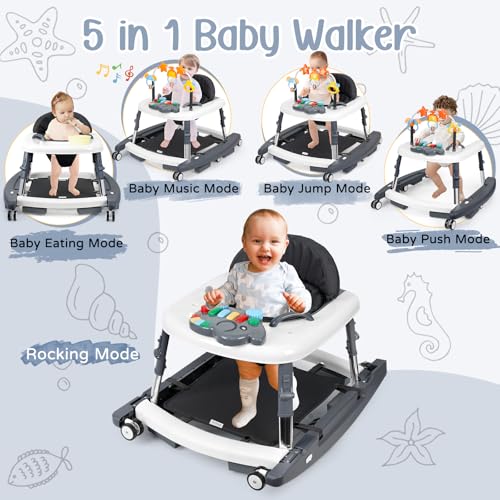
For this category, the best activity setup is removable or repositionable: toys should keep a baby engaged, but the tray should also clear for feeding, snacks, or quieter play. Look for toys that are firmly attached, have no small removable pieces, and do not block the baby’s view or arm movement; music and lights are useful only if the controls are easy for an adult to manage. Owner reports consistently value walkers that keep babies engaged, with toys, music, tray use, bright styling, and multi-function modes all contributing to satisfaction.
Clean Storage
Baby walkers are bulky for a product used during a limited stage, so storage and cleanup can decide whether it gets used or becomes clutter. Easy-folding frames and removable washable parts make the walker more realistic for everyday feeding, play, and messes.
If space is tight, look for a walker that folds flat without requiring awkward force, has removable toys or trays, and can be wiped down around the wheels, frame joints, and tray rim. Folding mechanisms should lock securely open and closed; avoid designs where the fold system feels vague, because owner feedback notes that folding convenience can be less satisfying for some families. Buyers like foldable designs, removable features, easy cleaning, and straightforward setup, which suggests daily practicality matters almost as much as the initial feature list.
Setup Value
Assembly quality affects safety because a walker depends on locked joints, secure wheels, and a properly attached seat. Value in this category comes from dependable everyday use, not from features that add clutter without improving support, cleaning, or supervised play.
Favor a walker that assembles with clear locking points, minimal loose hardware, and parts that audibly or visibly click into place; after setup, push down on the seat, tray, and base to check for flex or wobble. Do not treat a higher feature count as automatically better—pay for sturdiness, fit range, washable parts, and safe-feeling construction before extra lights or decorative details. Owner sentiment is strong here: setup is repeatedly described as quick and straightforward, and many families feel a well-built walker with useful modes, sturdy construction, and easy cleaning can be worth the money without needing to be overly expensive.