









We also considered 10 others:


Our Top Choice
Compare Features


The order above is not editorial opinion, and it is not paid placement. It comes from what shoppers across our network actually do - which desktop speakers they compare, and which they ultimately buy. We re-rank as new data comes in, so the long-term favorites have to keep earning their spot against new entrants. The full method, including how we make money.
Desktop Speakers Buyer's Guide
Desktop speakers are a near-field purchase: they sit close to your ears, monitors, keyboard, mic, and power cables, so clarity, hiss control, footprint, and connection type matter more than raw loudness. The sharp tradeoff is compact convenience versus real stereo separation and bass, especially if you use the same setup for calls, music, games, and videos.
Sound
You’ll want speakers that sound clear and balanced at the volumes you actually use, whether you’re listening quietly or filling a room. Pay attention to bass that feels full without muddying voices or instruments, and watch for distortion, hiss, rattling, or harshness as the volume rises.
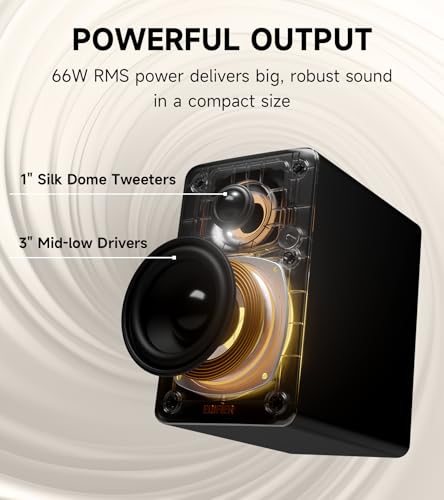
For desktop use, prioritize clean near-field sound at low to moderate volume: voices should stay intelligible, treble should not become sharp at arm’s length, and the speakers should not hiss audibly when idle. If you game or watch video, check stereo separation and latency; if you want stronger bass, make sure you have room for a subwoofer and can control its level so it does not boom under the desk. Owner feedback supports that many compact desktop sets sound clearer and fuller than expected, with some earning praise for crisp audio, stronger-than-expected bass, and enough volume for music, videos, calls, gaming, and movies; speakerphone-style options are especially valued for clearer meetings and improved laptop-call audio.
Build
Build quality matters because speakers are often moved, played loudly, and expected to last for years without rattles, loose connections, or worn controls. Look for solid cabinets, secure grilles, stable feet or mounting points, and connectors that feel firm, and be wary of flimsy plastic, buzzing panels, or controls that feel loose out of the box.
Look for cabinets and controls that can survive daily desk abuse: stable bases that will not tip when bumped, grilles or drivers protected from accidental knocks, a volume knob that does not feel loose, and cables with enough strain relief to handle monitor arms, sit-stand desks, or laptop docking. For USB-powered models, weak build often shows up as rattling at higher volume, loose ports, or buzzing from poor shielding, so check for these failure modes early. Owner sentiment generally frames this category as a practical everyday upgrade, with buyers often finding compact, tidy speakers good enough for regular use and some small conference or phone-stand designs feeling sturdy and reliable for routine calls.
Ease
Speakers that are easy to set up and use are more likely to fit smoothly into your daily routine, whether you’re pairing a device, adjusting volume, switching inputs, or using a remote or app. Look for clear controls, straightforward connectivity, reliable remote operation, and useful functions you’ll actually use; watch out for confusing menus, limited controls on the speaker itself, or features that depend too heavily on a finicky app.
Choose a setup that matches how your desk actually works: a single USB cable is easiest only if it carries both power and audio; some “USB” speakers still need a separate 3.5 mm audio plug. Check cable length between left and right speakers, whether controls are front-facing, whether the speakers remember volume/input after sleep, and whether they pop or reconnect awkwardly when the computer wakes. Owners frequently describe desktop speakers in this niche as plug-and-play, with simple controls, quick USB or USB-C setup, easy Bluetooth pairing, and compact footprints that work well on desks, small rooms, and even some TV-style arrangements.
Value
You want a speaker that feels worth what you paid, not just one with impressive specs or flashy features. Look for the best balance of sound quality, build, connectivity, battery life if portable, and useful extras for how you actually listen. Watch out for paying more for features you will not use or for a low price that comes with weak sound, poor durability, or frustrating controls.
The best value is not just louder sound for less money; it is avoiding upgrades you will soon replace because of hiss, poor dialogue clarity, flimsy knobs, short cables, or missing inputs for your PC, monitor, dock, phone, or console. Spend attention on the features that solve your specific desk problem: a real volume control, headphone or AUX access, Bluetooth only if you need it, USB-C if your laptop dock demands it, and a subwoofer only if you can place it properly. Owner sentiment strongly supports the idea that many desktop speakers feel like worthwhile, simple upgrades over built-in monitor or laptop audio, with buyers often impressed by the performance, compactness, and everyday usefulness relative to what they expected.
Connectivity
Reliable connectivity matters because even great speakers are frustrating if they drop out, lag, or make pairing a hassle. Look for easy Bluetooth pairing, stable wireless range for your space, and support for the connection types you actually use, while watching for complaints about intermittent dropouts or trouble reconnecting to familiar devices.
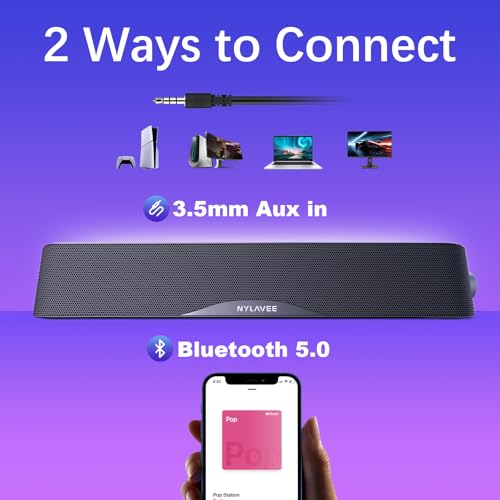
Verify exactly what each connection does before buying: USB-A or USB-C may be power-only, digital audio, or both; AUX depends on your computer or monitor’s analog output quality; Bluetooth is convenient but can add latency for games and video calls. If you use a dock, KVM, monitor audio-out, work laptop, or phone, check input switching, pairing behavior, cable length, and whether the speakers create ground-loop hum when powered from the same USB hub as the PC. Owner feedback is positive around simple USB, USB-C, Bluetooth, and AUX setups, with many buyers liking plug-and-play operation, smooth pairing, multiple input options, and the ability to move between wired and wireless use without much friction.
Design
A speaker often sits in plain view, so its appearance matters as much as where you plan to place it. Look for a shape, finish, and size that fit your room and furniture, and watch out for designs that block controls, show dust easily, or feel awkward on shelves, counters, or stands.
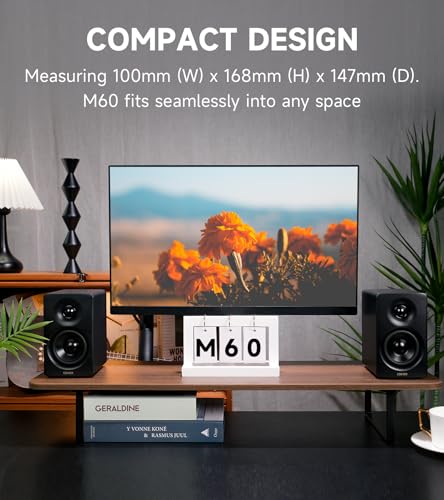
Design matters because desktop speakers compete with monitor stands, keyboards, webcams, microphones, and mouse space: measure height under the monitor, width beside the screen, rear cable clearance, and whether angled drivers aim toward your ears instead of your chest. RGB lighting should be dimmable or switchable if the speakers will be used for work calls, shared rooms, or movie watching in the dark; soundbar-style units save width but may reduce stereo separation compared with two spaced speakers. Owners often praise slim, clean-looking desktop designs that fit neatly under or beside monitors, with RGB lighting liked when it matches a gaming setup but especially appreciated when it can be turned off for a cleaner look.
1,000,000+ shoppers use Buyer's Guide every week to find the best products and services online.

Helping millions of users make smarter purchases online.


