


- Type: Countertop
- Filtration Process: 7-stage with reverse osmosis
- Filter Lifespan: 265 gallons
- Flow Rate: Not indicated
- Dimensions: 6.7" wide x 14.1" deep x 13.4" tall





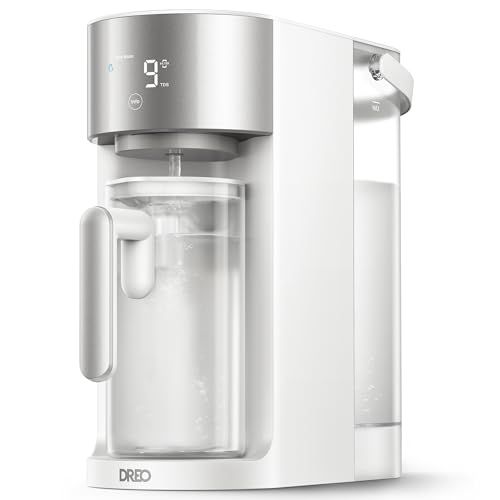
DREO Reverse Osmosis Water Filter
Overview and Performance

The DREO Reverse Osmosis Water Filter aims to bring the kind of multi-stage purification typically associated with under-sink installations into a more approachable, day-to-day format. Reverse osmosis filtration is widely valued because it can reduce a broad range of contaminants, including many dissolved solids that simpler carbon-only systems may not address. In practical use, a DREO RO system is most appealing to people who care about both taste improvement and more comprehensive reduction of unwanted substances, especially in areas where municipal water has noticeable odor, a “hard” mineral profile, or occasional advisories that make you question what is coming out of the tap.
What stands out most about an RO-based unit is the way it changes the character of your water. Many users report that tea and coffee taste cleaner, ice cubes freeze clearer, and the “chlorine edge” that can linger in tap water fades substantially. That said, the real value is not only taste but consistency. When a system is designed well, it should deliver a reliably neutral flavor day after day, rather than the up-and-down experience some pitcher filters can create as they approach the end of their life. A good DREO RO setup should also be relatively straightforward to live with: you want simple filter changes, clear indicators for maintenance, and a flow rate that does not turn filling a bottle into a chore.
As with any reverse osmosis product, the best results depend on using the system as intended, replacing filters on schedule, and paying attention to performance signals like reduced flow or changes in taste. If your household drinks a lot of water, the perceived convenience of the DREO system will be shaped by its output capacity and how often you need to refill a reservoir or wait for filtration. For light to moderate use, RO can feel like a big upgrade in quality. For heavy use, capacity and speed become decisive because even excellent filtration can feel frustrating if it cannot keep up with demand.
Factors to Consider Before Buying
Before purchasing the DREO Reverse Osmosis Water Filter, the first thing to consider is what problem you are solving. If your primary issue is chlorine taste and smell, a carbon filter might be enough. If you are more concerned about total dissolved solids, heavy metals, nitrates, or general water variability, RO is the more serious option. This matters because reverse osmosis systems cost more upfront and require ongoing filter replacements, so it is worth matching the tool to your actual needs rather than buying the most advanced system by default.
Capacity and daily throughput are crucial. Think about how many people will use the filter, how often you fill large bottles, and whether you cook with filtered water. In a single-person apartment, almost any RO system that is reasonably designed can feel adequate. In a family setting, the system’s ability to produce enough water in a day and deliver it at a comfortable pace becomes one of the most important purchase factors. If you frequently host guests, make baby formula, or like to keep multiple bottles chilled, you will feel the difference between an RO unit that keeps up and one that lags.
Filter replacement cost and availability are also central, and they are among the most important long-term considerations. Many buyers focus on the initial price and overlook that RO systems typically involve multiple stages and a membrane that must be replaced periodically. You should check how often each stage needs replacement under typical conditions, whether the replacements are easy to source, and whether they are proprietary. Even a well-performing system can become a poor value if consumables are expensive or hard to find. On the other hand, predictable, reasonably priced replacements can make a more premium purchase feel justified over time.
Installation and footprint matter more than you might expect. Some RO systems are under-sink and require plumbing changes, while others are countertop style with simplified setup. Your available space, tolerance for installation work, and willingness to keep a unit visible should guide your decision. If you rent, or if you dislike the idea of modifying plumbing, a countertop approach can be the most important feature because it removes the biggest barrier to adoption. If you own your home and want an always-ready supply without refilling, an under-sink approach might be preferable, assuming the DREO model you are considering supports it.
Water waste ratio is another consideration specific to reverse osmosis. Many RO systems produce wastewater as part of the purification process. If you are environmentally conscious or live somewhere with high water costs, it is worth understanding how efficient the system is and whether it has features that reduce waste. While taste and safety often come first, efficiency can become a deciding factor when choosing between similar systems.
Your local water quality should shape what you prioritize. If your water is very hard, pre-filtration and membrane longevity become more important because scale can shorten service life. If your water supply is chlorinated, a strong carbon stage helps protect the RO membrane. If you use well water, you may need additional treatment for sediment, iron, or microbial concerns depending on your test results. The most important step here is getting a basic water report from your municipality or using a certified lab test if you rely on a private well. That information tells you whether RO is necessary and which performance claims actually matter for your household.
Finally, usability features can make or break your satisfaction. Maintenance reminders, clear filter change design, leak protection, and noise level all influence everyday experience. These details are not as glamorous as filtration claims, but they are often the difference between a system you love and one you tolerate. After safety and performance, the most important “quality of life” factor tends to be how painless it is to keep the system running, because even the best filtration is only useful if you consistently maintain it.
Common Questions
Does reverse osmosis remove helpful minerals, and is that a problem? Reverse osmosis can reduce minerals like calcium and magnesium along with contaminants. For most people eating a normal diet, this is not a health issue because minerals primarily come from food rather than water. If you prefer mineral taste, you may want a system with remineralization or you can add minerals back through your diet and beverages.
How often do I need to replace filters? Replacement schedules vary by model and by water conditions. Pre-filters typically need more frequent changes than the RO membrane, and heavy usage or poor source water can shorten intervals. The practical approach is to follow the manufacturer’s guidance and also pay attention to flow rate and taste, since those often signal when service is due.
Will the DREO RO filter reduce fluoride, lead, or nitrates? Reverse osmosis is commonly used to reduce a wide range of dissolved substances, and many RO systems are effective for contaminants like lead and nitrates when properly designed and maintained. However, performance depends on the exact model, certifications, and filter condition. The most reliable way to confirm is to check the product’s third-party testing and certifications for the specific contaminants you care about.
Is RO water safe to drink every day? For most households, RO water is safe for daily use and is often chosen specifically for improved contaminant reduction. The key is maintenance. An RO system that is not maintained as recommended can perform poorly, so regular filter changes and proper cleaning routines are essential.
Will it be slow to fill a bottle? RO filtration can be slower than simple carbon filtration, especially if the system’s production rate is modest or the membrane is nearing the end of its life. If quick fills matter to you, prioritize systems with adequate output and consider your household’s peak demand times, such as mornings and after workouts.
Overall, the DREO Reverse Osmosis Water Filter is best judged on whether it fits your household’s demand, your willingness to keep up with filter changes, and your specific water quality concerns. If you value a noticeable upgrade in taste and want broader contaminant reduction than basic filters typically provide, an RO system like this can be a worthwhile investment. The smartest purchase is the one that balances proven performance with affordable, accessible maintenance and a form factor that matches how you actually live.