







We also considered 10 others:


Our Top Choice
Compare Features


The order above is not editorial opinion, and it is not paid placement. It comes from what shoppers across our network actually do - which countertop reverse osmosis systems they compare, and which they ultimately buy. We re-rank as new data comes in, so the long-term favorites have to keep earning their spot against new entrants. The full method, including how we make money.
Countertop Reverse Osmosis Systems Buyer's Guide
Countertop reverse osmosis systems trade plumbing-free convenience for hands-on water management: you gain serious filtration without an under-sink install, but you must live with refill tanks, reject water, filter maintenance, and limited batch capacity. The sharpest buying concerns are verified contaminant reduction for your actual source water and whether the unit’s reservoir workflow fits your daily drinking, cooking, and appliance needs.
Purity
Purity matters because it determines how much a filtration system can improve the water you drink, cook with, and use every day, including taste, odor, clarity, and the “softness” feel that affects skin, hair, fixtures, and appliances. Look for systems that target the specific issues in your water, such as sediment, chlorine, metals, chemicals, microbes, or hardness minerals, and be wary of vague filtration claims that do not clearly state what contaminants are reduced or how often filters need replacement.
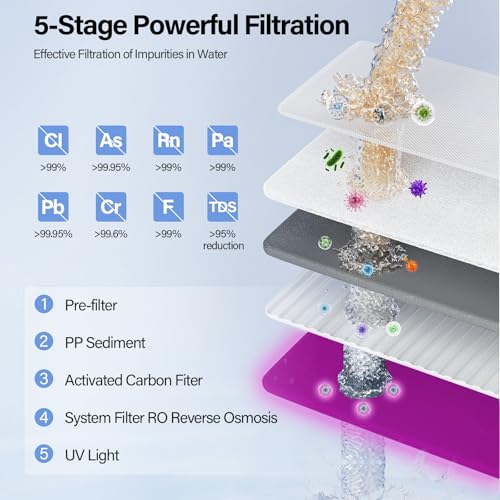
Prioritize verified contaminant reduction over vague “pure water” claims: look for NSF/ANSI 58 certification or clearly documented third-party testing for the contaminants you care about, plus stated limits for feed-water TDS, hardness, iron, and well-water use. If you use untreated well water, confirm whether the unit has UV or another disinfection step, because RO membranes are not a substitute for making microbiologically unsafe water safe; also check how the clean-water tank and spout are protected from recontamination. Owner feedback supports this priority: buyers most often praise countertop RO systems for noticeably cleaner water, lower TDS readings, reduced odors, and reliable filtration results, especially when replacing chlorinated tap water, hard water, well water, or bottled water.
Taste
If your filtered water still tastes or smells off, you’re less likely to drink it or use it for coffee, tea, ice, and cooking. Look for a system designed to reduce common taste and odor issues such as chlorine, sulfur-like smells, or earthy notes, and check that its filter type matches the source of your problem. Watch for systems that improve taste without addressing broader contaminants if you also need filtration for health-related concerns.
For taste, decide whether you want very low-mineral RO water or a remineralized output, because countertop RO can taste “flat” to some drinkers and can change coffee or tea extraction. If chlorine smell, sulfur-like well-water odors, or hard-water taste are your main complaints, look for activated-carbon pre/post filters in addition to the RO membrane, and check whether replacement filters include the same taste-polishing stages. Owner sentiment strongly backs taste as a major strength: shoppers frequently describe the water as crisp, clean, refreshing, and a major upgrade over tap water, with particular praise from households dealing with chlorine, hard water, well water, coffee, tea, and everyday drinking.
Build
Build quality matters because a water filtration system sits under pressure and often near cabinets, floors, or appliances where leaks can cause damage. Look for sturdy housings, secure fittings, well-made valves, and clear installation hardware; watch out for flimsy plastic threads, vague connector specs, or owner reports of leakage, cracking, or difficult seal-ups.
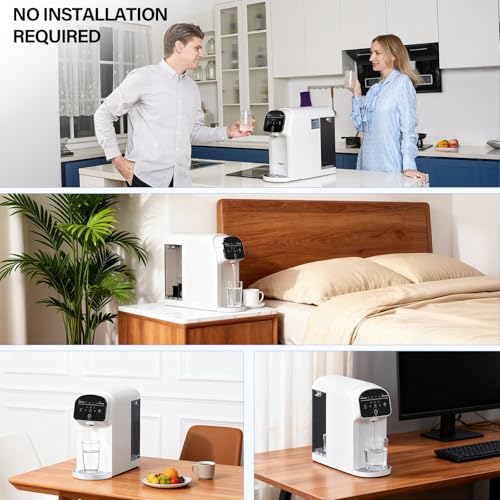
Evaluate the physical design around water handling, not just appearance: countertop RO units need leak-resistant reservoirs, easy-to-clean tanks, sturdy pitcher docking, reliable seals, and materials that tolerate daily filling, dumping wastewater, and lifting full containers. Measure cabinet clearance and counter depth, check whether the unit vents heat, and avoid designs with awkward rear tanks or fragile latches if it will be used by multiple household members. Owners generally report straightforward setup and dependable construction, with many appreciating countertop operation that avoids plumbing changes, steady daily output, and helpful support when a malfunction or replacement issue occurs.
Usability
You’ll live with a water filtration system every day, so ease of use can matter as much as filtration performance. Look for straightforward controls, clear filter-life indicators, simple installation or refilling steps, and filter changes you can do without special tools or mess. Watch out for systems with awkward access points, frequent maintenance, or hard-to-find replacement filters, since those hassles can make you less likely to keep the system working properly.
Choose a workflow you will actually maintain: some countertop RO systems require filling a raw-water tank, emptying a reject-water tank, priming filters, running flush cycles, and periodically cleaning reservoirs. Look for clear filter-life indicators, simple tank removal, automatic shutoff, guided setup, and controls that prevent dispensing stale or partially processed water; if you want hot water, confirm child locks, temperature settings, and descaling requirements. Owner feedback aligns with this: buyers like plug-in, no-plumbing operation, push-button use, clear manuals or guided interfaces, automatic filling/stopping pitcher designs, and convenient instant hot water where included.
Performance
You want a filtration system that consistently improves your water quality without slowing to a trickle, leaking, clogging too often, or requiring constant attention. Look for clear performance certifications or test data tied to the contaminants you care about, and make sure the system’s flow rate and capacity match your household’s daily use. Be wary of vague claims that it “purifies” water without specifying what it removes and under what conditions.
Match output rate and reservoir capacity to your household’s peak demand, not just the advertised filtration rating: check how many cups it can dispense before refilling, how long a full purification cycle takes, the wastewater ratio, and whether it can keep up with cooking, pets, humidifiers, ice, coffee, or a family’s daily bottles. Built-in TDS displays are useful for trend monitoring, but they do not prove removal of every contaminant, so use them as a maintenance cue rather than a full water-quality test. Owners commonly report dependable day-to-day performance, quick filling, consistent TDS readings, autofill sensors, polished pitcher designs, no obvious leaking in use, and practical countertop or tankless layouts that simplify filter changes and avoid plumbing clutter.
Value
A water filtration system’s value for money depends on more than the upfront cost; you should also factor in filter lifespan, replacement cartridge prices, maintenance needs, and any installation costs. Look for a system that matches your household’s water use and filtration needs without locking you into expensive or hard-to-find replacements. Be wary of low-priced systems that require frequent filter changes or don’t clearly state ongoing costs.
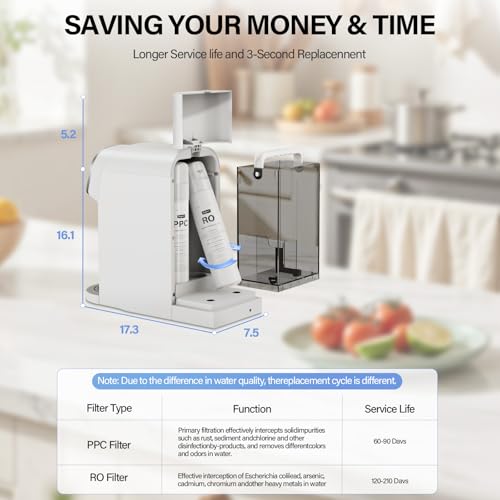
Judge value by total cost and hassle avoided: include replacement filter sets, membrane life, UV lamp or mineral cartridge costs if applicable, wastewater volume, electricity use, and the time spent refilling and cleaning tanks. A countertop RO is usually most worthwhile when you cannot or do not want to install under-sink plumbing, when bottled-water trips are frequent, or when distilled-water purchases for appliances can be replaced safely with RO water; avoid overpaying for extras like chilling or hot water unless you will use them daily. Owner sentiment supports the value case, with many buyers seeing these systems as worthwhile for reducing bottled or distilled water purchases, refill trips, and installation complexity while still getting strong home filtration and convenient countertop use.
1,000,000+ shoppers use Buyer's Guide every week to find the best products and services online.

Helping millions of users make smarter purchases online.


