





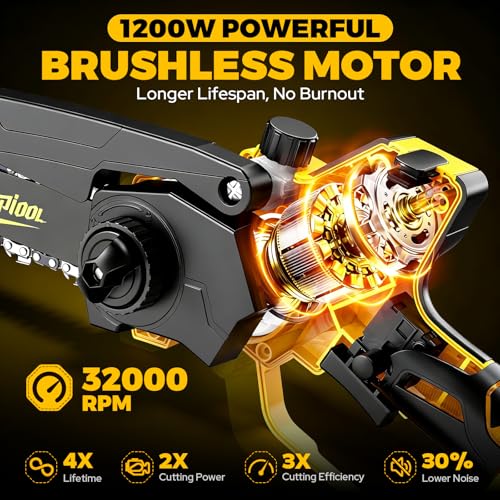





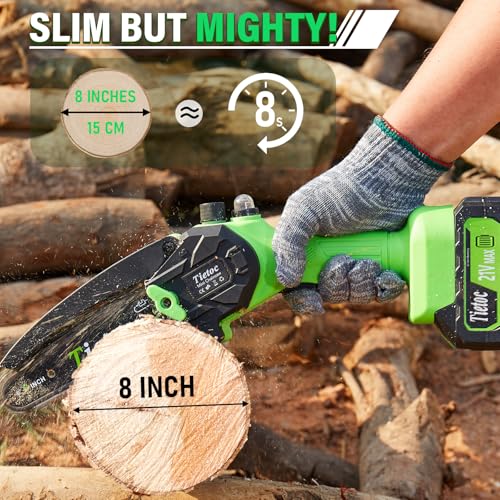


We also considered 10 others:


Our Top Choice
The order above is not editorial opinion, and it is not paid placement. It comes from what shoppers across our network actually do - which cordless mini chainsaws they compare, and which they ultimately buy. We re-rank as new data comes in, so the long-term favorites have to keep earning their spot against new entrants. The full method, including how we make money.
Cordless Mini Chainsaws Buyer's Guide
Cordless mini chainsaws are best when they split the gap between loppers and a full-size chainsaw: fast enough for pruning and storm cleanup, but small enough to control around shrubs, fences, and overhead branches. The key tradeoff is convenience versus limits—bar length, battery stamina, chain maintenance, and safe handling matter more here than raw “chainsaw” claims.
Kit Value
Chainsaw value is not just the saw body; it includes the battery system, charger, chain, bar, tools, oiling setup, and parts path. A cheaper kit can cost more in frustration if it lacks the accessories needed to keep cutting.
Look for a kit that matches the actual pruning workflow: a 4–6 inch bar for branches, at least one spare chain, chain cover/scabbard, tensioning tool or tool-free adjuster, gloves/eye protection if included, and preferably two batteries if you will do more than a few cuts. Avoid paying for a “chainsaw replacement” promise if the kit is really aimed at shrub pruning, storm-twig cleanup, and limbs in the small-yard range. Owner feedback supports this use case: buyers consistently value these saws as compact helpers for shrubs, small trees, bushes, and branches around 2–4 inches, with some reporting useful performance on larger limbs when used within reason.
Cut Capacity
A chainsaw that is too small stalls, overheats, or forces unsafe technique, while an oversized saw is harder to control for routine pruning. Bar length, chain sharpness, motor torque, and intended duty cycle should match whether you are trimming brush, limbing, cutting firewood, or sectioning small trees.
Choose bar length and motor size around the branch diameter you cut most, not the biggest number in the listing: a 6-inch mini saw is best for repeated 1–4 inch limbs, can often manage occasional thicker cuts with patience, and should not be treated like a full-size saw for large logs or heavy felling. Check that the usable cut depth is close to the bar length, that replacement chains are standard enough to source, and that the chain speed is adequate for green wood rather than only dry twigs. Owner reports line up with this: shoppers praise fast, smooth cutting on branches, bushes, small trees, overgrown yard growth, and in some cases storm cleanup or limbs up to roughly 7 inches, but the strongest satisfaction appears when the tool is kept in the pruning and small-limb range.
Maintenance
Chainsaws need routine attention even when they are electric or compact. Chain tension, lubrication, bar wear, and replacement parts affect cutting speed, motor strain, and long-term usability.
Prioritize chain-care features because mini chainsaws fail quickly when run dry, loose, or dull: look for easy chain tension adjustment, accessible bar nuts or a reliable tool-free mechanism, clear instructions for chain direction, spare chains, and either an automatic oiler or a simple manual oiling routine you will actually follow. Avoid kits that hide the tensioner, provide no replacement-chain specs, or imply the saw is maintenance-free; these small motors depend on a sharp, correctly tensioned chain to avoid stalling and overheating. Owner sentiment shows buyers like models that are simple to set up and easy to get working right away, with fast smooth cuts through 4-inch branches and small trunks, but that ease is most useful when the saw also makes basic chain upkeep straightforward.
Handling Fit
A chainsaw’s usable power depends on whether you can hold it securely at the cut. Weight, balance, grip spacing, and reach determine fatigue and accuracy, especially when trimming branches, working in shrubs, or switching between cuts.
Fit the saw to your grip strength, reach, and cutting position: for one-handed pruning, check weight with the battery installed, handle diameter, trigger-lock placement, front hand guard, and whether the balance pulls the nose down during overhead cuts. If you need to cut above shoulder height, a pole-compatible design is safer than stretching with a handheld saw; if you are working in dense brush, a compact body and guarded tip reduce snagging. Owners repeatedly praise these tools for being lightweight, manageable, and less intimidating than gas saws, with good results on overhead trimming, brush work, bushes, and branches too large for loppers but not worth a full-size chainsaw.
Power Runtime
Runtime matters because chainsaw work is stop-start: you cut, move brush, reposition, and cut again. The right power source should finish the work session without forcing rushed cuts, while still delivering enough current for the bar and chain size.
Check battery system details before buying: voltage, amp-hour rating, number of batteries, charger type, charge time, and whether batteries are proprietary or compatible with tools you already own. For repeated cuts in green hardwood or thicker limbs, two batteries matter more than peak power claims; also avoid undersized packs that make the saw feel strong for a few cuts and then sag. Owner feedback supports this balance: buyers describe these saws as surprisingly powerful for their size and smooth on 1–4 inch branches and thicker yard growth, while also noting that kits with useful extras and two rechargeable batteries provide practical runtime for typical pruning and cleanup sessions.
1,000,000+ shoppers use Buyer's Guide every week to find the best products and services online.

Helping millions of users make smarter purchases online.


