






We also considered 10 others:


Our Top Choice
The order above is not editorial opinion, and it is not paid placement. It comes from what shoppers across our network actually do - which chainsaws they compare, and which they ultimately buy. We re-rank as new data comes in, so the long-term favorites have to keep earning their spot against new entrants. The full method, including how we make money.
Chainsaws Buyer's Guide
Buying a chainsaw is a tradeoff between cutting capacity and controllability: the saw that flies through a trunk may be awkward for pruning, while a mini saw that is perfect in shrubs can be overwhelmed by repeated log cuts. For most homeowners, the sharpest concerns are matching bar length and battery power to real limb sizes, then making sure the saw is safe and manageable in the position where the cuts actually happen.
Cut Capacity
A chainsaw that is too small stalls, overheats, or forces unsafe technique, while an oversized saw is harder to control for routine pruning. Bar length, chain sharpness, motor torque, and intended duty cycle should match whether you are trimming brush, limbing, cutting firewood, or sectioning small trees.
Start by matching bar length to the work: compact mini saws make sense for brush, roots, and small limbs; 10–12 inch cordless saws fit limbing and small firewood; 14–16 inch saws are better for larger limbs, small trunks, and sectioning downed wood. Look for a sharp low-kickback chain, enough torque to keep chain speed up in hardwood, and a bar length that exceeds your common limb diameter without tempting you to bury the entire bar on every cut. Avoid buying only by maximum advertised cut size if most of your work is overhead, in shrubs, or in tight spaces. Owner feedback strongly supports this split: compact saws were praised for fast, smooth cuts through 3–4 inch limbs and small trunks, while larger cordless saws earned praise for 4–7 inch hardwood limbs, 14-inch wood, and even substantial homeowner tree-sectioning tasks. The common failure mode to avoid is choosing a light pruning saw for repeated trunk work or a full-size saw for quick brush cleanup where control matters more than raw power.
Power Runtime
Runtime matters because chainsaw work is stop-start: you cut, move brush, reposition, and cut again. The right power source should finish the work session without forcing rushed cuts, while still delivering enough current for the bar and chain size.
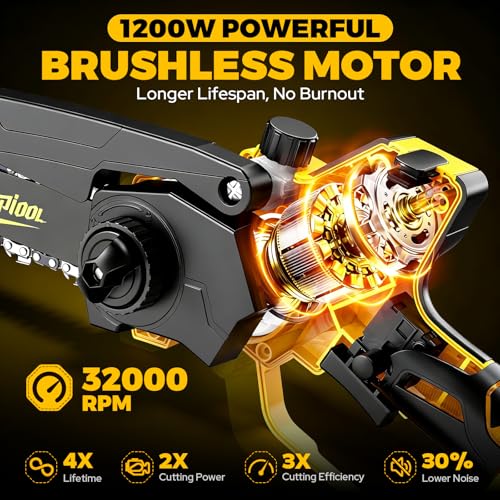
For cordless chainsaws, check battery voltage, amp-hour capacity, charger inclusion, and whether the saw can use batteries you already own. A single small battery may be fine for pruning, but storm cleanup, firewood bucking, or small-tree work calls for higher-capacity packs or a second charged battery. If you are comparing cordless to gas or corded electric, weigh instant starting and lower maintenance against runtime limits and recharge time. Owners repeatedly valued battery setups that lasted through real yard cleanup, with some noting lots of cuts per charge and enough runtime for typical small-yard sessions. They also appreciated kits that included batteries and chargers, and they especially liked compatibility with existing 20V-style tool batteries because it made the saw easier to keep ready.
Handling Fit
A chainsaw’s usable power depends on whether you can hold it securely at the cut. Weight, balance, grip spacing, and reach determine fatigue and accuracy, especially when trimming branches, working in shrubs, or switching between cuts.
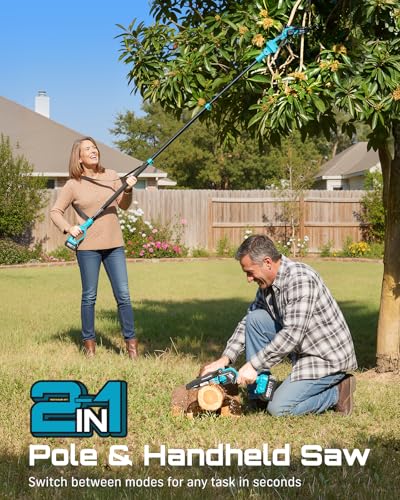
Choose the format around body position, not just wood diameter: mini saws are best for one-hand-adjacent pruning tasks only when they still provide secure guarding and control; standard rear-handle or top-handle-style cordless saws are better for two-handed limbing; pole saws are useful for overhead branches when they let you cut from the ground instead of climbing. Check the saw’s weight with the battery installed, balance at the front handle, and whether the trigger and safety lockout are comfortable with gloves. Avoid any setup that requires overreaching, cutting above shoulder height with a regular chainsaw, or using a ladder to compensate for poor reach. Owner sentiment repeatedly highlights compact, lightweight saws as easier to maneuver for pruning, tight spots, hedge work, roots, and cleanup where a full-size saw feels awkward. Pole extension use also drew praise because it helped handle overhead limbs without immediately resorting to a ladder, while manageable weight made grab-and-go yard work more practical.
Maintenance
Chainsaws need routine attention even when they are electric or compact. Chain tension, lubrication, bar wear, and replacement parts affect cutting speed, motor strain, and long-term usability.
Look for tool-free or clearly accessible chain tensioning, automatic chain oiling with an easy-to-see reservoir, a bar cover, and readily replaceable chains and bars. A saw that cuts well out of the box can become frustrating if the chain loosens constantly, oiling is inconsistent, or replacement parts are hard to source. For compact saws, pay close attention to guard quality and whether included tools, spare chains, or maintenance gear are practical rather than decorative. Owners praised saws that felt solid, well put together, and not bulky, and several comments tied confidence to stronger motors, sturdy feel, easy chain-tensioning setups, and simple maintenance. Positive reports also noted tools holding up to substantial homeowner tasks and convenient features such as auto lubrication for casual property work.
Safety Controls
Chainsaws are high-risk tools because the chain is exposed, fast, and prone to kickback when used incorrectly. Safety features cannot replace protective gear or technique, but they can make accidental starts, loss of control, and fatigue-related mistakes less likely.
Prioritize a chain brake or front hand guard on standard saws, a trigger lockout, a low-kickback chain and bar, a secure scabbard, and guards that do not interfere with the cut. For mini chainsaws, be especially strict about hand protection, trigger safety, and stable grip design because the compact size can make users treat them too casually. Always budget for chainsaw chaps, eye and ear protection, gloves, and a helmet or face shield for overhead work; avoid cutting overhead with a handheld chainsaw or using a saw one-handed unless the tool and task are specifically designed for that use. The owner evidence does not replace safety inspection, but it does reinforce why controllability matters: buyers consistently praised lightweight, manageable tools, easy starting and stopping, and simple operation for repeated cut-move-cut yard work. Those traits help reduce fatigue and hesitation, but the safer pick is still the one with proper mechanical protections and a format suited to the cutting position.
Kit Value
Chainsaw value is not just the saw body; it includes the battery system, charger, chain, bar, tools, oiling setup, and parts path. A cheaper kit can cost more in frustration if it lacks the accessories needed to keep cutting.
Compare complete kit contents: battery and charger, spare chain, extra bar where applicable, tensioning tool, oil bottle or starter maintenance gear, bar cover, and clear parts availability. If you already own compatible batteries, a tool-only or battery-compatible option may make sense; if not, a complete kit is usually more practical for first-time chainsaw ownership. Do not treat accessories as a bonus if the core saw lacks enough power, safe controls, or replacement-chain support. Owners frequently described homeowner saws as strong values when they could handle pruning, storm cleanup, and small-tree work without hiring out every branch job. Positive sentiment also clustered around generous accessory bundles, included batteries and chargers, extra chains or bars, and cutting performance that felt more capable than expected for light-to-medium property maintenance.
1,000,000+ shoppers use Buyer's Guide every week to find the best products and services online.

Helping millions of users make smarter purchases online.