




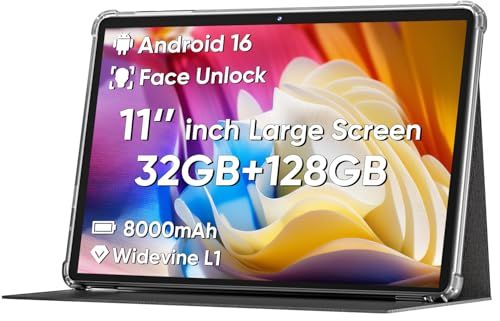
- Screen: 11"
- Resolution: 1280 x 800
- Processor: 2.0GHz 8-core
- Storage: 128GB
- Battery Life: Up to 14 hours
- Camera: 5MP front & 8MP rear
- Operating System: Android





COLORROOM Android 14 Tablet
Review and Real-World Experience

The COLORROOM Android 14 Tablet aims to deliver the essentials people actually use every day: a modern Android version, a bigger screen than a phone for comfortable reading and streaming, and the flexibility of the Android app ecosystem. As a general-purpose tablet, it’s best understood as a device for light to moderate workloads rather than a powerhouse for intensive gaming or professional creation. In that context, it can be a practical choice for browsing, watching videos, email, video calls, note-taking, casual games, and managing smart home apps, especially if you want a dedicated “sofa device” that doesn’t cost as much as premium tablets.
Android 14 is a meaningful highlight because it signals recent software foundations, better privacy controls, and a generally current interface compared to older-budget tablets that ship with dated Android versions. That said, what matters in day-to-day use is less about the number on the box and more about how smoothly the tablet runs your favorite apps. Most buyers will notice responsiveness in common tasks like switching between a browser, YouTube, and messaging. If the tablet has sufficient memory and a reasonably optimized build, Android 14 can feel clean and modern, with more predictable app behavior than older builds. If memory is limited, though, even a new Android version can’t fully prevent reloads when you switch between several apps.
For media consumption, the screen experience is the make-or-break factor. A tablet lives or dies by whether it’s pleasant to look at for long periods. When evaluating the COLORROOM, consider brightness and viewing angles, since a dim display can be frustrating in a bright room, and weak viewing angles can make shared viewing awkward. Resolution also matters, but not always in the way people expect. Higher resolution helps crispness for text and UI elements, while color accuracy and brightness influence perceived quality just as much for movies and photos. If you read a lot, pay attention to how text looks at the brightness level you actually use at night, because that’s where eye comfort becomes obvious.
Audio is another understated part of tablet satisfaction. Even if you plan to use headphones sometimes, built-in speakers shape how you experience quick videos, video calls, and casual listening. Look for clear dialogue at moderate volume and minimal distortion near maximum volume. If you’re buying it mainly for streaming, the speaker tuning can matter more than raw loudness. If you rely on Bluetooth audio, stability is key, and a tablet that holds a consistent connection to earbuds or a speaker without stuttering will feel far more premium than its price suggests.
Battery life is typically strong on tablets used for browsing and streaming, but it varies widely based on screen brightness, network conditions, and standby drain. The practical question is whether it lasts a full day of intermittent use without anxiety and whether it loses too much charge overnight. Charging speed also influences convenience more than people expect: if it takes many hours to refill, you’ll start managing your usage around the charger. A tablet that charges reliably and quickly becomes a device you naturally pick up more often.
Finally, build quality and ergonomics matter for a device you hold. Weight, edge shape, and button placement determine comfort during long reading sessions or when propping it on your lap. If the tablet is used by kids, durability and case availability become part of the real cost of ownership. A good, readily available protective case can be the difference between a tablet that lasts years and one that ends with a cracked screen after a single drop.
What to Consider Before Buying (and What Matters Most)
Before purchasing the COLORROOM Android 14 Tablet, it helps to decide what “good” means for your specific use. The most important factor for many people is performance consistency, not peak performance. That means enough RAM to keep common apps from constantly reloading and a processor that doesn’t stutter while scrolling web pages or switching between tasks. If you plan to do multitasking, schoolwork in a browser, or video calls while referencing notes, prioritize memory and overall responsiveness. A slightly better-performing tablet will feel dramatically better over the life of the device than a slightly sharper screen.
The second most important factor is the display, because it directly affects comfort, enjoyment, and perceived quality. If you mainly stream shows, a bright, pleasant screen with good viewing angles will matter more than a long list of specs. If you read and browse for hours, look for a screen that remains comfortable at lower brightness and doesn’t appear washed out when you tilt it. People often fixate on resolution alone, but a well-tuned, bright panel can be more satisfying than higher pixel density paired with dull brightness.
Third, consider software support and the practical meaning of Android 14 on this device. Android 14 is a strong starting point, but buyers should still think about whether the manufacturer provides timely security updates and how long the tablet is likely to remain supported. Even if you don’t follow update schedules closely, security patches matter for a device that logs into email, stores passwords, or handles payments. If this tablet is meant to be a long-term household device, update cadence and stability are worth weighing heavily.
Storage capacity and expandability can also change your experience. Streaming users can get by with less storage, but families who download movies for travel, store photos, or install larger games will feel cramped quickly. If the tablet supports expandable storage, that flexibility can be valuable, but it’s still worth checking whether apps can be moved and whether internal storage is fast enough to avoid sluggish installs and updates. Many “budget pains” come from low storage more than anything else.
Connectivity and ports are easy to overlook until they become a daily annoyance. Reliable Wi‑Fi performance affects streaming quality, video calls, and app downloads. If you plan to connect accessories, verify whether the tablet supports the keyboards, styluses, or USB accessories you care about. Charging port type matters for convenience too, because standardizing on one cable across devices reduces friction. If you intend to use the tablet for calls, classes, or remote work, camera quality and microphone clarity become more important than most shoppers expect. A tablet can be “fine” for casual snapshots but still disappointing for video calls if the front camera is soft or the mic picks up too much room noise.
Price should be evaluated against what you would otherwise do with the tablet. If you want a dedicated device for the kitchen, the couch, travel, or a child’s learning apps, value matters more than absolute performance. If you expect laptop-like productivity, intensive 3D games, or heavy creative work, it’s better to pay more upfront for a tablet with stronger performance, better accessories, and a longer support horizon. The key is to match expectations to the tier of device, because satisfaction comes from alignment rather than specs alone.
Common Questions
Will the COLORROOM Android 14 Tablet feel fast enough for everyday use?
For typical tasks like web browsing, streaming, email, and light multitasking, it can feel perfectly adequate if it has sufficient RAM and decent optimization. If you regularly run multiple heavy apps, play demanding games, or keep many browser tabs open, you should prioritize a configuration with more memory and be prepared that entry-level tablets may show occasional slowdowns.
Is Android 14 a big advantage on a budget tablet?
Yes, mainly because it means newer system features and a more current baseline for app compatibility and privacy controls. The bigger question is ongoing updates and stability. A modern Android version is a strong start, but long-term satisfaction depends on whether the device remains secure and smooth as apps evolve.
Is this tablet good for kids and family use?
It can be a good household device for streaming, learning apps, and casual games, especially if you add a protective case and set up appropriate parental controls. For kids, durability, battery life, and a screen that’s bright enough for various rooms often matter more than peak performance.
Can it replace a laptop for school or work?
It depends on your workload. For documents, web-based learning platforms, email, and video calls, a tablet can work well, especially with a keyboard. For specialized software, heavy multitasking, or advanced file management, a laptop is usually the better primary device, with the tablet serving as a secondary screen or note-taking tool.
Overall, the COLORROOM Android 14 Tablet makes the most sense for buyers who want an affordable, modern Android tablet for browsing, entertainment, and everyday apps, and who focus on smoothness, screen comfort, and reliable battery life rather than premium extras. If you prioritize consistent performance and a pleasant display above all else, you’re most likely to end up happy with what this tablet is designed to deliver.