











We also considered 10 others:


Our Top Choice
The order above is not editorial opinion, and it is not paid placement. It comes from what shoppers across our network actually do - which bright desk lamps they compare, and which they ultimately buy. We re-rank as new data comes in, so the long-term favorites have to keep earning their spot against new entrants. The full method, including how we make money.
Bright Desk Lamps Buyer's Guide
Bright desk lamps are about balancing strong task illumination with glare control, adjustability, and desk space. The best choice is not simply the brightest lamp; it is the one that can aim a wide, tunable light field exactly where you work without wobbling, crowding the desk, or making controls annoying to reach.
Task Brightness
A bright desk lamp should deliver enough usable light for close work without forcing glare into your eyes or onto a screen. The best choices give a wide, even light field so reading, writing, crafting, and camera-facing work do not depend on one harsh hotspot.
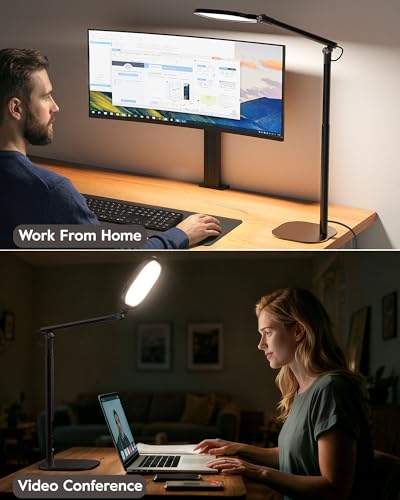
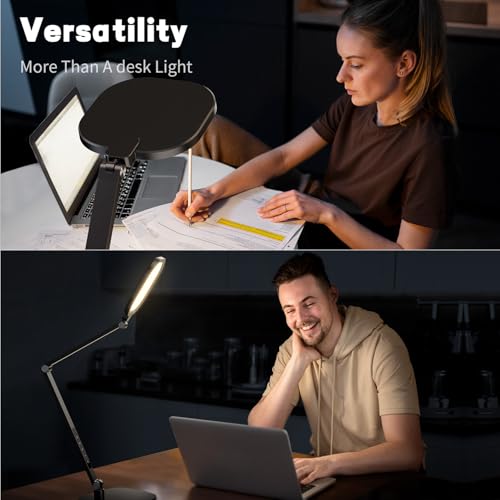
Look for a lamp that specifies multiple brightness levels and has enough output for the largest task area you use, not just a small notebook-sized spot. For bright-desk use, avoid lamps that are only described as “ambient” or decorative; you want task lighting that can support reading, paperwork, art, office work, and video-call fill light while still dimming down when full brightness is too much. Owner feedback strongly supports brightness as a key separator: buyers repeatedly praised strong output for desk work, art, office use, reading, and video-call lighting, with enough light for tasks while still feeling easy on the eyes.
Light Tuning
Color temperature and dimming matter because desk lamps are used across different tasks and times of day. Cooler light can help with detail work, while warmer or dimmer light is often better for relaxed evening use and reducing visual harshness.
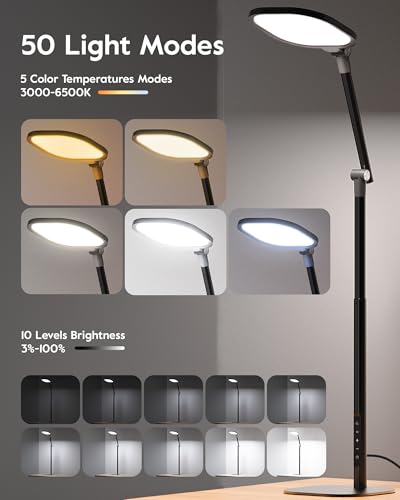
Choose a lamp with smooth dimming and several color-temperature settings, ideally reachable without cycling through awkward modes every time. For this category, the practical goal is to switch from crisp focused light for paperwork, crafts, or meetings to softer warmer light for ambient use without changing lamps. Owner sentiment backs this strongly: buyers liked dimming and color-temperature controls because they made the lamp adaptable for different needs and times of day, and praised wide lighting ranges for focused tasks, video calls, crafts, and softer ambient light.
Positioning
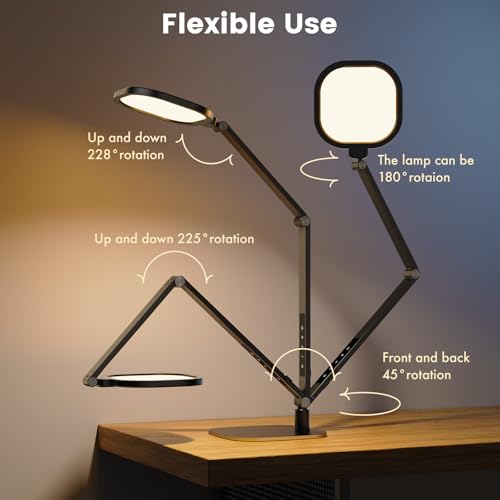
A bright lamp is only useful if the light can be placed where the task actually is. Adjustable height, head angle, and arm position help prevent shadows from your hands, keyboard, monitor, or camera setup.
Prioritize adjustable height, a tilting or rotating head, and an arm that holds position without sagging. For monitor-heavy desks and video meetings, make sure the lamp can aim light across the work surface or toward your face without shining directly into your eyes or reflecting off the screen; for crafts and drawing, reach and angle control are especially important to avoid hand shadows. Owners consistently valued adjustable height, angles, positioning, brightness, and light color, saying these features made the lamp useful for desks, office setups, virtual meetings, and varied tasks.
Desk Fit
Bright desk lamps often live in crowded workspaces, so footprint and folding behavior can matter as much as raw lighting power. A good design saves surface area while keeping the lamp stable and easy to position.
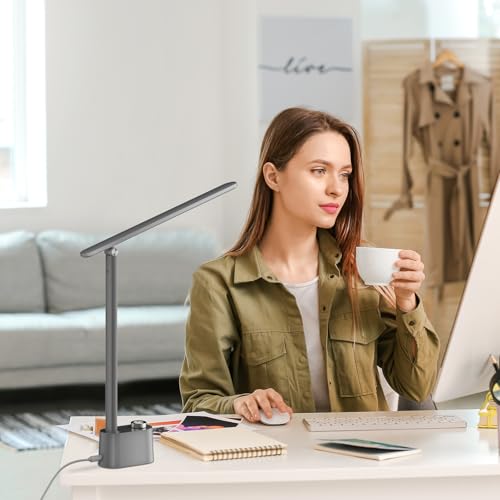
Measure your available desk depth and check both the base footprint and the lamp’s folded and extended dimensions. A strong bright desk lamp should fit around monitors, laptops, notebooks, and charging gear without crowding the work area; folding designs are especially useful if the lamp shares space with a keyboard, tablet, or craft materials. Owner comments highlight this tradeoff well: shoppers praised sleek, sturdy, space-saving designs that fold down small, take up little desk space, and still provide either direct task light or softer indirect lighting.
Build Quality
A lamp with a long arm or high brightness setting needs a solid base and durable joints. If the build is flimsy, the lamp can wobble, drift out of position, or feel unstable during everyday adjustments.
Look for a weighted base, firm hinges, and materials that feel rigid rather than bendy, especially if the lamp has an extended arm or tall height adjustment. Avoid designs that look top-heavy or depend on loose friction joints, because a bright task lamp is adjusted often and needs to stay aimed where you put it. Owner sentiment strongly favors build quality: buyers described well-received lamps as high-quality, sturdy, durable, stable on the desk, solid, and not flimsy, with some also connecting the attractive design to a premium feel.
Easy Controls
Controls affect whether the lamp stays convenient during real work. Quick access to brightness, color, and positioning changes is especially important when switching between reading, screen work, calls, and ambient lighting.
Choose controls you can operate without breaking concentration: dedicated dimming and color controls are better than hidden multi-press sequences, and a remote or knob can be useful if the lamp sits behind a monitor or across a wide desk. Built-in USB-A or USB-C charging can reduce desk clutter, but treat it as a convenience bonus rather than the main reason to buy unless the port placement and output suit your devices. Owners praised simple setup, clear documentation, straightforward everyday operation, easy intensity and angle changes during work or meetings, a wireless knob remote for brightness and color changes, and built-in USB-A and USB-C ports as useful desk or nightstand additions.
1,000,000+ shoppers use Buyer's Guide every week to find the best products and services online.

Helping millions of users make smarter purchases online.


