
Which Type Of Mattress Has The Smallest Carbon Footprint?
Posted on Friday, September 17, 2021
To keep this site free for consumers, we receive compensation for customer referrals.
Some experts consider climate change the biggest threat to the future of our planet. While there isn’t much the ordinary citizen can do about government policies, they may want to make personal choices that will help reduce their carbon footprint. Even a simple decision like what mattress you’ll choose has the ability to reduce your carbon footprint. Keep reading to find the mattress types that will help your carbon footprint be as small as possible.

The Different Types Of Mattresses
Before you can find a mattress that carries a low carbon footprint, you have to understand the available options. One popular choice is a box spring mattress, which is the kind many people think of when they think of a traditional mattress. This type is usually supportive and firm.
Another type, the memory foam mattress, is made of a foam material. This type of mattress offers a lot of cushioning and contours to each individual sleeper’s spine and pressure points.
For those who want the best of both worlds, there is a hybrid mattress. Hybrids have a box spring, like a traditional mattress, but also have foam layers.
Latex mattresses have support comparable to memory foam, helping people stay in a neutral alignment when sleeping and keeping pressure off other areas, like the shoulders and hips.
What To Consider When Looking For A Mattress With A Low Carbon Footprint
Determining a carbon footprint can be tricky. There are a lot of factors that go into a product’s overall carbon footprint, including how far and in what method it is shipped, the type of materials used, how it is produced, how long it’ll last, and what packaging it comes in.
To find a mattress with a low carbon footprint, first look at where the company makes its mattresses. Is there a mattress production company within the same state as you? If not, can you at least buy your mattress in the same country as where you live? Cutting back on shipping drastically reduces a product’s carbon footprint, which is one reason some consumers love buying local whenever possible.
Avoiding mattresses that use additives as much as possible is another way to reduce your carbon footprint. Some mattresses use a lot of chemicals and additives, like flame-retardants, that drive up their carbon footprints. Thus, finding a mattress that uses organic materials will result in a smaller carbon footprint.
The Best Types of Mattresses For A Low Carbon Footprint
A large part of the equation when searching for a mattress with a low carbon footprint is its type. Box spring mattresses often aren’t a good choice because they use metal coils that have been created and produced in a factory. Plus, this type of bed often uses a fair amount of chemicals and additives. Hybrid mattresses often suffer from these same issues when it comes to their carbon footprints.
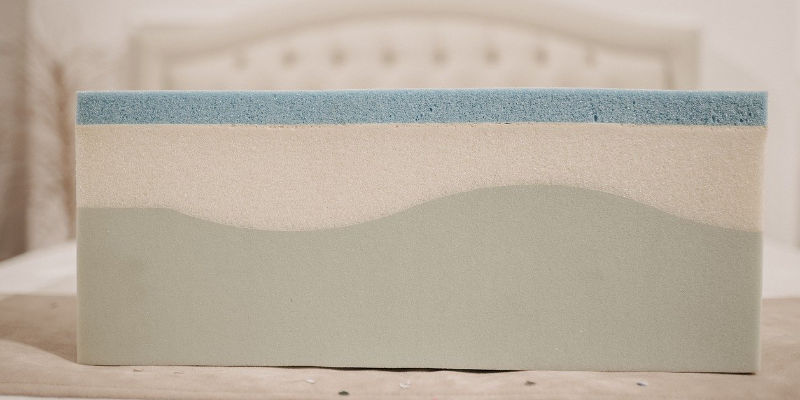
Memory foam mattresses, in particular those that use plant-based memory foam, are generally better choices than box spring mattresses or hybrids when looking for a product with a low carbon footprint. That’s because the newest generation of memory foam is often crafted by using a zero-emission manufacturing process. Plus, plant-based memory foam gets rid of many of the characteristics that make traditional memory foam a bad choice when trying to reduce your carbon footprint. It doesn’t contain chemicals like formaldehyde, phthalates, and others.
One of the best choices you can make for a low carbon footprint mattress is a natural latex mattress. Natural fiber mattresses such as these often have a lower carbon footprint because they are long-lasting and made of natural, chemical-free materials.
Reduce Your Carbon Footprint
To find a mattress with a low carbon footprint, you’ll want to go with a type of mattress that uses fewer chemicals and is made of renewable resources. A great choice would be a natural latex mattress. For every mattress company you’re considering purchasing from, find out what their packaging is made of, where they’re shipping from, what materials the mattress is made of, what chemicals (if any) the mattress contains, and how long the mattress is expected to last. This information will allow you to make an informed decision that will help you sleep better at night knowing that you are reducing your carbon footprint.


Related Blog Posts

Top Posts
- Exploring Computer Monitors
- Exploring the Benefits of Video Doorbells
- Maintenance for Smoke Detectors
- Treadmills: The Ultimate Guide to Getting Fit
- Rice Cookers for Every Kitchen
- Curling Irons for All Hair Types
- Better Dental Health with Electric Toothbrushes
- Meal Delivery for Celiac Disease & Gluten Intolerance
- Pet Insurance for Cats
- Air Purifiers for Allergies