How to Choose the Right Dumbbells
Posted on Monday, February 23, 2026
To keep this site free for consumers, we receive compensation for customer referrals.
How to Choose the Right Dumbbells
Dumbbells are among the most versatile tools in strength training, supporting everything from foundational resistance exercises to advanced conditioning routines. Choosing the right dumbbells involves more than selecting a weight; it requires understanding how different designs, materials, and configurations influence usability, progression, and long-term practicality.
Whether building a home workout setup or refining an existing routine, understanding the structure of the dumbbell category can make evaluating options more straightforward. Small differences in adjustability, grip design, and storage requirements can significantly affect everyday use.
The Role of Dumbbells in Strength Training
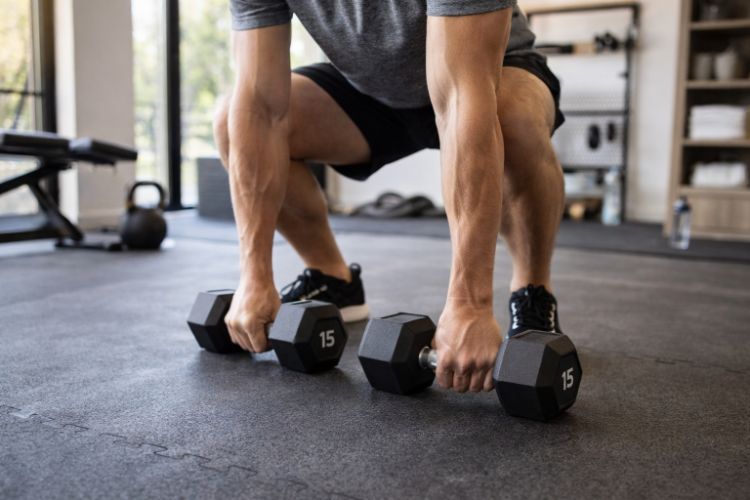
Dumbbells enable unilateral training, meaning each side of the body works independently. This can support muscle balance, coordination, and controlled movement patterns. They are commonly used for upper-body exercises such as presses and rows, as well as lower-body movements like lunges and squats.
Because dumbbells allow for a wide range of motion, they can accommodate both compound exercises and isolation movements. Their simplicity also makes them suitable for varied fitness levels, from beginners learning movement mechanics to experienced lifters refining specific muscle engagement.
Main Types of Dumbbells
The category generally divides into fixed-weight and adjustable dumbbells. Each format addresses different space, progression, and convenience considerations.
Fixed-Weight Dumbbells
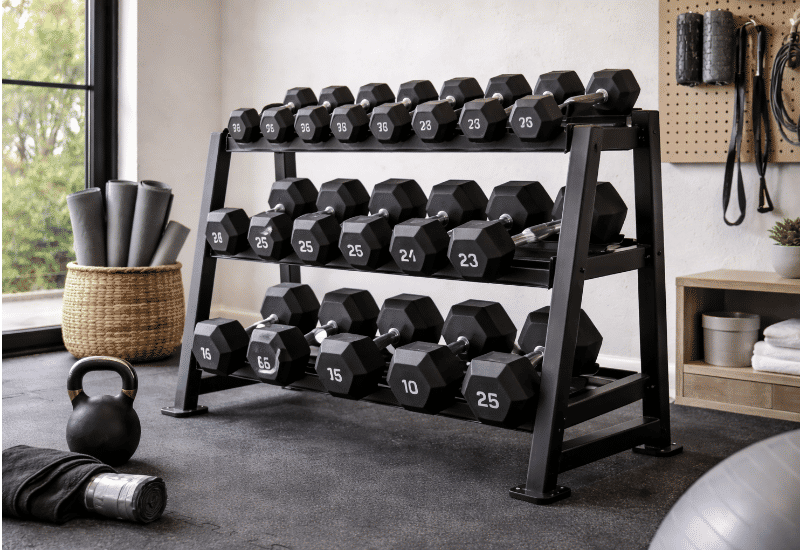
Fixed dumbbells come in a single, predetermined weight. They are often made from solid metal or feature coated exteriors for floor protection and noise reduction. These are straightforward to use and require no setup between exercises.
However, progressing in weight typically requires acquiring additional pairs. This can increase storage needs over time, particularly for users incorporating progressive overload into their routines.
Adjustable Dumbbells
Adjustable dumbbells allow users to change weight by adding or removing plates or by using integrated adjustment mechanisms. This format consolidates multiple weight increments into a single pair.
They are often selected for home environments where space efficiency is important. The trade-off may include slightly longer setup times between weight changes, depending on the adjustment system and locking mechanism.
Core Design Elements That Influence Performance
Beyond format, several design characteristics influence how dumbbells perform in everyday training. Evaluating these elements in the context of your workout style can clarify which configuration aligns with your goals.
- Weight Range: Consider both your current strength level and your anticipated progression. A suitable range should accommodate foundational exercises while allowing gradual increases over time.
- Increment Options: Smaller weight increments can support more controlled progression, which may be particularly helpful for upper-body isolation movements.
- Grip Diameter and Texture: Handle thickness and surface texture affect comfort and control. A grip that feels secure without causing discomfort can improve consistency during higher-repetition sets.
- Material and Coating: Some dumbbells feature rubber or similar coatings to reduce floor impact and noise. Others have fully metal constructions that may offer a more compact and traditional feel.
- Length and Balance: The overall size of the dumbbell can influence range of motion, particularly in pressing or curling movements. Balanced weight distribution supports controlled lifting mechanics.
- Adjustment Mechanism: For adjustable models, the reliability and simplicity of the locking system can influence workout flow and long-term usability.
- Storage Requirements: Fixed sets may require racks or designated floor space, while adjustable pairs often occupy a smaller footprint.
Matching Dumbbells to Your Training Style
Your exercise routine plays a significant role in determining which dumbbells are appropriate. Individuals focused on structured strength programs may prioritize incremental weight increases and handle comfort during moderate to high repetitions. Those incorporating circuit training or conditioning sessions may value quick weight transitions between exercises.
For full-body programs, a broader weight range often proves useful. In contrast, targeted accessory work may require only moderate weights but benefit from finer increments that allow steady progression without large jumps in resistance.
Practical Performance Considerations
In everyday use, convenience can shape long-term consistency. If adjusting weight feels cumbersome, it may interrupt the rhythm of fast-paced workouts. Conversely, maintaining multiple fixed pairs can simplify transitions but requires sufficient storage space.
Noise and floor protection are also practical factors, particularly in shared living spaces. Coated heads can help reduce impact sound, while stable storage systems can prevent rolling and clutter.
Durability should be considered in relation to workout frequency and intensity. Heavier lifting or high-volume training may place more stress on moving parts in adjustable systems, while solid fixed designs rely on simpler construction with fewer mechanical components.
Limitations to Consider
Each dumbbell format comes with constraints that should be acknowledged before making a selection. Adjustable models prioritize compact storage but may involve brief pauses to change weights, which can affect high-tempo routines.
Fixed-weight dumbbells offer immediate usability but require additional space as weight needs increase. Over time, assembling a wide range of fixed pairs can influence how a home workout area is organized.
Handle thickness and overall dimensions may also vary between designs. Larger heads can slightly limit range of motion in certain exercises, while thinner handles may not suit every grip preference.
Who Dumbbells Are Suitable For
Dumbbells are adaptable to a broad range of training environments. Individuals setting up compact home workout spaces often gravitate toward adjustable configurations to conserve room. Those with dedicated exercise areas may prefer multiple fixed pairs for ease of use during structured strength sessions.
Beginners frequently start with lighter weights that allow them to refine technique and build foundational strength. More experienced lifters may look for expanded weight ranges that support progressive overload across compound and isolation movements.
Dumbbells are also commonly integrated into rehabilitation-style programs and general fitness routines, where controlled, unilateral movement patterns are emphasized.
Reviewing Your Options
Selecting the right dumbbells is ultimately about alignment between equipment design and training intent. Clarifying how often you train, which exercises you prioritize, and how much space you can dedicate to storage will narrow the field meaningfully.
When you break down how each format operates, identify the trade-offs involved, and consider how specific design details affect daily workouts, the selection process becomes more organized and easier to navigate. Check out our page for more in-depth fitness equipment guides and category insights designed to support informed decision-making.

Related Blog Posts