

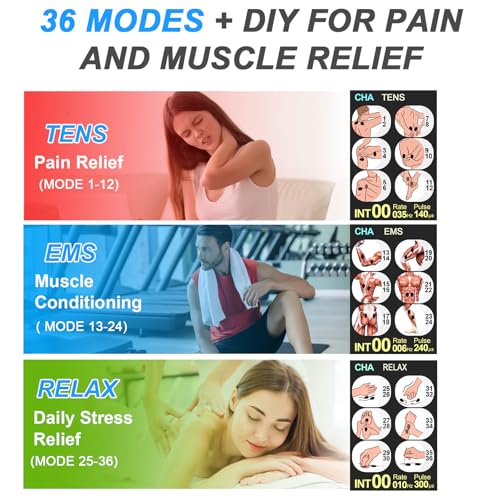


- Modes: 36
- Intensity: 20 levels
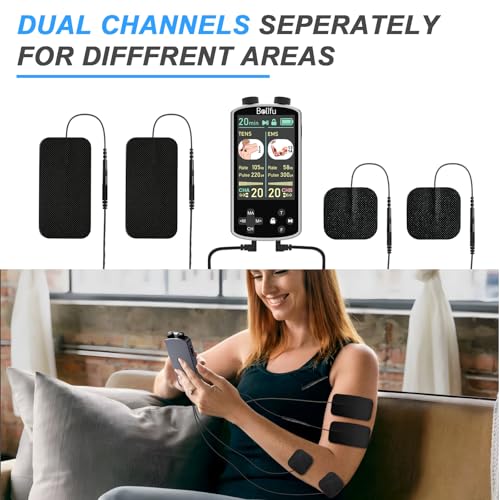
- Channels: Dual
- Battery Life: Up to 60 hours
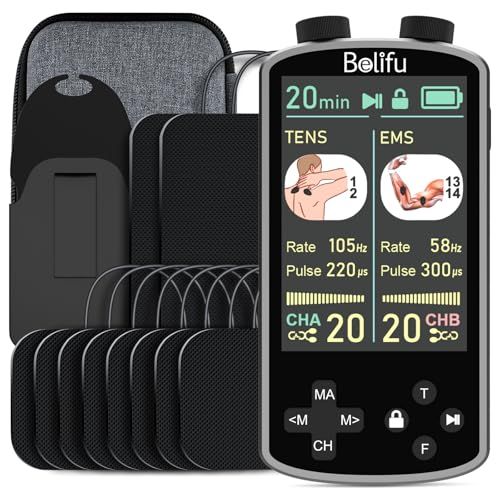
- Pads Included: 10





Belifu TENS EMS Unit
Overview and Real-World Performance

The Belifu TENS EMS Unit is designed for people who want convenient, at-home relief for sore muscles, post-workout tightness, and day-to-day aches, while also offering EMS-style stimulation aimed at activating muscles. In practice, it’s best understood as a compact, multi-mode electrotherapy device that focuses on flexibility: multiple programs, adjustable intensity, and portable use that fits into a routine without much setup. For many buyers, the key appeal is that it can serve as a “grab-and-go” option for targeted areas like the neck and shoulders, lower back, hips, knees, and calves, while still being adaptable enough for lighter recovery sessions or stronger pulses depending on comfort.
Where the Belifu tends to shine is in the range of sensations it can produce. Some modes emphasize rhythmic tapping or kneading-like pulses that feel similar to a massage pattern, while others use sharper, more distinct contractions. Users who are new to TENS often notice that the gentler settings feel surprisingly soothing, while the higher intensities can feel intense quickly, especially on thinner or more sensitive areas. With EMS modes, you may notice more obvious muscle engagement, which can be useful for some recovery routines but also requires careful control so you don’t overdo it. Overall, the device is at its best when you treat intensity as a fine-tuning tool rather than a challenge to “turn it up.” Comfort, consistency, and proper placement tend to matter more than pushing maximum output.
Ease of use is another part of the experience. A clear display and straightforward controls can make a big difference when you’re trying to run a 20–30 minute session without fuss. Many people value the ability to adjust intensity quickly during a session as the body acclimates. Portability is also a practical advantage: it’s small enough to use at a desk, on a couch, or while traveling, as long as you can place pads correctly and remain relatively still. That said, performance is heavily dependent on pad contact and skin prep. Even a well-designed unit can feel inconsistent if pads are old, poorly placed, or not adhering evenly, so the “real-world” outcome is often a combination of device quality and user habits.
What to Consider Before Buying (and What Matters Most)
Before purchasing the Belifu TENS EMS Unit, a user should consider how they plan to use it and what outcomes are realistic. The most important factor is whether you want TENS for symptomatic pain relief, EMS for muscle activation, or a mix of both. TENS is typically chosen for temporary relief of discomfort by stimulating nerves and altering pain signals, while EMS is more about prompting muscle contractions. If your primary goal is calming sore areas after work or exercise, TENS-focused use may be the priority. If you want noticeable muscle engagement, EMS modes matter more, but they also require more careful intensity management and correct pad placement.
Pad quality and ongoing costs are also essential. Electrode pads are consumables, and their lifespan depends on skin oils, storage habits, and frequency of use. A buyer should look at whether replacement pads are easy to find and reasonably priced, because long-term satisfaction often hinges on this. The most powerful unit in the world will disappoint if the pads lose adhesion quickly or if replacements are inconvenient. Related to this is the number of channels and leads you need. Some users only ever treat one area at a time, while others want to place pads on two different muscle groups. If you anticipate treating a larger region like the back, or alternating between two areas without constantly moving pads, channel flexibility becomes more important.
Intensity range and control granularity are another big consideration. Many people assume more intensity is always better, but comfort and adjustability are the real keys. You want a unit that lets you increase stimulation in small steps, because sensitivity differs by body part and by person. A good TENS/EMS session should feel controlled and repeatable. If the steps are too large, it becomes harder to find the “sweet spot” where the stimulation is effective but not irritating.
Battery and charging convenience can be more important than it seems. If you intend to use the unit frequently, you’ll want reliable power and a simple charging routine. A device that is easy to recharge and holds power well is more likely to become a consistent part of your recovery or pain-management habits. Similarly, the timer and automatic shutoff features matter for both safety and convenience. Many users appreciate being able to start a session and relax without worrying about tracking the time precisely.
Finally, safety and appropriate use should be at the top of the decision. Anyone with a pacemaker or implanted medical device, a history of seizures, pregnancy, or a heart condition should consult a clinician before using TENS/EMS. It’s also important to avoid placing pads on the front of the neck, across the chest, or on broken or irritated skin. The best purchase decision is one that includes an honest assessment of whether you can use it safely and whether your pain or muscle issue might need medical evaluation rather than self-treatment. If you’re choosing just one “most important” factor, it’s safe, correct use for your specific need, because that determines whether the device will help you or simply be uncomfortable and underused.
Common Questions
Will the Belifu TENS EMS Unit stop pain permanently?
It’s best viewed as a tool for temporary symptom relief and muscle support rather than a permanent cure. Many users experience short-term reduction in discomfort or improved relaxation in a tight area, but lasting improvement usually involves addressing underlying contributors like posture, workload, mobility, stress, sleep, or a rehab plan.
What’s the difference between TENS and EMS, and which should I use?
TENS generally targets nerves to help modulate pain signals, often producing a tingling or pulsing sensation without strong muscle contraction. EMS is intended to stimulate muscle contractions more directly, which can feel like the muscle is “working.” If your main goal is easing an ache, start with TENS-style settings. If your goal is muscle engagement for recovery or activation, use EMS, starting gently and prioritizing comfort and proper placement.
How long should a session be?
Many people use sessions in the range of 15 to 30 minutes, depending on the program and comfort level. It’s wise to begin with shorter sessions and moderate intensity, then adjust based on how your body responds. If you feel lingering irritation, reduce intensity, shorten sessions, or take longer breaks between uses.
Why does the stimulation feel weak or uneven sometimes?
This is usually related to pad adhesion, placement, or skin condition rather than the unit itself. Clean, dry skin, firmly adhered pads, and correctly spaced placement can make stimulation feel more consistent. If pads are old or drying out, performance often drops noticeably, and replacing pads can restore the intended sensation.
Can I use it on my neck or shoulders?
Many users apply TENS to the upper back and shoulder area, but you should avoid placing electrodes on the front of the neck or in ways that send current across the throat or chest. If you’re unsure about safe placement for a sensitive area, consult a clinician or follow the manufacturer’s guidance carefully.
Overall, the Belifu TENS EMS Unit is a practical, versatile option for people who want a portable device for managing everyday discomfort and supporting muscle recovery routines. It tends to work best when you prioritize safe placement, comfortable intensity, and consistent pad care, while keeping expectations grounded in what TENS and EMS are designed to do. If the device matches your primary goal and you’re prepared for the ongoing reality of replacing pads as needed, it can be a reliable addition to an at-home self-care setup.