

- Methodology: Science-backed nutrition programs, no diets or meds required
- Meal Tracking: Easy food logging, nutrition score of meals and insights, Intermittent fasting tracker, healthy recipes
- Exercise Tracking: Yes, manual logging, auto data sync via integrations with other apps, personalised workouts to include strength training, cardio or even chair yoga
- Free Trial: Not available, plans from $3.99
- Rx Weight Loss Support: Not offered

The Benefit of Using Diet Apps
Choose the Right Fasting Diet for Your Goals

Pick a Diet App that Fits Your Body Type


4,600+ shoppers have used Buyer's Guide in the last week to help find the best Diet Apps.
Learn more about our rankings.

Expert Analysis
Our team of experts highlights useful information so you can easily compare products to find the one that's right for you.
Award-Winning Tech
Our technology analyzes thousands of purchase trends to bring you the top product recommendations.

Brands Evaluated
Topics Considered
Hours of Research
Purchases Analyzed

Helping millions of users make smarter purchases online.


Simple App Review

What to Consider Before You Buy
Before committing to Simple, it helps to map your expectations to what the software actually does. If your goal is rapid, aggressive weight loss driven by rigid meal plans, you may prefer a program that emphasizes prescriptive calorie ceilings. Simple can certainly count calories, but its philosophy leans toward sustainable habits, balanced nutrition, and steady progress. That framing matters, because it informs everything from the interface to how feedback is delivered, and users who value long-term change may find it a better match than those seeking short bursts of strict restriction.
Pricing and value are core considerations. The app is available via a subscription model with tiered features, and the sweet spot for most people is the middle tier, which unlocks the complete food database, barcode scanning, recipe macros, workout logging, and the new emotional support feature, Blinky. If you already own a competing nutrition tracker with similar tools, the incremental value will come from Simple Diet App’s coaching prompts, habit loops, and empathetic feedback rather than from raw database size alone. Consider whether those softer benefits are what you’ve been missing; for many, they are precisely what keeps a plan from stalling after two weeks.
Integrations and compatibility are crucial. Simple syncs with the major wearable ecosystems and common health platforms, pulling step counts, heart rate zones, and sleep duration to contextualize your calorie goals. If you rely on a niche device or maintain a data workflow that must export in specific formats, double-check support first. Sync reliability sounds like a small thing, but when your burn estimate depends on it, accurate integrations become one of the most important purchase factors, right alongside coaching quality and food-logging ease.
Data privacy deserves attention. The app encourages journaling around mood and urges, especially with Blinky, which means you may store personal reflections alongside nutrition data. The company states that entries remain private to your account unless you explicitly share summaries, and you can purge logs at any time. That combination of control and transparency is reassuring, but buyers who prioritize minimal data collection should still review permissions. In practical terms, confidentiality and deletion controls are as impactful as any macro ratio when it comes to long-term comfort using the app daily.
Accessibility and cultural fit round out the key considerations. The interface offers high-contrast modes, dyslexia-friendly fonts, and voice input for hands-free logging, which lowers friction for many users. The recipe importer recognizes regional dishes and supports flexible portioning, so you are not forced to approximate home cooking with generic entries. If you routinely eat family recipes or split meals, this feature becomes one of the most important in day-to-day use, because it preserves your real life rather than bending it to the software’s limitations.
Diet, Fitness, and Blinky: Features and Benefits
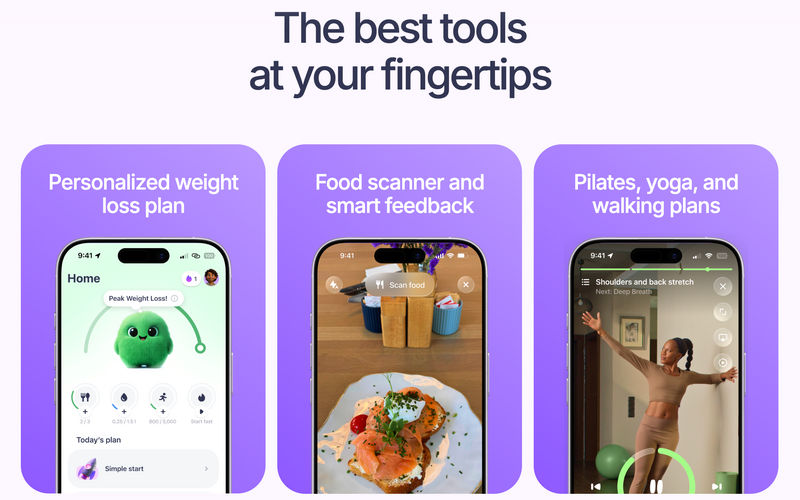
At its core, Simple is a modern nutrition tracker with a coaching layer designed to make the daily grind feel doable. The food logging is fast, with barcode scanning that prioritizes verified entries and portion guidance that adapts to your typical serving sizes. Over time the app learns your routine and floats quick-add suggestions at the times you tend to eat, shaving seconds from every log. That might not sound dramatic, but those seconds add up, and the cumulative ease is a meaningful benefit.
Macro tracking is one tap away, with presets for common dietary patterns like Mediterranean, plant-forward, high-protein, low-carb, and flexible balanced plans. Rather than forcing you to pick a camp, the app lets you set targets and then auto-generate meal ideas that meet those macros using ingredients you mark as staples. The recipe builder is a highlight; paste a link or type a list of ingredients and it calculates nutrition per serving, stores cooking notes, and suggests simple swaps to improve protein density or fiber without derailing the dish. This is where the app quietly excels: it meets you where you already are.
Fitness features go beyond step tallies. The workout module supports strength sessions, intervals, yoga, and steady-state cardio, assigning estimated energy expenditure based on your device data and historical effort. If you lift, you can log sets and reps; the app will then estimate muscle-group fatigue and adjust your calorie budget modestly for recovery days. Runners get pace-zone guidance linked to fueling reminders, while lifters receive protein timing nudges. The benefit is not just more accurate calorie math, but better coordination between training stress and nutrition choices.
Coaching prompts are short and context-aware. If your late afternoons often trigger snack surges, Simple surfaces a hydration reminder and a “protein now, snack later” suggestion right before the window when you historically drift. The habit system pairs a tiny action with a tiny reward—a checkmark streak, a calming animation, or a one-line reflection prompt—so adherence feels less like drudgery. These nudges come with adjustable intensity so they feel helpful rather than nagging, and you can pause them during travel or holidays without losing your streak, which is a small but thoughtful mercy.
Then there is Blinky, the new emotional support feature. Blinky appears as a small, friendly companion that reacts to your logs, workouts, and reflections with empathy rather than judgment. If you record a tough day, Blinky acknowledges it and offers a brief grounding exercise, such as a 30-second breathing sequence or a one-sentence reframing prompt. During streaks, Blinky celebrates progress in a calm, measured way and reminds you why your goals matter to you—not to an abstract leaderboard. The magic here is tone. Many fitness apps turn setbacks into scolding and wins into dopamine fireworks; Blinky treats both as information. The benefit is a steadier emotional climate, which reduces the “all-or-nothing” spiral that derails so many plans.
Blinky also supports urge tracking. When you feel the pull toward stress eating, you can tap a quick “urge timer” that walks you through delay-distract-decide in under a minute. You log the intensity before and after, and over time you can see patterns without shame. Simple never pretends that willpower alone is a strategy; Blinky’s prompts help you build skills that transfer outside the app. The result is a surprisingly humane loop: notice, name, and navigate, then return to ordinary life.
Benefits extend into recovery and rest. The sleep overview imports duration and variability to suggest lighter days when your readiness dips, and Blinky reframes missed targets as signals rather than failures. That shift is more than motivational copy; it nudges you toward consistency by protecting your mood. If sustainability is your top criterion, this gentle accountability may be the app’s most important advantage over more militant alternatives.
Common Questions
Q: Is Simple good for beginners who have never tracked before?
A: Yes. The onboarding asks a handful of plain-language questions and then sets conservative targets with an option to “go slower” if you prefer an even gentler ramp. The interface hides advanced graphs until you ask for them, and Blinky’s check-ins help you normalize imperfect days so you can keep moving.
Q: How accurate is the food database, really?
A: Accuracy is solid thanks to a verified layer that elevates trusted entries and demotes duplicates. You can still add custom foods, but barcode scans prefer verified data, and the recipe calculator encourages weighing or measuring at least once so future estimates are realistic. Accuracy improves the more you use your own staples, which the app remembers.
Q: Will it work if I follow a specific diet like plant-based or low-carb?
A: It will. You can choose presets or define macros manually, and meal ideas adapt to your restrictions. The swap suggestions are thoughtful, prioritizing whole-food options first. If your diet is culturally specific, the recipe importer handles home dishes well, which makes adherence simpler without abandoning your cuisine.
Q: Do I need a wearable to get value from the fitness features?
A: No. You can log workouts manually and still receive fueling prompts and recovery suggestions. A wearable refines calorie estimates and zones, but the habit system, Blinky’s support, and the recipe tools work perfectly well without external hardware.
Q: What if I fall off for a week?
A: Nothing breaks. Streaks resume with grace periods, and Blinky’s first message on return is a short re-entry prompt that helps you identify one tiny next action, such as logging breakfast only. That keeps momentum from depending on perfection.
Simple succeeds because it values adherence as much as analytics. The diet and fitness engines are capable and increasingly smart, but the standout is the way the app shapes your experience of change. By pairing solid nutrition tools with adaptive workouts, humane prompts, and Blinky’s calming presence, it creates the conditions for consistency. If your most important purchase factors are sustainable habits, gentle accountability, and features that fit real life, this is an app worth choosing.