





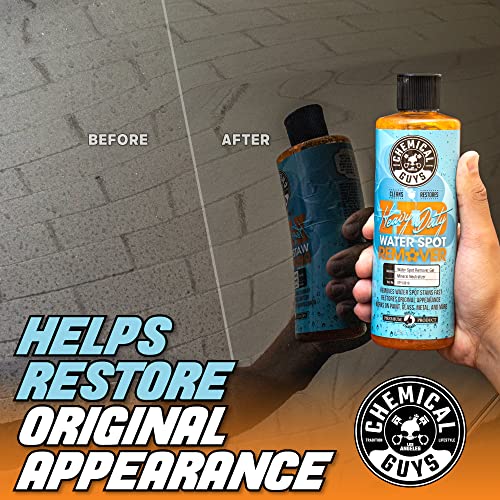


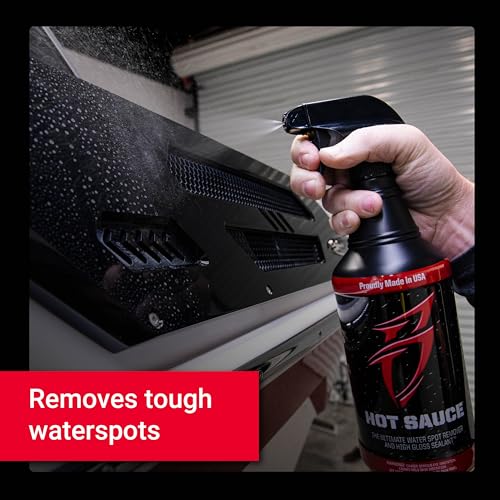
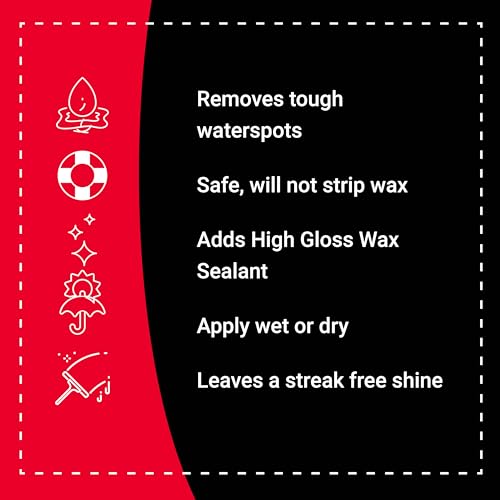


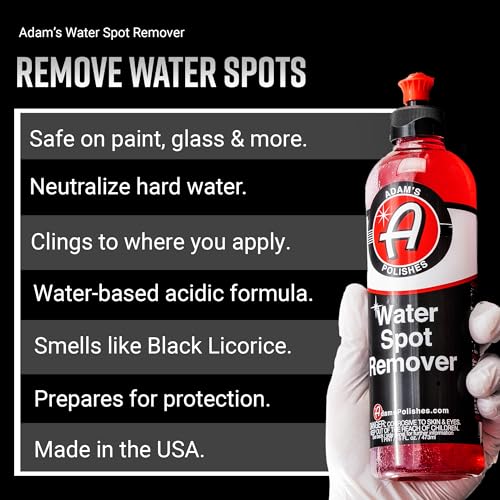

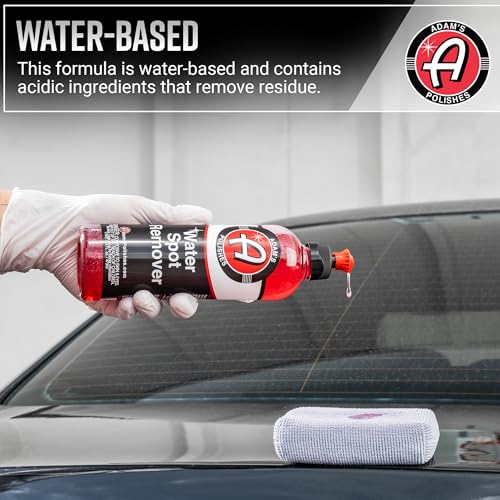
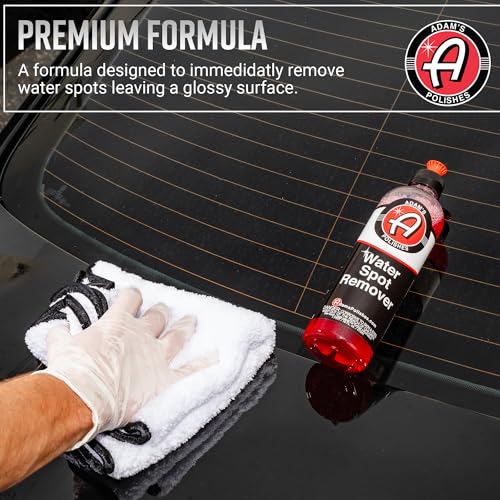
We also considered 10 others:


Our Top Choice
The order above is not editorial opinion, and it is not paid placement. It comes from what shoppers across our network actually do - which water spot removers for cars they compare, and which they ultimately buy. We re-rank as new data comes in, so the long-term favorites have to keep earning their spot against new entrants. The full method, including how we make money.
Water Spot Removers For Cars Buyer's Guide
Car water spot removers sit between chemistry and correction: the best choice depends on whether you are dissolving fresh mineral deposits or trying to fix etched glass or clear coat. The sharpest buying concerns are surface safety and realistic effort, because an overly aggressive or poorly controlled remover can leave haze, affect protection, or still fail on baked-in spots.
Spot Severity
Water spots are not all the same: fresh mineral deposits can often be dissolved or polished away, while etched marks have bitten into glass or clear coat and may need true polishing or may not fully disappear. A good choice sets realistic expectations for age, hardness, and sun-baked severity so you do not over-scrub a surface that needs a different correction step.
Look for language that distinguishes light mineral spotting, sprinkler marks, hard-water deposits, and etched or baked-in spots; avoid any remover that promises a one-wipe cure for severe glass or clear-coat etching. For car use, start with the least aggressive method, test a small area, and be ready for repeat passes only if the surface is improving without haze, dulling, or drag. Owner feedback supports this split: buyers often report real improvement on spotted paint, glass, and gel coat, but results are hit-or-miss on severe or etched spots, with stubborn marks sometimes remaining even after products that worked elsewhere.
Surface Safety
Automotive water spot removers may use acids, abrasives, or polishing agents, and the wrong chemistry can stain trim, weaken protection, or haze sensitive surfaces. The safest pick clearly states where it can be used and where it should be kept away, especially around coated glass, fresh paint, plastic trim, vinyl, and aftermarket films.
Choose a remover by surface first: dedicated glass strippers are best for bare exterior glass and windshield film, while paint-safe formulas should specify clear coat use and should not be allowed to dwell on hot panels or porous trim. If the vehicle has wax, sealant, ceramic coating, paint protection film, or tinted/treated glass, assume the remover may alter that layer unless the label says otherwise, and plan to re-protect paint or glass after correction. Owner reports point to strong results across vehicle glass, paint, gel coat, and boat-like surfaces, but the same feedback also shows that performance varies by surface condition, so compatibility and a test spot matter as much as raw cleaning strength.
Application Control
These products work best when the user can keep them where needed, control how long they stay wet, and remove residue before it dries hard. Poor workability can turn a simple decontamination step into heavy rubbing, residue smearing, or accidental overexposure on adjacent surfaces.
Favor gels, creams, or polishes that can be worked in small sections with a microfiber or foam applicator and that give clear instructions for wet glass or dry glass, dwell time, and final wipe-off. Avoid applying over an entire windshield or hood at once, especially in sun or heat; once residue dries, removal can become much harder and may require extra wiping or polishing. Owner sentiment lines up with this: buyers like formulas that stay where applied and are straightforward by hand, but they also warn that letting product dry can make cleanup finicky and turn the job into a longer detailing step.
Clarity Finish
A water spot remover should leave the surface clearer, not merely less spotted. On windshields, residue and oily film can affect wiper glide and night visibility; on paint, the goal is a clean, glossy finish without haze or scrub marks.
For windshield-focused use, look for a product that removes mineral film and traffic/oily residue, then leaves no chalky haze that can chatter wipers or glare under headlights. For paint, choose a formula that finishes cleanly and pair it with proper washing, drying, and protection so the corrected panel does not immediately spot again. Owners frequently praise noticeably clearer glass, cleaner windshields, smoother wiper behavior, and a refreshed or glossier look on glass and paint, especially when the product is used after washing on dry surfaces and worked section by section.
Effort Payoff
The real cost of a water spot remover is not only the bottle; it is the amount of rubbing, repeating, rinsing, and follow-up polishing required. A worthwhile choice should match the job size and severity so a small glass cleanup does not become an all-day correction project.
Buy for the job you actually have: light newer spots may justify an easy hand-applied remover, while heavy hard-water accumulation, neglected glass, or etched paint may require multiple applications, machine polishing, or a different correction approach. If a product needs aggressive scrubbing to show progress, stop periodically to inspect for haze or marring rather than pushing harder. Owner feedback is conditional in the same way: some buyers call the results well worth the effort when stubborn deposits lift, while others find tough buildup only partially improved and note that repeat wiping, scrubbing, or polishing may be needed for best results.
1,000,000+ shoppers use Buyer's Guide every week to find the best products and services online.

Helping millions of users make smarter purchases online.


