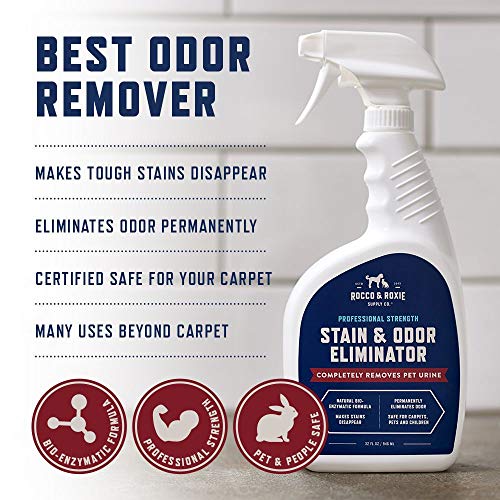
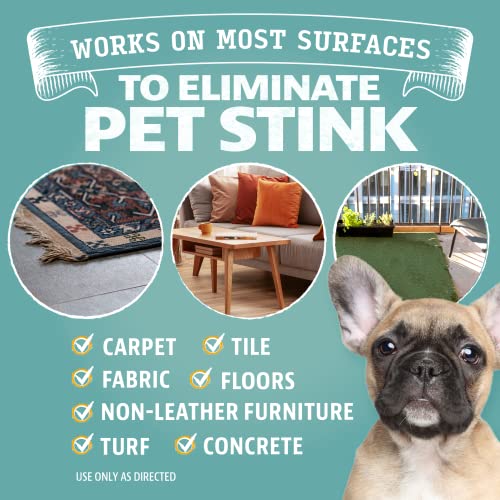
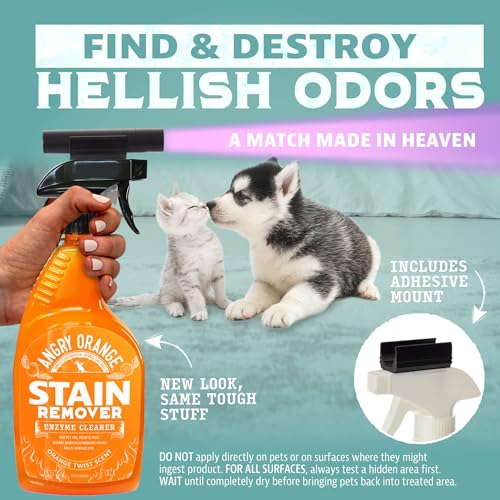
We also considered 10 others:
Our Top Choice
Compare Features
Why These Features Matter:
Urine is not a normal “oops” spill. It’s warm, it seeps, it lingers, and it has an emotional agenda: it wants you to smell it again in three days, right when you’ve convinced yourself you handled it. The best urine removers aren’t the ones that make your house smell like a “mountain breeze.” They’re the ones that actually stop the problem at the source — the stuff you can’t see that’s quietly soaking into grout, carpet pad, sofa foam, and that one floorboard your dog keeps revisiting like it’s a Yelp-worthy destination.
In real-life homes (tiny apartments, rentals with ancient carpet, beautifully styled living rooms with a toddler who moves like a Roomba with opinions), the details matter. Not “lab results.” Details like: does the spray pattern hit the baseboard crack? Does it dry without leaving a sticky halo? Does the scent scream “cleaning aisle” or just… disappear?
The Enzyme Question (Yes, You Want Enzymes)
If you take one thing from this guide: enzyme-based formulas are the ones that tend to fix the actual issue, not just the vibe. Enzymes break down the organic stuff that causes odor (and repeat marking). Non-enzyme cleaners can make the surface look fine, but they’re more likely to leave behind the ghost of the accident — especially once humidity, heat, or a sunny patch of floor gets involved.
- Notable strengths: Better at fully removing odor (not covering it). More effective on repeat incidents and “mystery spots.”
- Things to know: Enzymes need time. If you spray and immediately scrub like you’re angry at the stain, you can make them less effective.
- Honest caveat: Enzyme cleaners can smell a little… farm-adjacent while they work. That “weird” smell usually fades as it dries. If it doesn’t, it’s often because there’s still urine in the padding/porous layer, not because the product failed you.

Scent: The Great Distraction
A strong fragrance can be comforting for exactly four minutes — until it starts feeling like you tried to solve a problem by lighting a candle on top of it. The most livable urine removers tend to land in one of two camps: lightly scented-and-then-gone, or truly low/no fragrance. If you have pets with sensitive noses, or you’re the kind of person who can identify “linen” vs. “fresh cotton” in your sleep, you’ll notice this.
- Look for: “No added fragrance” if you’re scent-sensitive, or “light scent” if you need psychological closure.
- Avoid: Anything that leaves a persistent perfume film — it can be unpleasant and it can attract repeat marking (some pets treat fragrance as a new “message board”).
- Real-life tip: If a product smells heavily of citrus or soap for days, it’s not necessarily “still cleaning.” It might just be… still there.

Spray Mechanism: Your Wrist Will Have Opinions
This is the least glamorous part of shopping, and also the part you’ll curse at most. A urine remover can have the best formula in the world and still make you hate your life if the bottle dribbles down your hand or requires a CrossFit grip session to mist a rug.
- Notable strengths: A wide, even spray for large rug zones; a tight stream for baseboards, grout lines, and the edge where carpet meets wall.
- Things to know: Some triggers clog or start “spitting” after a few uses — especially if you store the bottle in a dusty laundry closet.
- Honest caveat: Big jugs are economical but annoying. You’ll end up decanting into a smaller spray bottle anyway (which is fine — just label it so no one thinks it’s DIY room spray).

Drying and Residue: The Sticky-Halo Problem
The ideal finish is boring: it dries, you forget, life continues. The less ideal finish is the classic slightly tacky patch that grabs dirt like it’s magnetized, turning your “clean spot” into a new grimy bullseye. This matters most on rugs and upholstery, where residue can change the texture — crunchy, stiff, or weirdly shiny.
- Look for: “No residue” claims that are actually backed up by reviews mentioning texture (people will tell you if their couch turned stiff).
- Things to know: Overusing product can create residue even with a great formula. More isn’t always more; sometimes it’s just wetter.
- Honest caveat: If you’re treating a deep accident on carpet, the padding underneath may still hold moisture and odor. Surface dryness doesn’t mean the situation is over.
Surface Reality: Carpet, Wood, Tile, Upholstery (And the One You Forgot)
Most of us don’t live in a showroom with one perfect surface. We live in mixed-material chaos: vintage wool rug, sealed hardwood, unsealed grout that collects regret, and a sofa that cost too much to be treated like a litter box (and yet).
- Carpet/rugs: You need something that penetrates. If you only treat the fibers and not what’s underneath, the smell can come back like an unwanted sequel.
- Hardwood: Sealed hardwood is usually manageable; unsealed or damaged finish is where urine can sink in and become a long-term tenant. Choose a remover that won’t bleach or strip finish, and don’t flood the area.
- Tile/grout: Grout is basically a sponge with a PR team. A remover that can dwell (sit) for a bit without drying instantly is helpful here.
- Upholstery: You want a formula that doesn’t leave rings and doesn’t stiffen fabric. Blotting matters more than aggressive rubbing (unless you enjoy making the stain bigger).
What “Works” Depends on the Mess: Fresh, Dried, or Mystery
A fresh accident is mostly a speed-and-technique situation. A dried accident is a chemistry-and-patience situation. A mystery spot is an emotional situation.
- Fresh: Blot first (paper towels, clean cloth), then treat. If you spray onto a puddle, you’re diluting and spreading.
- Dried: You often need to rehydrate the area a bit so the enzymes can do their job. That means a generous application and time.
- Mystery: You may need a blacklight to find the perimeter. The smell you notice is not always centered where you think it is.
Things That Make a Urine Remover Feel “Editor-Approved”
After reading far too many reviews and talking to the kind of people who own both a cream sofa and a large dog (brave), the products that people stick with tend to share a few quiet virtues.
- Predictable performance: It works the same way every time, not just on “easy” accidents.
- Non-dramatic scent: It doesn’t turn your living room into a fragranced cleaning wipe.
- Good bottle behavior: No leaks, no clogged trigger, no accidental misting your jeans.
- Doesn’t punish you later: No sticky patch, no bleached spot, no crunchy upholstery texture.
Honest Caveats (Because Your House Is Not a Lab)
- Old stains can be structural: If urine got into subfloor, foam, or deep padding, a spray can only do so much. At a certain point, you’re in replacement-or-seal territory.
- “It came back” doesn’t always mean failure: Heat and humidity can reactivate odor from deeper layers. This is why repeat applications sometimes work better than one heroic soaking.
- Some pets are committed to the bit: If the behavior is ongoing (stress, marking, medical issue), even the perfect remover becomes part of an endless chore cycle. Sometimes the “best urine remover” is paired with a vet visit and a gate.

How to Use It So It Actually Works
- Blot, don’t scrub: Scrubbing pushes urine deeper and fuzzes carpet fibers. Blot like you’re trying to lift the mess out, not sand it into the floor.
- Saturate the full zone: Treat beyond the visible stain. Liquid spreads, especially in carpet padding.
- Let it dwell: Enzymes need time. Read the label, then add a little patience.
- Cover if needed: For deep carpet accidents, placing a towel and a weighted object over the area can encourage wicking up and slower drying (which helps enzymes).
- Dry thoroughly: Fans help. So does not trapping moisture under a rug pad immediately after.
A Quick Buying Cheat Sheet (Pick Your Priorities)
- If you have repeat accidents: Enzyme formula + minimal fragrance + good penetration.
- If you live in a small apartment: Low-odor formula + bottle that doesn’t leak + fast-ish dry down.
- If you’re treating upholstery: Low-residue, fabric-safe reputation + gentle spray + no stiff finish reports.
- If it’s mostly tile/grout: A remover that can sit without evaporating instantly + a spray pattern that can target edges.
The Bottom Line
The “best urine remover” is the one that disappears the evidence without leaving behind a new problem: perfume, residue, discoloration, or a lingering damp patch that makes you feel like you live inside a cleaning tutorial. Prioritize enzymes, a sane scent, and a bottle you don’t hate using. Then use it like you mean it: blot, soak the real area (usually bigger than you want), let it sit, and dry it properly. The goal isn’t a house that smells like product. It’s a house that smells like nothing happened — which, in a real home, is its own kind of luxury.