













We also considered 10 others:


Our Top Choice
The order above is not editorial opinion, and it is not paid placement. It comes from what shoppers across our network actually do - which under cabinet range hoods they compare, and which they ultimately buy. We re-rank as new data comes in, so the long-term favorites have to keep earning their spot against new entrants. The full method, including how we make money.
Under Cabinet Range Hoods Buyer's Guide
Under-cabinet range hoods are a tight tradeoff between real ventilation and the limits of existing cabinets, duct openings, and cooktop clearance. The best pick is not just the strongest fan; it is the hood that fits your cabinet, captures fumes from your actual burners, stays usable at normal noise levels, and can be cleaned before grease buildup becomes a problem.
Capture Power
A range hood only works well if it captures cooking plume before it spreads into the room. In under-cabinet models, fan strength, hood depth, filter design, and duct layout all affect whether smoke and grease actually leave the kitchen.
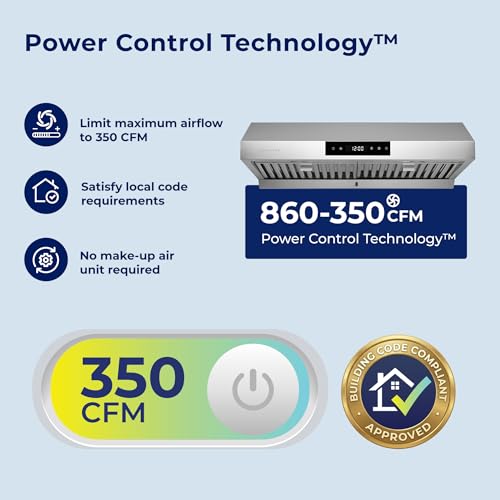
Prioritize capture area, ducting, and real-world ventilation before chasing a headline fan rating. For frequent frying, searing, wok cooking, or high-output gas burners, a ducted under-cabinet hood with multiple fan speeds, a properly sized duct path, and good coverage over the front burners will clear smoke, steam, grease, and odors far better than a shallow or recirculating setup. Check whether the hood vents upward or out the back, whether your cabinet and wall can support that route, and avoid choking a strong fan with undersized, long, or sharply bent ductwork. Owner feedback strongly rewards hoods that feel like a clear upgrade over weaker units, especially when they move a lot of air and pull cooking fumes out quickly. Sentiment is strongest around suction for serious cooking, odor removal, and dependable airflow, though some owners report split longer-term fan experiences, so power should be weighed alongside build and reliability.
Fit & Mounting
Under-cabinet hoods are constrained by existing cabinets, duct openings, and cooktop clearances. A good fit saves labor, preserves cabinet space, and helps the hood sit close enough to the cooking surface to capture fumes effectively.
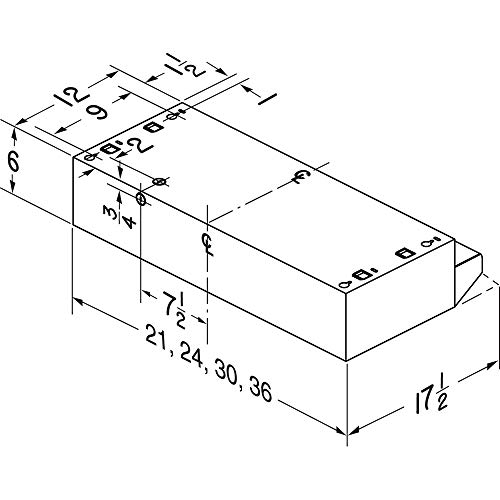
Measure the cabinet opening, hood width, cabinet depth, rear wall clearance, and duct knockout location before choosing. A replacement hood is easiest when the width, top-or-rear vent position, electrical location, and mounting holes line up with the old installation; a mismatch can turn a simple swap into cabinet cutting, duct modification, or electrical work. For solo DIY, pay close attention to weight, screw access, and whether the unit needs to be held overhead while fasteners are started. Owners often praise under-cabinet models that are lightweight, straightforward to mount, and easy to get running in standard setups. Fit is especially important for shoppers replacing older hoods, with positive feedback around 30-inch units working well under existing cabinets, while heavier models or awkward screw access can make solo installation demanding.
Noise Control
A hood that is too loud often gets left off, which defeats its purpose. Noise depends on fan speed, duct restriction, mounting stiffness, and motor quality, so the best choice balances strong capture with sound levels you can live with.
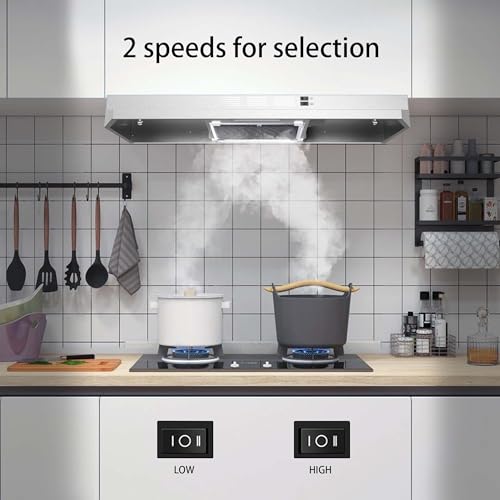
Look for a hood that gives you usable lower speeds, not just a powerful maximum setting. High speed will almost always be louder, so the practical question is whether the hood can handle everyday simmering and sautéing at a sound level you will actually use, while reserving the loudest mode for smoke-heavy cooking. Watch for signs of vibration control, solid mounting, balanced fans, and clear speed steps; squeals, rattles, or resonance through the cabinet are bigger problems than normal airflow noise. Owner sentiment suggests noise is acceptable in many kitchens but rarely invisible. Several buyers describe lower speeds as quiet enough or tolerable, while highest settings can get loud, and a few report squealing sounds that make the unit feel much louder.
Grease Cleanup
Range hoods collect airborne grease by design, so maintenance is not optional. Easy filter removal and wipeable surfaces reduce fire risk, preserve airflow, and keep the hood from becoming noisy or ineffective over time.
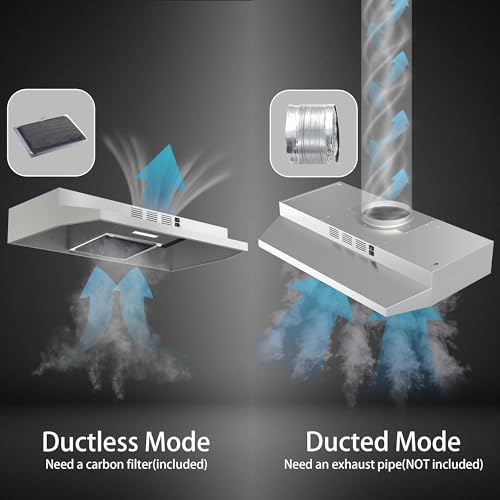
Choose a hood that makes grease management easy: removable metal filters, accessible filter latches, smooth underside surfaces, and a design that does not hide oily residue in sharp seams. Heavy cooking benefits from stainless baffle or sturdy mesh filters that can be washed regularly; ductless setups also need charcoal filter replacement, which adds ongoing maintenance and reduces odor performance. Avoid designs where lights, controls, or fan openings sit in hard-to-clean grease paths. Owners call cleaning a major advantage when the hood has simpler surfaces or self-cleaning features, especially when replacing an older unit. Positive sentiment also ties effective function and well-made stainless bodies to easier day-to-day ownership, because the hood has to keep working in a hot, greasy environment.
Lighting & Controls
The hood sits directly over the cooking surface, so its lights and controls affect every meal. Poor lighting makes it harder to monitor food, while awkward controls discourage timely fan use when smoke or steam starts rising.
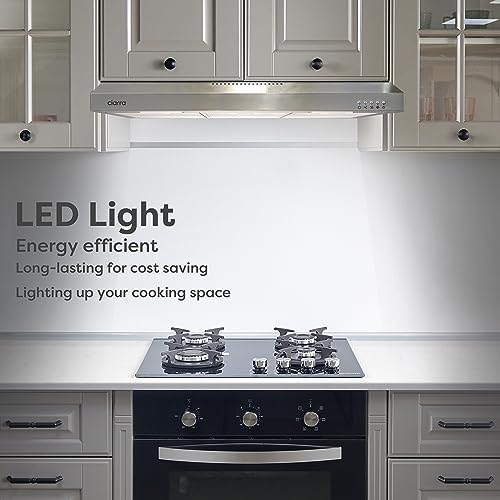
For an under-cabinet hood, lighting should illuminate the front and rear burners without glare, dead spots, or a weak daytime output. Prefer replaceable or long-life, heat-tolerant LEDs with at least two lamps on wider hoods, and check whether the color and placement help you judge browning, boiling, and smoke. Controls should be easy to operate with wet or greasy hands; touch-free gesture controls can be convenient, but they should be optional or easy to disable if they trigger unintentionally. Owners often appreciate bright white lights that improve visibility over the stove, and some specifically like touch-free operation as a convenience. Feedback on lighting is mixed, however, with some finding it bright enough and others saying it is too dull for daytime use, so lighting deserves more scrutiny than a spec sheet photo may suggest.
Build & Look
Under-cabinet hoods are highly visible and exposed to heat, moisture, and grease. Good construction keeps the fan stable and the finish presentable, while the right profile helps the hood blend with cabinets and appliances.
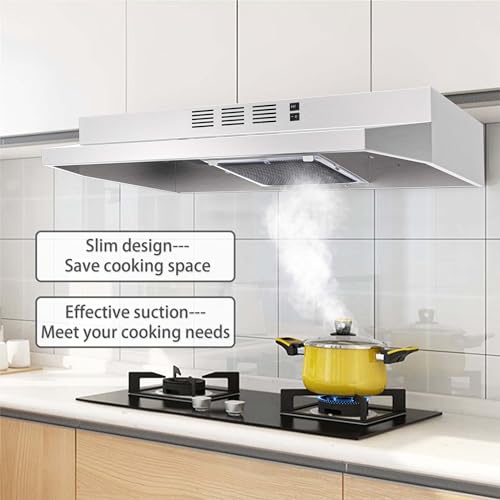
Match the hood’s finish, profile, and material quality to both your kitchen and your cooking habits. A slim stainless under-cabinet hood can modernize a kitchen without visually crowding the cooktop, but the metal should still feel rigid, the seams should be clean, and the underside should resist flexing during fan operation. Thin cosmetic stainless over a weak chassis may look good at first but can amplify vibration, dent during installation, or feel less durable around filters and controls. Owner sentiment is consistently positive toward sleek stainless styling, contemporary looks, and low-profile designs that make kitchens feel updated. Buyers also connect sturdy feel and stainless construction with quality, and some describe the look as a strong upgrade for the money compared with more costly-looking alternatives.
1,000,000+ shoppers use Buyer's Guide every week to find the best products and services online.

Helping millions of users make smarter purchases online.


