













We also considered 10 others:


Our Top Choice
The order above is not editorial opinion, and it is not paid placement. It comes from what shoppers across our network actually do - which ductless range hoods they compare, and which they ultimately buy. We re-rank as new data comes in, so the long-term favorites have to keep earning their spot against new entrants. The full method, including how we make money.
Ductless Range Hoods Buyer's Guide
A ductless range hood trades exterior venting for easier placement, so the real question is not just how powerful it sounds on paper but how well it captures grease, smoke, and odors before recirculating air back into the kitchen. The sharpest buying concerns are filter-supported airflow, cabinet fit, and noise at the speeds you will actually use.
Air Capture
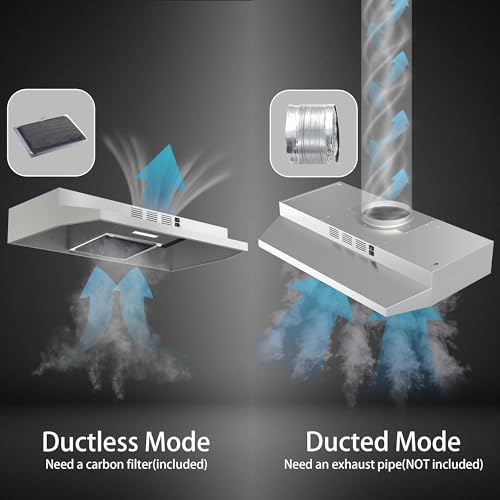
Ductless range hoods do not send smoke, grease, and odors outdoors, so their usefulness depends on capturing cooking plume quickly and filtering it before recirculating air back into the room. A good pick combines adequate fan strength, proper hood coverage, and easy-to-replace charcoal filtration; a bad pick can move air yet still leave lingering smells and greasy residue.
For a ductless hood, prioritize capture and filtration over raw airflow numbers alone: look for a hood at least as wide as the cooktop, with a deep enough capture area to cover front burners, washable grease filters, and replaceable charcoal filters specifically supported for recirculating use. Avoid treating ductless as equivalent to vented exhaust for heavy wok cooking, frequent searing, or high-smoke frying; because air is returned to the kitchen, odor and fine smoke control depend heavily on filter condition and how well the hood pulls rising fumes before they spread. Owner feedback supports making airflow a top screen: suction was repeatedly called a strength, with users saying the hood pulled a good amount of air and handled everyday kitchen ventilation effectively, though fan performance was more mixed over time.
Fit & Install
Ductless hoods are often chosen because they avoid exterior ductwork, but they still have strict fit, clearance, and support requirements. A hood that is slightly wrong for the cabinet, insert cutout, or cooktop width can be hard to mount and may capture fumes poorly even if the fan itself is capable.
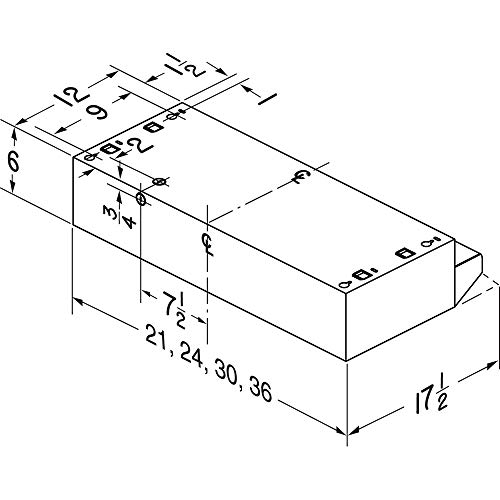
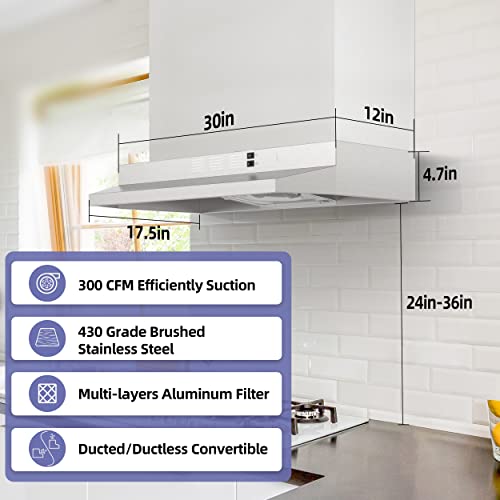
Measure the cabinet opening, hood width, depth, rear height, and mounting-hole pattern before buying, and confirm the model can run ductless without an external vent. Under-cabinet units should leave enough clearance above the cooktop while still sitting low enough to catch steam; insert-style units need a cabinet or custom enclosure that can support their weight and expose the controls and lights properly. Owner reports make installation a real differentiator: many found mounting straightforward, especially with lighter under-cabinet designs, while heavier built-in units may be easier and safer to install with a second person.
Noise Control
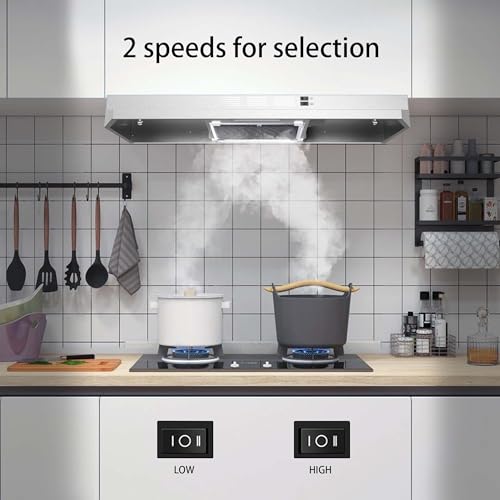
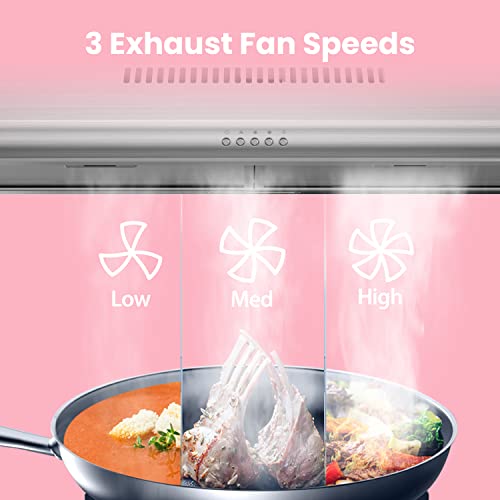
Noise matters more in ductless hoods because the unit is usually close to ear level and may need to run longer after cooking to clear odors. Multiple usable speeds are important: if the low setting is still loud or the high setting is unpleasant, people tend to run the hood less, which reduces real-world ventilation.
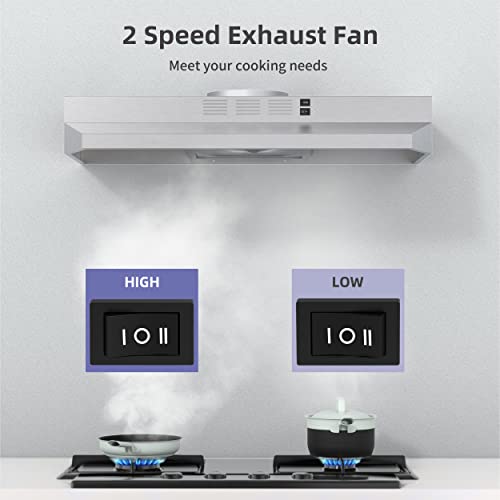
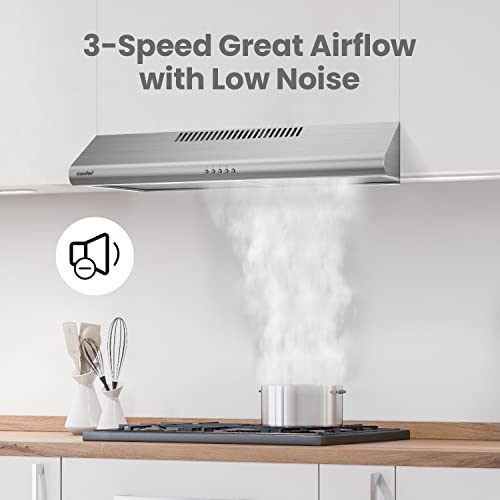
Choose a hood with multiple fan speeds and expect to use lower speeds for simmering and higher speeds only for smoke-heavy cooking. Check noise ratings when available, but also assume that compact ductless hoods can become noticeably loud at maximum speed because the fan, filters, and recirculation path are all close to the cook. Owner sentiment matches this tradeoff: some buyers found the sound tolerable or quieter than expected, while others said higher settings were clearly loud rather than silent.
Cooktop Light
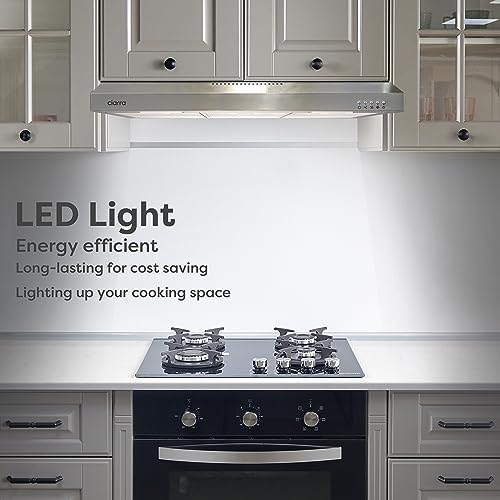
A range hood is also the task light directly over the cooking surface. Good lighting improves visibility for browning, simmering, and cleaning the cooktop, while weak or uneven lighting makes the hood feel less useful even when ventilation is adequate.
Look for bright, evenly placed cooktop lighting that illuminates both front and back burners without glare. Ductless hoods often sit under cabinets or inside a cabinet surround, so poor light placement can leave pans in shadow even if the kitchen has ceiling lights; replaceable or long-life LEDs are preferable for long-term use. Owners specifically praised useful over-stove lighting, including bright white dual-light setups that made it easier to see what was cooking.
Build & Upkeep
Ductless hoods work in a greasy, warm environment and depend on filters and fans that need regular attention. Better construction, accessible filters, and dependable controls help the hood keep performing after the first few months instead of gradually losing airflow or becoming troublesome to maintain.
Favor sturdy metal construction, secure controls, removable grease filters, and a motor/fan design that can be cleaned without fighting the cabinet. In ductless use, maintenance is not optional: clogged grease filters reduce capture, saturated charcoal filters stop controlling odors, and a weak fan assembly can turn a good-looking hood into a noisy light fixture. Owner feedback supports checking durability rather than just initial performance, with some units described as solid, premium-feeling, and dependable, while longer-term comments mentioned fan or unit failures after a short time.
Visual Profile
Range hoods sit in one of the most visible parts of the kitchen, so shape and finish affect satisfaction every day. In this category, the best visual choice still has to preserve capture depth and usable controls; a hood that looks minimal but misses steam and smoke is a poor tradeoff.
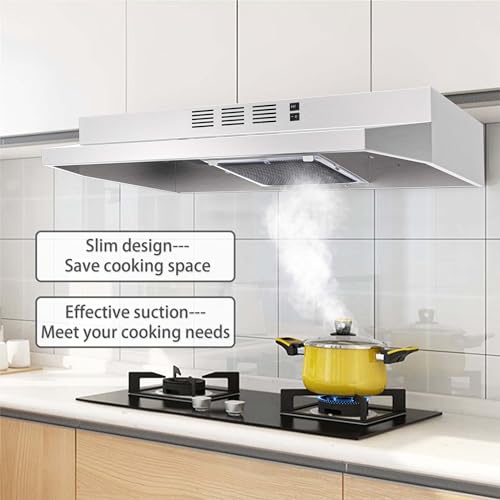
Match the hood style to how visible it will be: a slim stainless under-cabinet hood can update the room without dominating it, while an insert can disappear into cabinetry for a cleaner built-in look. Check the front profile, control visibility, finish, and how far the hood projects over the cooktop; too shallow may look sleek but capture less from front burners, while too bulky can crowd the cooking area. Owners placed real value on appearance, repeatedly liking sleek stainless finishes, slim visual profiles, and built-in designs that modernized the kitchen without a bulky hood hanging down.
1,000,000+ shoppers use Buyer's Guide every week to find the best products and services online.

Helping millions of users make smarter purchases online.


