











We also considered 10 others:


Our Top Choice
The order above is not editorial opinion, and it is not paid placement. It comes from what shoppers across our network actually do - which quiet range hoods they compare, and which they ultimately buy. We re-rank as new data comes in, so the long-term favorites have to keep earning their spot against new entrants. The full method, including how we make money.
Quiet Range Hoods Buyer's Guide
Quiet range hoods involve a real tradeoff: the hood must move enough air to capture smoke, steam, grease, odors, and gas fumes, but more airflow usually creates more sound. The sharpest buying concerns are whether it stays tolerable at the speeds you will actually use and whether its size, ducting, and filter design match the way you cook.
Quietness
A quiet range hood still has to move smoke, steam, grease, and combustion byproducts, so the real test is how it sounds at useful airflow levels. Noise also depends on duct layout, fan balance, cabinet resonance, and whether the hood can clear cooking fumes without always running on high.
Shop for quiet performance at the speed you will actually use, not just the lowest setting. For serious cooking, look for published sones or dBA by speed, a quiet low/medium setting for simmering, solid motor isolation, and duct sizing that matches the outlet; undersized ducts, tight elbows, and long runs can make even a good hood roar. Avoid assuming “quiet” means silent at maximum power, because high airflow has to move a lot of air. Owner feedback supports this tradeoff clearly: many buyers found noise reasonable or tolerable for the power, especially at lower speeds, while others said medium and high settings got loud. Some reports also mention squealing developing on certain units, so fan quality and vibration control matter as much as the advertised noise rating.
Venting Power
The best quiet hood is not merely low-noise; it must capture the cooking plume before it spreads into the room. Strong airflow, proper hood coverage, and a suitable duct path determine whether smoke and grease actually leave the kitchen instead of recirculating around cabinets and ceilings.
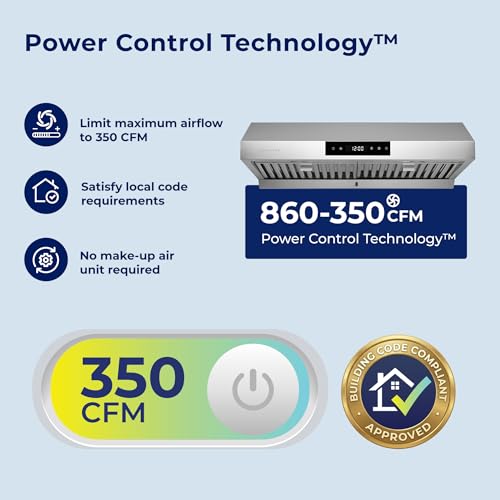
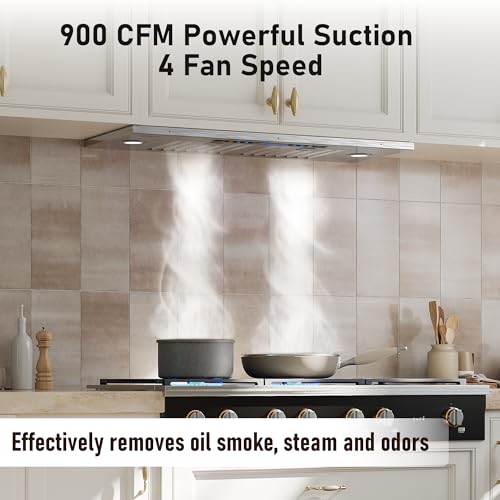
Prioritize capture and venting power for your cooking style: frequent searing, wok cooking, frying, or aromatic cooking needs stronger airflow, a hood at least as wide as the cooktop, good front-burner coverage, and preferably ducted outdoor exhaust. Check CFM alongside hood depth and duct diameter, because a shallow or poorly ducted hood can miss the smoke plume even with a strong motor. For gas ranges, venting outside is especially important because the hood is also removing heat, moisture, grease, and combustion fumes. Owners repeatedly praised strong suction that cleared heavy smoke, steam, grease, fumes, and odors, including during stir-frying and Chinese-style cooking. Several also described these hoods as a major upgrade over weaker over-the-range microwave vents or basic fan setups.
Fit & Install
Range hoods are fixed appliances, so a mismatch in ducting, cabinet clearance, or mounting access can create more trouble than the hood itself. A quiet hood can also become noisier if it is forced through the wrong duct path or mounted with vibration against cabinetry.
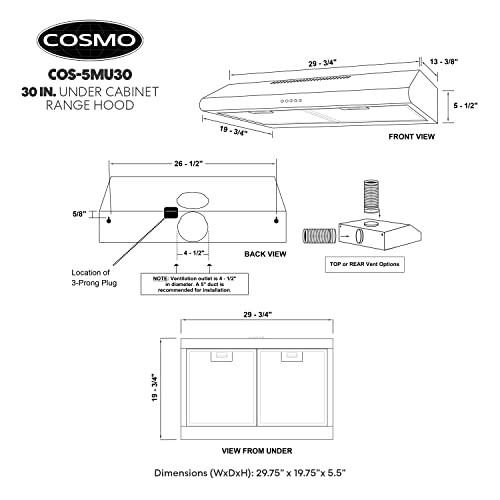
Measure before choosing: confirm cabinet width, hood depth, clearance above the cooking surface, outlet direction, duct size, electrical location, and whether the hood supports top or rear venting for your layout. Under-cabinet models can be simple when the opening and duct line up, but heavy bodies, awkward screw access, and vague instructions can turn a solo install into a difficult job. If replacing a microwave vent, check that the duct is not too small and that the new hood’s mounting pattern and outlet position will not require cabinet cutting. Owner sentiment shows both sides: many buyers found lightweight, standard under-cabinet mounting straightforward, while others needed a helper, contractor, or extra effort because of weight, vent alignment, screw access, or limited instructions. Slim, low-profile designs were also praised for fitting cleanly under cabinets without dominating the kitchen visually.
Grease Cleanup
Grease management is central to range hood performance because dirty filters restrict airflow and can spread residue onto cabinets and walls. Easy cleaning also makes it more likely that the hood will be maintained often enough to stay effective and safe.
Choose a hood that makes grease removal routine: removable stainless baffle or mesh filters, dishwasher-safe parts where appropriate, smooth wipeable surfaces, accessible grease trays, and minimal crevices around controls and seams. For high-grease cooking, baffle-style filtration and easy filter removal are often worth prioritizing because clogged filters reduce airflow and can make the fan work harder and louder. If considering self-cleaning features, still check what parts must be wiped, emptied, or replaced. Owners called out removable mesh filters, easy wipe-down surfaces, and self-cleaning features as meaningful day-to-day advantages. Cleaning convenience was especially valued by people replacing older hoods, where grease buildup had made maintenance more of a chore.
Lights & Controls
Lighting and controls affect every cooking session, especially when the hood is mounted under cabinets where shadows are common. Good controls also help users run the fan earlier and adjust speed faster, which improves capture before smoke spreads.
Look for bright, well-placed LED lighting that reaches the front burners, not just the back wall, and check whether the bulbs or light modules are replaceable. Controls should be usable with wet or greasy hands, easy to read in low light, and simple enough to change fan speeds quickly when smoke surges. Touch-free or gesture controls can be helpful during messy cooking, but make sure they can be disabled or do not trigger accidentally in a tight cooking space. Owner feedback strongly favored bright front lighting and useful white LEDs that improved visibility over the stove and prep area. Hands-free controls were also appreciated as a convenience, though some owners used them selectively or turned them off.
Build Quality
A range hood is both a visible kitchen fixture and a mechanical appliance exposed to heat, grease, moisture, and vibration. Good materials and assembly help it look integrated while reducing rattles, flex, and premature fan problems.
Favor rigid stainless construction, well-finished edges, solid filters, secure panels, and a motor assembly that feels stable rather than tinny. A sleek hood should still have enough depth and structure to capture fumes, and a low-profile body should not come at the cost of rattling, weak filters, or difficult service access. For long-term confidence, pay attention to fan design, vibration, and whether common wear parts can be accessed. Owners often described sturdy stainless builds, sleek contemporary styling, and premium-feeling finishes as major positives, especially when the hood had to match modern appliances or cabinetry. At the same time, fan performance feedback included some longer-term failure reports, so build quality should be judged beyond appearance alone.
1,000,000+ shoppers use Buyer's Guide every week to find the best products and services online.

Helping millions of users make smarter purchases online.


