
















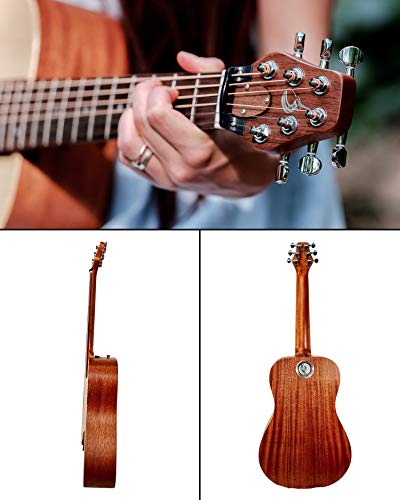


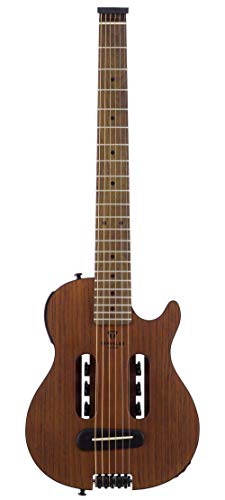


We also considered 10 others:


Our Top Choice
The order above is not editorial opinion, and it is not paid placement. It comes from what shoppers across our network actually do - which travel guitars they compare, and which they ultimately buy. We re-rank as new data comes in, so the long-term favorites have to keep earning their spot against new entrants. The full method, including how we make money.
Travel Guitars Buyer's Guide
Travel guitars are all about the tradeoff between packable size and a real playing experience. The sharpest concerns are whether the compact design still feels like a proper instrument, stays in tune after travel, and gives you the right kind of sound for quiet practice, plugged-in playing, or casual acoustic use.
Packability
Travel guitars succeed or fail on whether they are actually easier to bring along than a standard instrument. The best compact design still needs to be comfortable to hold, safe to pack, and practical in cramped spaces, not just short on paper.
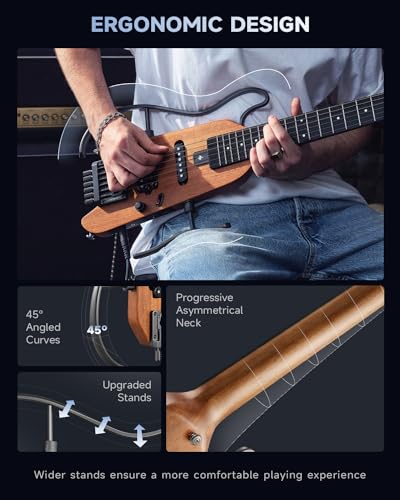
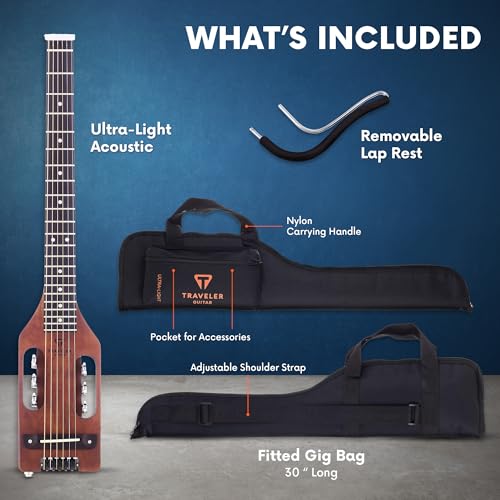
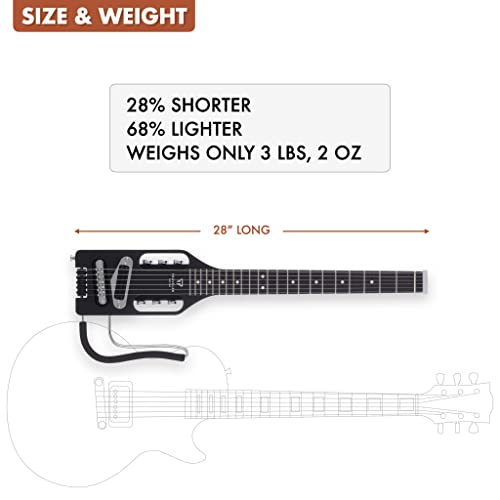
For a travel guitar, judge the packed length, body thickness, weight, and case shape before judging the instrument by its scale length alone. Headless bodies, removable frames, and compact acoustic bodies save space, but make sure the packed guitar still protects the bridge, tuners, and neck joint in a real bag, overhead bin, car trunk, or dorm corner. If you plan to practice on a couch, in a hotel, or with headphones, prioritize a shape that can sit securely on your lap without a strap and does not require a bulky stand or amp rig. Owner sentiment strongly supports compact, lightweight designs as a clear advantage for trips, couch practice, and small headphone setups, and travel use is specifically praised when the guitar remains easy to carry and play in limited space.
Playability
A travel guitar is often used for practice, so poor feel defeats its main purpose. Because compact and headless designs can use less familiar hardware, setup range and fret comfort matter more than they might on a full-size instrument tried in person.
Do not accept a travel guitar that feels like a toy: look for a comfortable neck profile, smooth fret ends, stable bridge hardware, and adjustable action and intonation where applicable. Short-scale instruments can feel slinkier, while full-scale headless models can feel closer to a regular guitar, so choose based on whether you want familiar muscle memory or easier fretting. Beginners should favor instruments that arrive close to playable but can still be adjusted, because high action, sharp frets, or poor intonation will slow learning much more than a smaller body will help travel. Owner reports highlight playability as a major strength when setup is done well, especially comfortable necks, rounded frets, and action that can be dialed in smoothly; starter-friendly models are also valued when they feel approachable for new players.
Practice Sound
Travel guitars are often played in places where normal acoustic volume is unwelcome or where an amp is unavailable. Matching the sound system to the setting matters as much as the guitar body itself, because “portable” can mean either quiet, amplified, or simply smaller.
Decide first whether you need an acoustic travel guitar, a silent/headphone guitar, or a compact electric that must be amplified. Small acoustic bodies are convenient but usually trade away bass and projection, while headphone-ready electrics are better for apartments, hotels, late-night practice, and shared spaces. Check for the output options you will actually use, such as headphone out, aux input, pickup selection, or amp compatibility, and avoid assuming an unplugged electric will be satisfying without electronics. Owner sentiment repeatedly points to sound quality as a pleasant surprise in this category, including clear and convincing tones for quiet practice and plugged-in playing; quiet practice is specifically praised when headphones or amplification make the experience satisfying without bothering nearby people.
Tuning System
A travel guitar is likely to be packed, unpacked, and exposed to changing conditions, so tuning stability is not a small detail. Nontraditional hardware can save space, but it can also make basic maintenance slower if the design is unfamiliar.
Inspect the tuning layout before buying, especially on headless or compact designs where the tuners may sit at the bridge and stringing may differ from a standard guitar. Look for clear string-change instructions, accessible tuners, enough adjustment range, and hardware that does not require awkward tools for routine tuning. New strings, compact hardware, and travel movement can all expose tuning drift, so setup confidence matters if you need the guitar to be ready quickly after packing. Owner feedback is mixed here: included tuners can be convenient, but some guitars drift out of tune at first, and tuning or string changes may have a learning curve compared with a standard electric.
Build Quality
Compact instruments still need to behave like real guitars under travel stress. Good construction protects tuning, playability, and electronics, while weak hardware can turn a convenient instrument into one that needs constant adjustment.
Prioritize solid neck alignment, clean fretwork, secure strap buttons, dependable bridge hardware, and a finish that will tolerate frequent handling. Travel instruments get bumped, packed, leaned against furniture, and played in changing environments, so loose frames, fragile jacks, rough fret ends, or flexy neck joints are bigger red flags than cosmetic minimalism. A glossy or attractive finish is a bonus, but it should not come at the expense of stable construction and hardware that can survive repeated transport. Owner sentiment supports build quality as an important separator, with multiple reports describing construction as better than expected and fret comfort contributing to a higher-quality feel; appearance also matters to some buyers when the instrument looks good enough to keep out and play often.
Starter Value
Travel guitars are often bought as first instruments, backup instruments, or practice tools, so the total package matters. Good value comes from a playable guitar plus genuinely useful accessories, not from a large bundle of items that do not solve real setup or transport needs.
For a first travel guitar or a learning kit, check whether the bundle includes the items that remove immediate friction: a usable gig bag, tuner, cable if needed, basic tools, strap, picks, and learning aids. However, do not let accessories hide a poor instrument; the guitar itself still needs playable action, stable tuning, and a size that fits the player. More experienced travelers may prefer fewer extras and better core hardware, while beginners benefit when the box includes enough practical gear to start playing the same day. Owner sentiment shows that complete bundles can make new players feel ready to begin, with practical extras like a tuner, gig bag, and chord poster called out, and several reports frame the better instruments as strong value when quality, sound, and playability exceed expectations.
1,000,000+ shoppers use Buyer's Guide every week to find the best products and services online.

Helping millions of users make smarter purchases online.


