














We also considered 10 others:


Our Top Choice
The order above is not editorial opinion, and it is not paid placement. It comes from what shoppers across our network actually do - which acoustic guitar amps they compare, and which they ultimately buy. We re-rank as new data comes in, so the long-term favorites have to keep earning their spot against new entrants. The full method, including how we make money.
Acoustic Guitar Amps Buyer's Guide
Acoustic guitar amps have to amplify detail without turning a bright pickup into harsh quack, so the best choice is rarely just the loudest small box. Shoppers should focus on clean acoustic voicing, enough headroom for the intended space, and whether the amp can handle the real setup: guitar, vocal mic, backing tracks, and possibly battery-powered use away from outlets.
Acoustic Tone
An acoustic guitar amp should make a pickup sound natural, clear, and full without masking finger detail or adding brittle harshness. Enough clean headroom matters because acoustic players often need clarity more than distortion or sheer loudness.
Look for an amp voiced for acoustic-electric instruments, preferably with a full-range speaker or tweeter, clean EQ, and enough wattage/headroom for your actual room. For bedroom practice, clarity at low volume matters more than maximum output; for coffeehouse sets, busking, or vocals plus guitar, prioritize clean volume before breakup and watch for feedback control or notch/phase features where available. Owner feedback strongly favors small acoustic amps that sound clean, warm, and surprisingly strong for their size, with enough volume for bedrooms, small spaces, casual playing, and some outdoor use, while also making clear that tiny practice units are not meant to fill a concert hall.
Inputs & Mix
Many acoustic players use one amp as a mini PA, not just a guitar speaker. Separate input paths and level controls keep a guitar, microphone, and backing source from fighting each other in the mix.
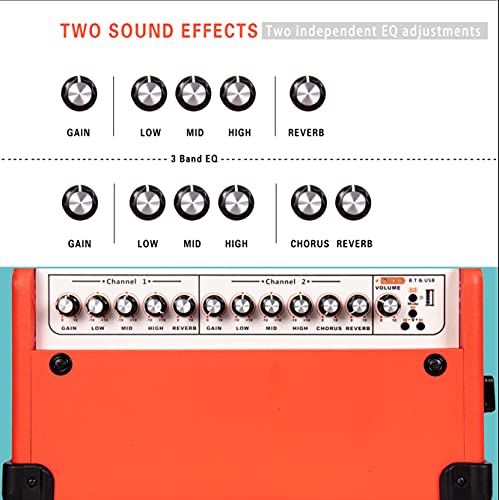
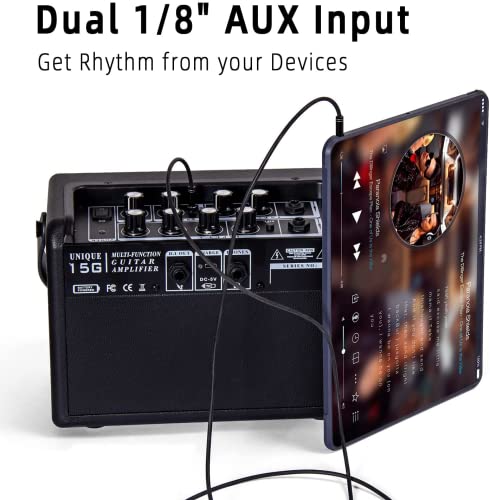
Choose input options around the way you actually perform: a single guitar input is fine for solo practice, but singer-songwriters should look for a microphone input, separate level controls, and ideally independent EQ or effects per channel. If you practice with tracks, Bluetooth or aux input is useful, but check whether the Bluetooth is only for playback rather than instrument transmission, since latency can make live playing impractical. Owners repeatedly praise amps with two or multiple inputs, Bluetooth channels, aux inputs, headphone jacks, and simple balancing controls because they can cover acoustic guitar, vocals, and backing tracks in one compact setup.
Battery Power
Battery power changes where an acoustic amp can be used, but runtime claims only matter if the amp stays loud enough for the session. Charging method and long-term battery reliability are also important because a portable amp becomes far less useful if it is difficult to recharge or inconsistent off-grid.
For busking, camping, park sessions, or outdoor ceremonies, prioritize a rechargeable battery with realistic runtime at performance volume, not just at low practice volume. Check the charger type, whether the amp can be used while charging, and whether replacement or service information is available, because battery or charging failures are common weak points in portable electronics. Owner sentiment is very positive on long unplugged play time, including hours of use for outdoor or busking situations, but there are also cautions that charging compatibility and reliability can be inconsistent for some users.
Carry Build
Acoustic amps often get moved between rooms, rehearsals, porches, and small gigs, so weight and cabinet shape matter as much as raw specifications. A portable amp still needs a solid cabinet, secure controls, and a handle or layout that survives regular carrying.
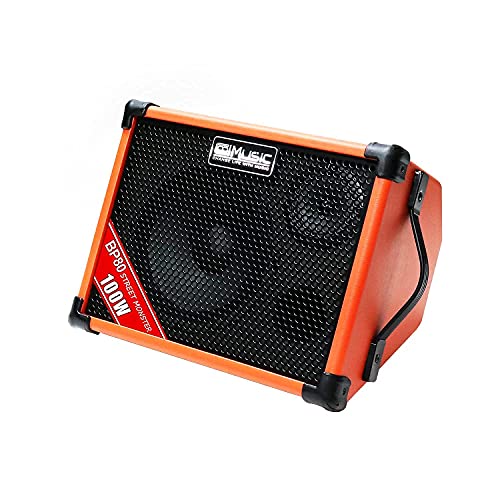
Match the cabinet to your routine: lunchbox-style amps are easy to carry around the house or to casual sessions, while larger cabinets may give more low-end body and projection but become less convenient for quick practice. Look for a stable cabinet, protected corners or a sturdy shell if it will travel, a practical handle/strap, and controls that are not easily snapped off in a bag or car. Owners strongly value compact, lightweight amps that are easy to move, take on trips, use camping, or carry to small gigs, and some also note solid-feeling construction and attractive finishes.
Practice Tools
The right practice features make an acoustic amp useful every day, not just on stage. Simple controls, tasteful effects, and private or track-based practice options can matter more than a long list of complicated settings.
For home use, look for quick-access volume and EQ, a headphone output, aux or Bluetooth playback for practice tracks, and reverb that can add space without washing out the guitar. Chorus can be useful on acoustic, but overly heavy or noisy effects are less important than a clean core tone; beginners and casual players usually benefit from fewer, clearer controls. Owners like simple layouts with clean/drive controls, headphone and aux options, Bluetooth support, and usable reverb/chorus, though feedback on built-in effects is more mixed than on the basic amp sound and utility.
Use-Case Value
A good acoustic amp is the one that fits the job without forcing you to pay for unused capacity or accept missing essentials. Value depends on the balance of tone, channels, portability, battery power, and durability for the specific use case.
Decide first whether the amp is mainly for bedroom practice, singer-songwriter performance, busking, or small ensemble use, then buy the feature set that supports that role. Avoid underbuying if you need vocals and outdoor projection, but also avoid chasing stage-sized power if you mostly need clear low-volume practice and easy setup. Owners often describe strong value when compact acoustic amps combine pleasing sound, rechargeable operation, multiple inputs, Bluetooth, and solid build in a small-space-friendly package, especially when the features exceed expectations for casual playing and portable performance.
1,000,000+ shoppers use Buyer's Guide every week to find the best products and services online.

Helping millions of users make smarter purchases online.


