













We also considered 10 others:


Our Top Choice
Compare Features


The order above is not editorial opinion, and it is not paid placement. It comes from what shoppers across our network actually do - which travel fans for hotel they compare, and which they ultimately buy. We re-rank as new data comes in, so the long-term favorites have to keep earning their spot against new entrants. The full method, including how we make money.
Travel Fans for Hotel Buyer's Guide
Hotel travel fans have to balance suitcase space against real overnight comfort in rooms where the thermostat may be locked, the air can feel stagnant, and outlets may be far from the bed. Prioritize a fan that can run safely and quietly all night near your pillow, charges from the cables you already carry, and can sit, clip, hang, or fold into position without cluttering a small nightstand.
Portability
If you plan to move a fan from room to room or use it on a stroller, desk, patio, or while traveling, portability affects how often it will actually be useful to you. Look for a size and weight you can carry comfortably, plus practical mounting options like a stable base, clip, hook, or magnetic attachment that fits where you’ll use it; just make sure portability doesn’t come at the cost of tipping easily, weak airflow, or awkward charging and setup.
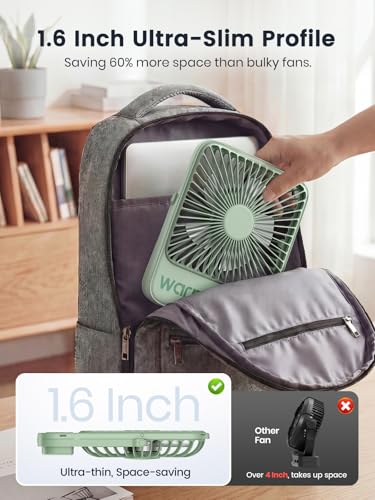
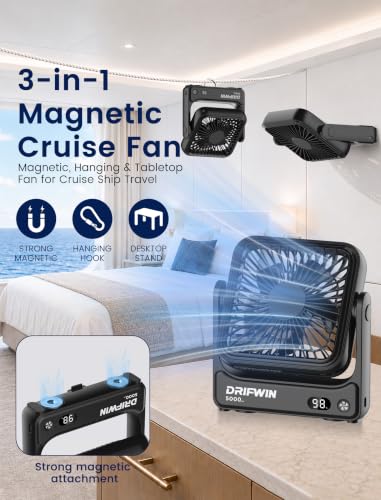
For hotel use, choose a fan that packs flat or folds into a protected shape, has a stable base or hanging/clip option, and does not require bulky proprietary adapters that are easy to forget. A travel fan should fit in a carry-on pocket or toiletry pouch but still deploy securely on a nightstand, desk, cruise cabin shelf, or RV counter; an included case or guarded blades help prevent damage in luggage. Owner feedback supports this priority: shoppers consistently like tiny, lightweight, foldable fans that pack easily, store flat, hang when needed, and work well in hotels, cruises, RVs, desks, and other small spaces.
Airflow
You’ll notice airflow most in how quickly a fan makes the room feel more comfortable and how far that cooling or heating effect actually reaches. Look for enough power and coverage for your space, plus useful features like multiple speeds, oscillation, or misting or heating modes if you need them, and watch out for fans that sound powerful but only move air well at close range.
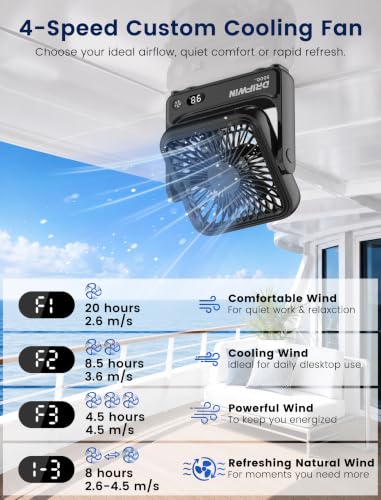
For a hotel room, look for close-range airflow rather than room-scale power: the fan should deliver enough focused air across a bed or pillow area from one to three feet away, with several speed settings so you can cool down without blasting papers, curtains, or a sleeping partner. Oscillation, adjustable tilt, or an extendable stand can matter more than maximum speed because hotel furniture placement is unpredictable; avoid fans with only one harsh setting or airflow that is too narrow to help in a stuffy room. Owners generally report that small travel fans can still move surprising air, especially for bedside sleeping, humid rooms, hot flashes, tents, RVs, and other confined spaces, and they value multiple speeds plus extras like oscillation, remote controls, lights, or backup functions when those features do not compromise cooling.
Battery
If you want the flexibility to move a fan from room to room or use it where outlets are limited, battery life and charging convenience matter just as much as airflow. Look for a runtime that matches how long you actually use a fan, clear recharge times, and easy charging options, and watch out for units that run strongly at first but fade quickly or take too long to recharge between uses.
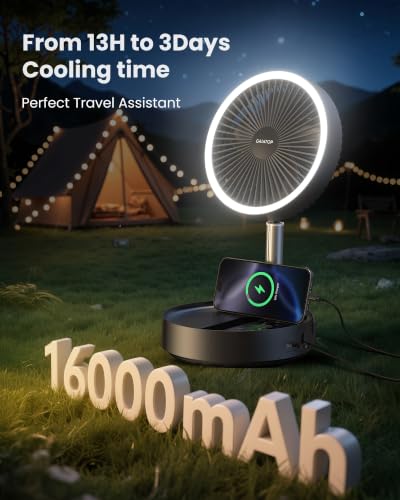
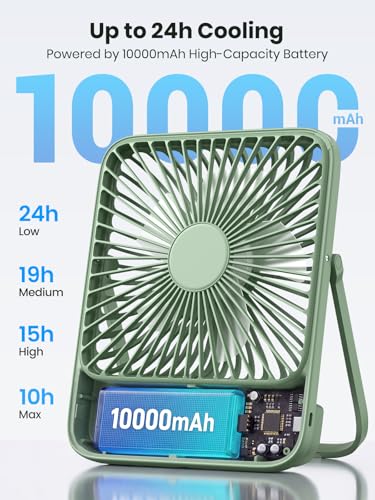
For hotel stays, prioritize battery runtime at the speed you will actually use overnight, not just the advertised maximum on the lowest setting. A good pick should charge by common USB, ideally work while plugged in, and last through a full night if the only outlet is across the room or already occupied by a phone, CPAP, or laptop; check charging time too, because a fan that takes all day to refill may be inconvenient on multi-stop trips. Owner sentiment strongly backs battery as a deciding factor: buyers repeatedly praise fans that hold a long charge, run for multi-hour sessions, make it through overnight use, or last through workdays, outings, and even multiple low-speed uses before recharging.
Size
Size matters because it determines where you can actually use the fan, whether that’s on a crowded desk, a nightstand, or in a tight corner without getting in the way. Look for a footprint and height that fit your space, and check that the fan can still aim airflow where you need it; a compact fan is easier to place, but if it’s too small, it may not move enough air for the room.
For hotel travel, size should be judged in two modes: packed size and bedside footprint. Avoid models that are compact in the bag but unfold into a wobbly tower that crowds a narrow nightstand; also avoid ultra-tiny fans if the head is too small to cool your face or upper body while sleeping. The best size is slim enough for luggage yet large enough to stay stable, aim properly, and move useful air in a small room. Owner reports support this balance, with shoppers liking fans that are tiny, slim, lightweight, fold down small, fit easily in luggage, and still provide meaningful airflow for hotels, cruises, desks, tents, RVs, and bedside use.
Noise
How a fan sounds can matter as much as how well it moves air, especially if you plan to use it in a bedroom, nursery, or office. Look for a fan that stays quiet at the speeds you actually use, has a smooth, consistent sound instead of rattling or clicking, and offers enough low-speed control for sleep; a fan that is only quiet on its weakest setting may still be disruptive at night.
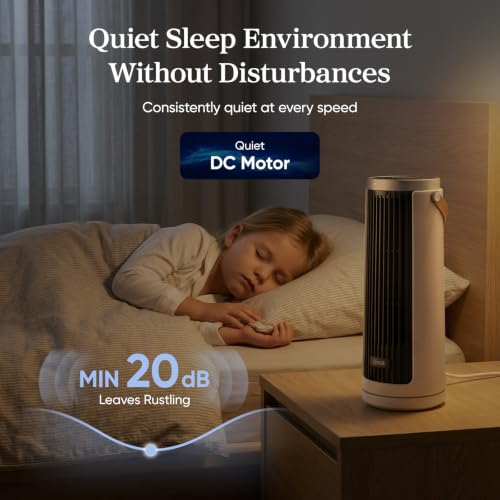
For hotel sleeping, check the sound character as much as the decibel claim: you want a smooth, steady hum or low white-noise effect, not rattling, pulsing, bearing whine, clicking buttons, or bright beeps that can disturb a quiet room. Multiple speed levels are important because the lowest setting should be whisper-quiet for light sleepers, while higher settings should remain tolerable if the room is hot or the HVAC is weak. Owner feedback is encouraging here: buyers often describe these fans as quiet enough for sleep, work, calls, TV, or conversation, with some specifically appreciating the soft white-noise hum and the ability to mask hotel background noise for adults, kids, toddlers, and sensitive sleepers.
Build
You want a fan that feels solid, stays stable at its highest speed, and keeps working without new rattles, wobble, or motor odor after regular use. Look for sturdy housing, well-balanced blades, a secure base or mount, and parts that are easy to remove and clean, since flimsy materials and hard-to-maintain grills tend to show wear, collect dust, and shorten the fan’s useful life.
For repeated hotel trips, inspect build details that affect safety and durability: a rigid blade guard, stable hinge or telescoping joint, non-slip base, protected charging port, reliable power button that will not turn on in a bag, and materials that can survive being compressed in luggage. If using it near children, pets, bedding, or curtains, avoid flimsy guards, exposed blades, unstable clip mounts, or fans that get warm while charging; rechargeable models should feel well assembled and should not require awkward cable strain on a nightstand. Owner sentiment supports paying attention to construction, with buyers praising fans that feel solid, dependable, intuitive to charge and use, more reliable than cheaper seasonal options, and convenient thanks to travel-friendly details such as cases, lanyards, straps, remotes, lights, and rechargeable operation.
1,000,000+ shoppers use Buyer's Guide every week to find the best products and services online.

Helping millions of users make smarter purchases online.


