










We also considered 10 others:


Our Top Choice
Compare Features


The order above is not editorial opinion, and it is not paid placement. It comes from what shoppers across our network actually do - which travel fans for cruise ship they compare, and which they ultimately buy. We re-rank as new data comes in, so the long-term favorites have to keep earning their spot against new entrants. The full method, including how we make money.
Travel Fans for Cruise Ship Buyer's Guide
Cruise cabins are small, outlet-limited, and often stuffy at night, so the best travel fan is not just “portable” but safe, rechargeable, quiet, and easy to aim from a bunk, nightstand, or metal wall. Prioritize all-night cordless use, secure mounting, and cabin-friendly noise over maximum fan size or gimmicky power draw.
Portability
If you plan to move a fan from room to room or use it on a stroller, desk, patio, or while traveling, portability affects how often it will actually be useful to you. Look for a size and weight you can carry comfortably, plus practical mounting options like a stable base, clip, hook, or magnetic attachment that fits where you’ll use it; just make sure portability doesn’t come at the cost of tipping easily, weak airflow, or awkward charging and setup.
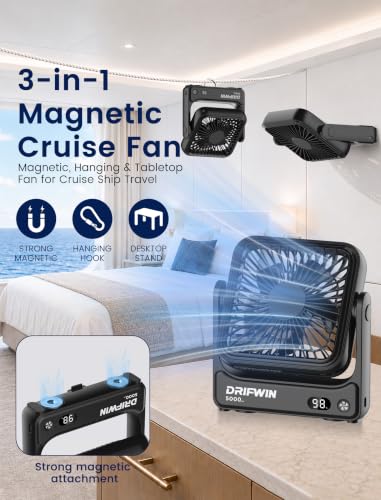
For cruise travel, choose a fan that folds flat or packs into a small case, has a protected blade grille, and can be used in more than one cabin position: standing on a narrow shelf, hanging from a hook, or magnetically mounting to a metal wall or ceiling. Do not rely only on a magnetic mount, because cabin surfaces vary; a backup stand, lanyard, hook, or fold-out base is useful. Owners consistently like lightweight, foldable, slim, and pocket-sized fans for cruises, hotels, RVs, desks, and other tight spaces, and magnetic mounting gets specific praise when it holds firmly to cruise ship walls or ceilings.
Airflow
You’ll notice airflow most in how quickly a fan makes the room feel more comfortable and how far that cooling or heating effect actually reaches. Look for enough power and coverage for your space, plus useful features like multiple speeds, oscillation, or misting or heating modes if you need them, and watch out for fans that sound powerful but only move air well at close range.
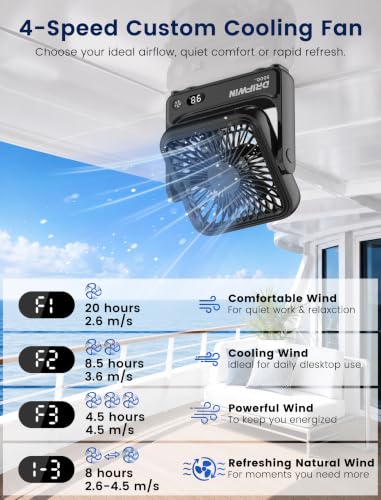
In a cruise cabin, look for focused personal airflow rather than a fan that claims to cool the whole room; the fan should have several speeds, an adjustable head, and enough close-range breeze for a bed, bunk, vanity, or balcony chair. Low and medium settings matter most for sleeping, while a higher setting is useful after excursions or in a warm interior cabin. Owner feedback supports this: compact fans are often described as surprisingly strong for their size, with multiple speed settings that cool quickly, and some add practical features such as oscillation, remote operation, light settings, flashlight use, or backup phone charging.
Battery
If you want the flexibility to move a fan from room to room or use it where outlets are limited, battery life and charging convenience matter just as much as airflow. Look for a runtime that matches how long you actually use a fan, clear recharge times, and easy charging options, and watch out for units that run strongly at first but fade quickly or take too long to recharge between uses.
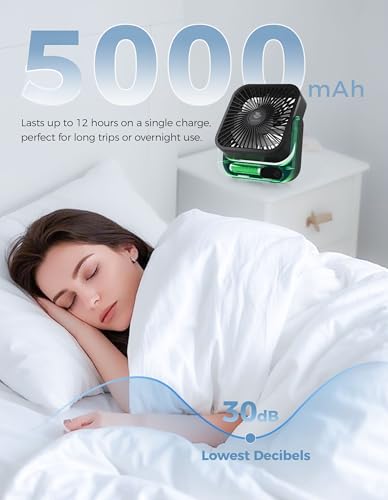
Because cruise cabins may have few convenient outlets and cruise lines often restrict certain extension cords or power strips, prioritize a rechargeable fan that can run overnight on low or medium speed without staying plugged in. Look for USB charging, battery-level indicators, and a non-proprietary cable; avoid tiny batteries that only last on the lowest setting or fans that must remain plugged in for meaningful airflow. Owners repeatedly praise long runtimes, including fans that last through multi-hour use, overnight use, a workday, or even multiple days on lower speeds.
Size
Size matters because it determines where you can actually use the fan, whether that’s on a crowded desk, a nightstand, or in a tight corner without getting in the way. Look for a footprint and height that fit your space, and check that the fan can still aim airflow where you need it; a compact fan is easier to place, but if it’s too small, it may not move enough air for the room.
For a cruise, check both the packed size and the deployed footprint: it should fit in a carry-on, drawer, purse, or backpack, but also sit safely on a small nightstand without blocking a walkway or falling from a narrow shelf. Fold-out pedestal designs can be useful if they collapse small yet extend high enough to aim at a bed or chair; very tall or wide fans can be awkward in compact cabins. Owner sentiment strongly favors compact, lightweight, foldable, slim, and pocket-sized designs, especially when they still deliver useful airflow in small spaces such as cruise cabins, hotels, RVs, tents, and bedside setups.
Build
You want a fan that feels solid, stays stable at its highest speed, and keeps working without new rattles, wobble, or motor odor after regular use. Look for sturdy housing, well-balanced blades, a secure base or mount, and parts that are easy to remove and clean, since flimsy materials and hard-to-maintain grills tend to show wear, collect dust, and shorten the fan’s useful life.
For shipboard use, inspect the build for a stable base, strong hinge tension, a secure grille, dependable charging port, and mounts that will not loosen with vibration, bumps, or repositioning. If choosing a magnetic fan, the magnet should hold securely on vertical or overhead metal surfaces and the head should stay aimed once adjusted; avoid flimsy clips, weak necks, exposed blades, or unstable tall stands. Owners tend to value fans that feel solid, reliable, and better made than cheap seasonal models, and they specifically praise secure magnetic bases, dependable overnight cabin use, and intuitive charging and controls.
Noise
How a fan sounds can matter as much as how well it moves air, especially if you plan to use it in a bedroom, nursery, or office. Look for a fan that stays quiet at the speeds you actually use, has a smooth, consistent sound instead of rattling or clicking, and offers enough low-speed control for sleep; a fan that is only quiet on its weakest setting may still be disruptive at night.
For a shared cruise cabin, buy for the lowest usable noise level, not just the highest airflow number: the fan should have a genuinely quiet low setting for sleep, no rattling mount, no loud button beeps, and minimal motor whine near your pillow. A soft white-noise hum can be helpful, but harsh vibration or clicking will feel amplified in a small cabin at night. Owner feedback is favorable here, with many portable fans described as quiet enough for sleeping, talking, watching TV, or working, while still providing the gentle background noise some travelers want.
1,000,000+ shoppers use Buyer's Guide every week to find the best products and services online.

Helping millions of users make smarter purchases online.


