









We also considered 10 others:


Our Top Choice
The order above is not editorial opinion, and it is not paid placement. It comes from what shoppers across our network actually do - which travel chargers for iphone and apple watch they compare, and which they ultimately buy. We re-rank as new data comes in, so the long-term favorites have to keep earning their spot against new entrants. The full method, including how we make money.
Travel Chargers for iPhone and Apple Watch Buyer's Guide
A good travel charger for iPhone and Apple Watch has to replace a tangle of cables without becoming a slower, fussier dock that leaves one device half-charged in the morning. The sharp tradeoff is compact convenience versus wireless charging limits: case compatibility, magnetic alignment, adapter power, and long-term reliability matter more here than they would for a simple wall cable.
Device Fit
The main reason to buy this category is to consolidate several Apple charging needs into one travel-ready station. Compatibility is not just about having three spots; the phone, watch, earbuds case, and any extra cable device must all seat correctly at the same time. A charger that fits your actual nightly setup prevents the common travel failure of waking up with one essential device still low.
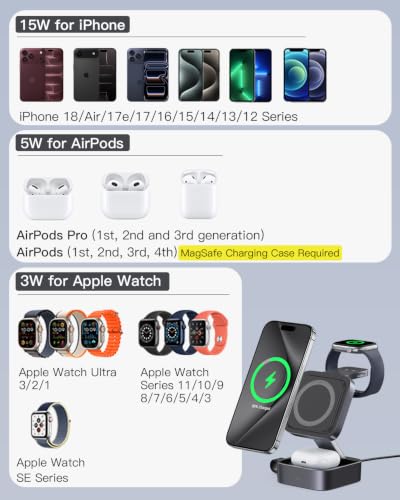
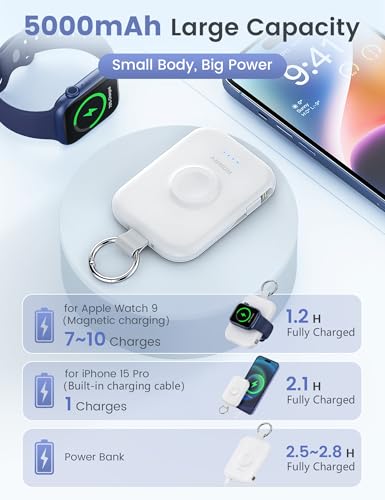
Choose the layout around the devices you actually pack: a magnetic iPhone pad or stand, a dedicated Apple Watch charger, an AirPods/Qi pad if needed, and ideally an extra USB-C or USB-A output for a cable-only item. Check that the watch spot supports your Apple Watch size and that the phone spot works with your iPhone’s magnetic charging setup; otherwise a “3-in-1” can become a partial solution. Owner feedback strongly favors chargers that power an iPhone, Apple Watch, and AirPods together, and some shoppers especially appreciate models that add spare USB ports for one more cable-charged device.
Packability
Travel chargers compete on how much space and mental load they remove from packing. A compact dock is only useful if it stays compact with its cable and power brick included. Foldability, low weight, and clean cable routing make the difference between a charger that travels every trip and one that stays at home.
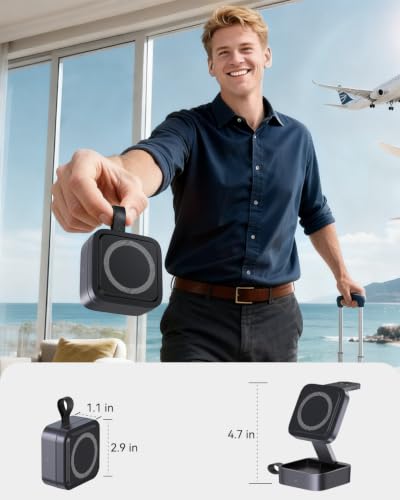
Prioritize a fold-flat or tightly folding design with one main input cable, a compact wall adapter, and no awkward protruding watch arm that can snag in a bag. For travel, the best designs pack into a small pouch or tech organizer, sit safely on a hotel nightstand, and reduce the number of loose Apple cords and charging blocks you must remember. Owner sentiment repeatedly highlights foldable, lightweight designs that fit purses, carry-ons, laptop bags, backpacks, RVs, desks, and nightstands while cutting cable clutter.
Charge Speed
When several devices share one compact charger, the wall adapter and internal power allocation become critical. Wireless charging also depends on alignment, heat control, and the device’s own limits, so rated speed may not always match cable speed. Buyers who need rapid top-ups should judge this category differently from buyers who mostly charge while sleeping.
Match charging speed expectations to your routine: wireless multi-device docks are usually best for overnight charging, while a direct cable is still the safer choice for urgent daytime refills. Look for clear input power requirements, per-device output ratings, USB-C Power Delivery support, and stated support for faster iPhone or Apple Watch charging if that matters to you. Owners often say these chargers are quick enough for charging an iPhone, Apple Watch, and AirPods overnight, but sentiment is mixed because some find them slower than plug-in charging or not truly fast-charging in daily use.
Magnetic Hold
Magnetic alignment is a core buying concern because it affects both charging and physical security. A phone that looks attached but is slightly off-center can fail to charge fully. Case thickness, magnet strength, and stand angle all determine whether the charger feels effortless or needs constant adjustment.
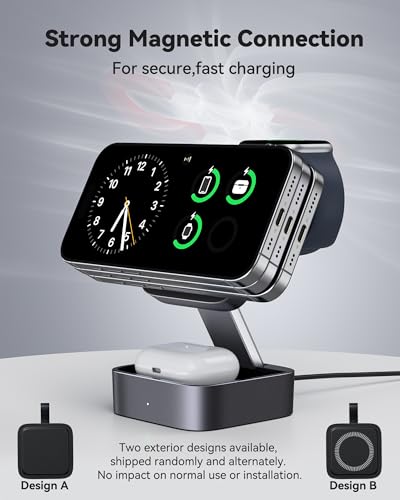
For the iPhone position, confirm MagSafe or magnetic-case compatibility before relying on the charger as a stand. A strong magnetic mount should hold the phone in portrait and landscape, clear the camera bump, and keep charging even if the nightstand is bumped; a weak or mismatched setup can slide, tilt, or miss the charging coil. Owner reports praise secure magnetic holds, including with compatible cases, but also warn that older iPhones, non-magnetic cases, or spotty alignment may require checking the phone before sleep.
Trip Reliability
A travel charger is handled, folded, packed, and unplugged far more often than a charger that sits permanently on a desk. Small build weaknesses can show up as loose hinges, intermittent charging, or a dead watch puck after repeated use. Reliability matters most when the charger is your only overnight power plan away from home.
Inspect the parts most likely to fail on trips: folding hinges, the Apple Watch charging module, strain relief on the input port, rubber feet, and the stability of the phone stand when loaded. Prefer sturdy construction, thermal protections, and a base that will not tip when the phone is attached; avoid flimsy docks that feel like cheap plastic or run unusually hot. Owners often describe better units as solid, stable, durable, and reliable at home and while traveling, but reliability sentiment is not uniform, with some reports of device positions failing or a device not finishing overnight.
1,000,000+ shoppers use Buyer's Guide every week to find the best products and services online.

Helping millions of users make smarter purchases online.


