










We also considered 10 others:


Our Top Choice
The order above is not editorial opinion, and it is not paid placement. It comes from what shoppers across our network actually do - which apple watch and phone charger they compare, and which they ultimately buy. We re-rank as new data comes in, so the long-term favorites have to keep earning their spot against new entrants. The full method, including how we make money.
Apple Watch and Phone Charger Buyer's Guide
An Apple Watch and phone charger is a tradeoff between cable-free convenience and the precision wireless charging requires. The best picks simplify a nightstand or travel bag without creating slower charging, alignment chimes, heat concerns, or compatibility surprises with cases, watch bands, and earbuds.
Device Fit
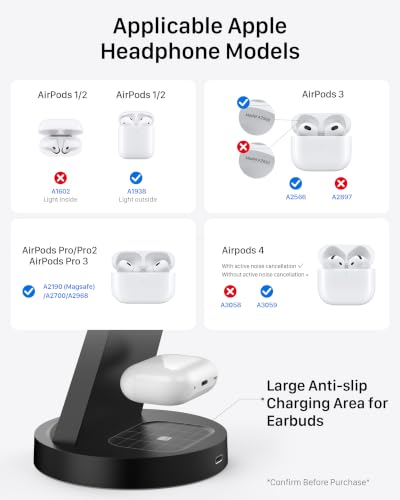
Multi-device chargers are only convenient when each charging spot matches the devices and cases a shopper actually uses. In this category, the watch module, magnetic phone pad, and earbud pad can have different compatibility limits, so layout matters as much as advertised device count.
Choose a charger only after confirming the exact device mix it supports: a magnetic phone position for compatible phones, a dedicated watch charging puck, and a wireless earbud spot if needed. Check whether the phone can charge with your everyday case, whether the watch band can sit naturally on the puck, and whether all three positions can be used at once without one device blocking another. Owner sentiment strongly supports this as a deciding factor: buyers most praise chargers that reliably handle a phone, watch, and earbuds together in one spot, especially for overnight routines.
Secure Alignment
Wireless chargers depend on coil alignment, and small shifts can interrupt charging or trigger repeated reconnect sounds. A good charger should make correct placement obvious and stable enough for a nightstand, desk, or travel surface.
Look for a strong magnetic phone attachment, a clearly recessed or raised watch position, and enough stand angle or surface grip that devices do not slide out of the charging sweet spot. Avoid designs where thick cases, metal attachments, large camera bumps, or closed-loop watch bands can prevent flat contact. Owners often like chargers where the phone seats securely and nightly placement feels easy, but mixed feedback also shows that poor alignment can cause finicky charging, cycling, or repeated chimes in some setups.
Charge Quality
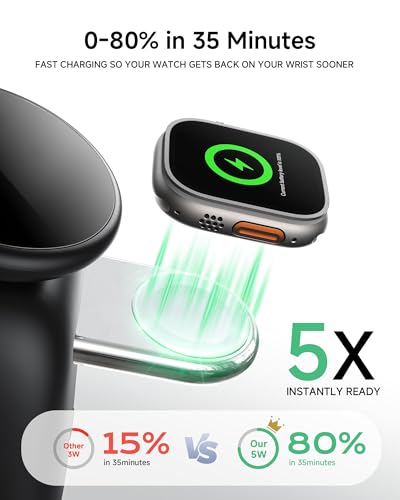
A combined charger usually trades peak cable speed for overnight convenience and a tidier setup. The important test is not just advertised wattage, but whether it can deliver predictable full charges without excess heat when several devices are charging at once.
Buy for your real routine: if this is mainly a bedside charger, steady overnight charging matters more than maximum speed; if you need fast top-ups, verify the phone pad rating, watch fast-charge support, and required wall adapter output. Use the supplied or recommended high-output USB-C power adapter when specified, because underpowered adapters can make a 3-in-1 station slow or unstable. Owner feedback is positive on dependable full charges and no overheating in good experiences, but charging speed is the least consistent theme, with some finding it fast enough overnight and others noticing it is slower than a direct cable.
Travel Footprint
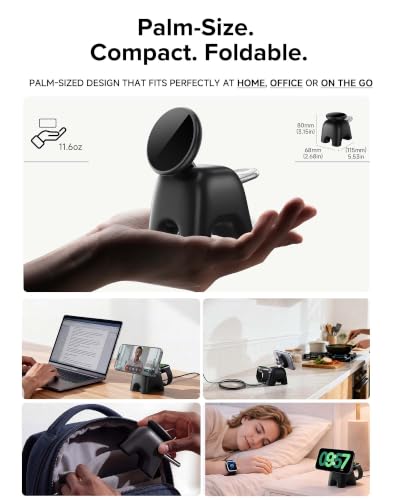
Many shoppers buy this category to replace a tangle of separate watch, phone, and earbud cables. Portability depends on more than small dimensions: the charger should fold safely, protect its hinges and charging faces, and work with the power brick and cable you actually pack.
For travel, prioritize a fold-flat or compact hinged design with a single cable input, a stable unfolded base, and charging surfaces that will not scratch easily in a bag. Make sure the charger’s packed shape fits your toiletry kit, tech pouch, or work bag, and remember that the wall adapter may add bulk even when the charger itself is slim. Owners repeatedly praise compact foldable chargers because they replace several separate chargers, take little space, and work well for trips, work, and bag carry.
Tidy Layout
These chargers often live in visible places, so a good one should reduce cable clutter without making devices awkward to see or grab. The best layout balances a tidy footprint with practical access for alarms, watch viewing, and phone notifications.
For a bedside table or desk, look for a low-profile base, non-slip feet, enough spacing between device zones, and a phone angle that suits alarm checks or standby viewing. Avoid bulky stations that solve cable clutter but create device clutter, especially if the watch band dangles into the phone area or the earbud spot is hard to reach in the dark. Owners value sleek, minimalist designs that keep devices organized and reduce cable mess without taking over a nightstand or desk.
Daily Reliability
A multi-device charger becomes a daily-use hub, so intermittent failures are more disruptive than with a spare cable. Build quality, hinge strength, cable strain relief, and thermal management all affect whether it stays dependable over repeated use at home and away.
Favor a charger with a sturdy hinge if it folds, a weighted or grippy base if it stands upright, reinforced cable input, and visible safety claims for over-current, over-voltage, and temperature control. Be cautious of chargers that feel flimsy, wobble when removing the phone, or require repeated reseating to continue charging. Owner sentiment shows strong appreciation for reliable daily and travel use, secure-feeling construction, and consistent charging, while the main reliability warning is finicky performance when alignment or charging stability is not well controlled.
1,000,000+ shoppers use Buyer's Guide every week to find the best products and services online.

Helping millions of users make smarter purchases online.


