















We also considered 10 others:


Our Top Choice
Compare Features


The order above is not editorial opinion, and it is not paid placement. It comes from what shoppers across our network actually do - which thermal imaging cameras for leak detection they compare, and which they ultimately buy. We re-rank as new data comes in, so the long-term favorites have to keep earning their spot against new entrants. The full method, including how we make money.
Thermal Imaging Cameras for Leak Detection Buyer's Guide
For leak detection, a thermal camera is best treated as a fast anomaly finder, not a moisture meter: it shows temperature patterns caused by evaporation, wet insulation, pipe temperature, air leakage, or radiant heat, then you confirm with moisture testing or inspection. The sharpest concerns are sensitivity to small temperature differences, enough resolution to trace a leak path rather than a vague blob, and controls that prevent auto-scaling or reflections from misleading you on tile, metal, glass, or glossy paint.
Image
Clear thermal imagery helps you spot temperature differences accurately, especially when you’re inspecting small components, hidden leaks, electrical hot spots, or insulation gaps. Look for enough thermal resolution and image detail to make targets easy to distinguish, plus a display that stays readable in the lighting conditions where you’ll use it. Be cautious of cameras that produce blurry, overly blocky, or hard-to-interpret images, because they can make diagnosis slower and less reliable.
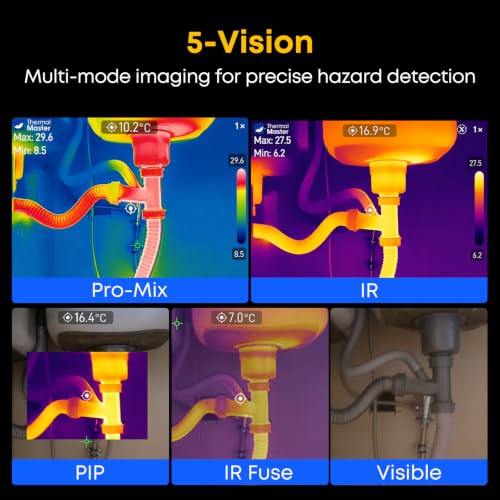
For leak detection, prioritize thermal resolution, low thermal sensitivity/NETD, and clear focus over cosmetic image effects, because a slow seep behind drywall or wet insulation may show only a subtle temperature shift. Look for a camera that can distinguish small hot/cold gradients, shows enough detail to follow pipe runs, wet areas, ceiling stains, baseboards, and slab-radiant lines, and ideally offers visual/thermal blending or side-by-side images so you can map the anomaly to the exact building feature. Avoid very low-resolution units if you need to separate a plumbing leak from HVAC stratification, a missing-insulation patch, or sun-loaded wall areas. Owner feedback supports this priority: users consistently value sharp thermal contrast, clear images, and sensitivity to small temperature differences for finding insulation gaps, drafts, HVAC patterns, electrical hot spots, radiant lines in concrete, and other hidden heat patterns.
Function
A thermal camera’s usefulness depends on whether its features match the jobs you need it to handle, from spotting insulation gaps and moisture patterns to checking electrical panels, HVAC issues, or mechanical heat buildup. Look for practical diagnostics such as clear image blending, adjustable emissivity, temperature markers, and easy reporting or storage, and be wary of models that offer flashy extras while lacking the accuracy, resolution, or controls needed for dependable troubleshooting.
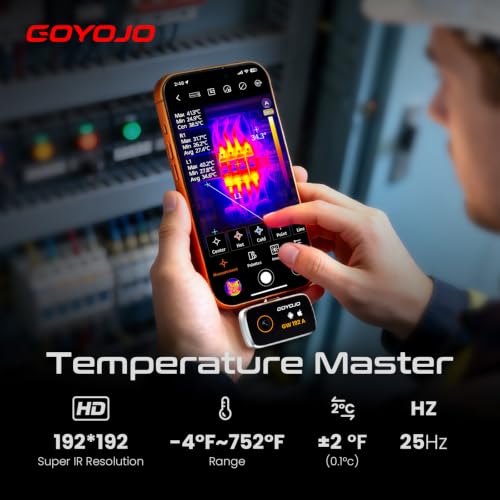
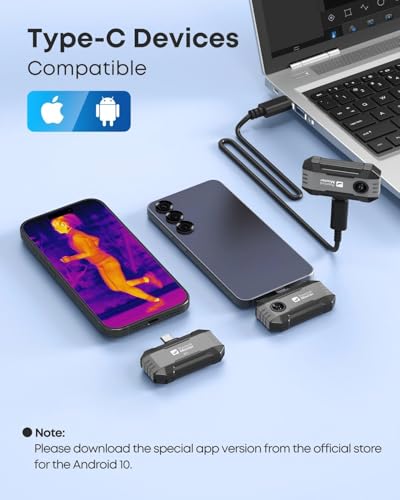
For leak work, the most useful functions are radiometric spot/area readings, adjustable level and span, image/video capture, temperature alarms, emissivity settings, and a workflow that lets you document before/after conditions for a plumber, roofer, insurer, or homeowner. Choose a unit that can scan walls, ceilings, floors, pipes, boiler lines, HVAC ducts, and crawlspace areas without excessive lag; for active plumbing leaks, being able to watch heat spread or cool over time is more valuable than a single still image. Phone-connected models can be convenient, but verify device compatibility, connector orientation, app support, and whether the phone can physically fit with a case in tight inspection areas. Owners generally report that these cameras are capable across practical jobs such as checking walls, pipes, boilers, ducts, electronics, vehicles, insulation gaps, and heat loss, with temperature detection useful enough for real troubleshooting.
Build
A thermal camera’s build quality matters because it affects whether you can trust it in real job-site, inspection, or outdoor conditions. Look for a solid housing, protected lens and ports, reliable controls, and clear durability ratings for drops, dust, and water; watch out for flimsy attachments, loose battery doors, or designs that feel more like fragile electronics than field tools.
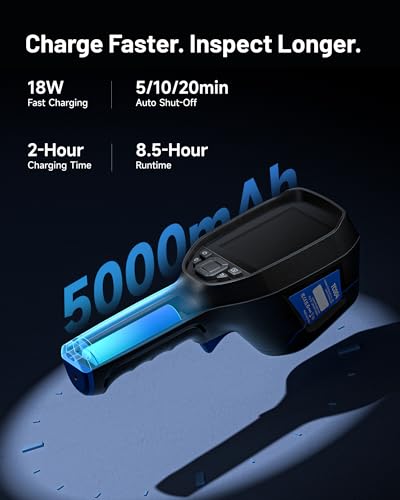
Leak detection often means bathrooms, basements, crawlspaces, attics, roofs, mechanical rooms, and job sites, so build quality should include a protected lens, solid housing, reliable battery life, a secure grip, and a case that keeps the imager clean and aligned between inspections. If you inspect wet or dusty areas, check the stated ingress protection and remember that many thermal cameras are not waterproof even if they are used around leaks; avoid exposing the lens, port, or phone connector to dripping water. For phone-based cameras, the mechanical stress on the USB-C or Lightning connector is a real failure point, especially when working one-handed under sinks or in ceiling cavities. Owner sentiment backs the need for durability: users describe well-made, sturdy, compact tools that hold up for garage, shop, job-site, and home diagnostic use, and they appreciate included storage protection.
Ease
A thermal camera should let you start scanning quickly, adjust key settings without digging through confusing menus, and understand what the image is telling you with minimal trial and error. Look for clear controls, intuitive temperature palettes, easy image capture or transfer, and straightforward calibration or focus steps; watch out for cameras that hide basic functions behind awkward interfaces or require a steep learning curve before you can trust what you’re seeing.
For leak detection, ease of use is not just simple menus; it is being able to scan quickly without misreading auto-scaled colors. Look for easy manual span/level control, quick palette changes, clear hot/cold markers, image freezing, annotation, and a display that remains readable in bright attics or dim crawlspaces. A beginner-friendly camera should still let you lock the scale so one cold pipe or hot vent does not make a wet patch disappear visually. Owner feedback is encouraging here: users often find these cameras approachable, intuitive, and quick to start using, with straightforward setup, simple controls, plug-and-play phone operation where applicable, and smooth scanning for walls, equipment, electrical panels, and HVAC checks.
Value
Value matters because thermal cameras can vary widely in what they deliver for the money, from basic heat-spotting to sharper imaging and more useful analysis features. Look for a camera that matches your actual use case rather than paying for specs you will not use, and watch out for low-cost options that save money upfront but compromise too much on image clarity, accuracy, durability, or software support.
For leak detection value, spend on the capabilities that reduce false calls: usable resolution, thermal sensitivity, stable readings, adjustable scaling, reliable image capture, and enough ruggedness for inspection environments. Extra features are less valuable if the camera cannot show a small evaporative cooling pattern behind drywall or distinguish a supply-line heat trace from general room temperature variation. If you only need occasional homeowner checks, a basic capable unit may be enough; if you document claims, run a trade business, or inspect large buildings, stronger imaging and reporting features are worth prioritizing. Owner sentiment broadly supports good value in this category, with users saying affordable thermal imagers can perform better than expected and be genuinely useful for home, shop, soldering, electrical, and building diagnostics rather than feeling like novelty gadgets.
Accuracy
You need reliable accuracy so the hot or cold spots you see actually reflect real conditions, especially when you’re troubleshooting electrical systems, insulation gaps, HVAC issues, or machinery. Look for clear stated temperature accuracy, stable repeat readings, adjustable emissivity settings, and a suitable temperature range for your work; be cautious of cameras that produce impressive images but lack trustworthy measurement specs or consistent monitoring performance.
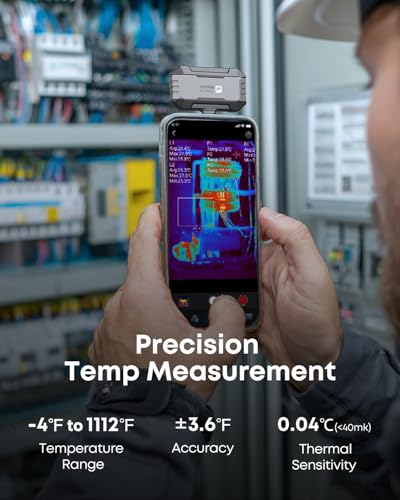
For leak detection, accuracy means correctly identifying the suspicious area, not treating the displayed temperature as proof of moisture. Look for adjustable emissivity, reflected-temperature compensation if available, stable calibration, responsive readings, and enough sensitivity to track small changes as hot water runs, radiant heat cycles, or wet material evaporates. Be cautious on shiny tile, metal pipe, glass, foil-faced insulation, sunlit walls, recently used showers, and HVAC airflow paths because reflections and transient heating can mimic leaks; always confirm with a moisture meter, pressure test, borescope, or physical inspection. Owners report that temperature readings and thermal contrast are accurate and responsive enough for practical diagnostics, including finding hot/cold anomalies, tracking heat changes, locating floor-heating trouble spots, identifying possible shorts, and following hidden heat patterns such as radiant lines in slabs.
1,000,000+ shoppers use Buyer's Guide every week to find the best products and services online.

Helping millions of users make smarter purchases online.


