














We also considered 10 others:


Our Top Choice
Compare Features


The order above is not editorial opinion, and it is not paid placement. It comes from what shoppers across our network actually do - which tabletop fans they compare, and which they ultimately buy. We re-rank as new data comes in, so the long-term favorites have to keep earning their spot against new entrants. The full method, including how we make money.
Tabletop Fans Buyer's Guide
Tabletop fans are bought for close-range comfort, so the key tradeoff is getting enough directed airflow without creating desk clutter, noise, vibration, or a blast that scatters papers. Pay closest attention to low-speed usability, base stability, grille safety, and whether the fan can be aimed precisely from a desk, nightstand, RV shelf, or small workspace.
Airflow
You’ll notice airflow most in how quickly a fan makes the room feel more comfortable and how far that cooling or heating effect actually reaches. Look for enough power and coverage for your space, plus useful features like multiple speeds, oscillation, or misting or heating modes if you need them, and watch out for fans that sound powerful but only move air well at close range.
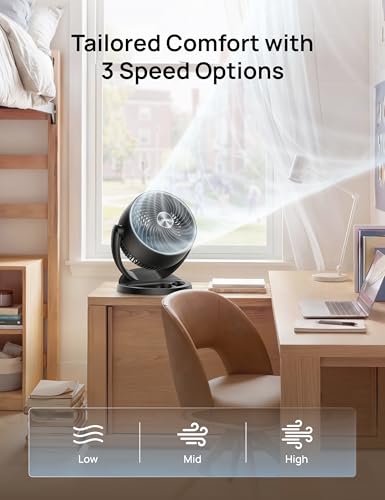
For tabletop use, prioritize controllable close-range airflow over raw power: look for at least three speeds, an adjustable tilt head, and enough output to feel useful from arm’s length without blowing papers, drying eyes, or overwhelming a sleeper. If you want it to help an air conditioner or cool a small room, choose a model designed as an air circulator that can aim upward or across the room rather than only straight at your face. Owner feedback supports this: buyers often report that compact tabletop fans can move more air than expected, with low settings sufficient for personal cooling and higher settings capable of helping bedrooms or medium-size rooms feel cooler.
Noise
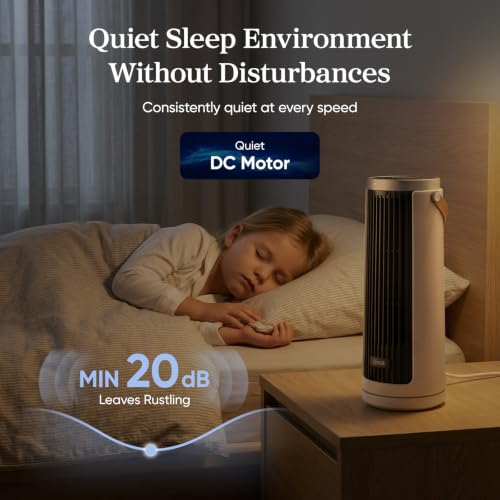
How a fan sounds can matter as much as how well it moves air, especially if you plan to use it in a bedroom, nursery, or office. Look for a fan that stays quiet at the speeds you actually use, has a smooth, consistent sound instead of rattling or clicking, and offers enough low-speed control for sleep; a fan that is only quiet on its weakest setting may still be disruptive at night.
For desks, calls, and bedside use, check noise character as much as volume: a steady low hum is easier to live with than blade buzz, bearing whine, grille rattle, clicking oscillation, or beeps when changing settings. Make sure the lowest speed is genuinely usable for sleep or focused work, because a tabletop fan sits close enough that even small noises become noticeable; expect high speed to be audibly stronger. Owners commonly describe better tabletop fans as quiet on low and medium, soft enough for nighttime or desk use, and in some cases still impressively quiet while moving a strong amount of air.
Build
You want a fan that feels solid, stays stable at its highest speed, and keeps working without new rattles, wobble, or motor odor after regular use. Look for sturdy housing, well-balanced blades, a secure base or mount, and parts that are easy to remove and clean, since flimsy materials and hard-to-maintain grills tend to show wear, collect dust, and shorten the fan’s useful life.
For a fan sitting near hands, drinks, pets, and electronics, inspect the base, grille, hinge, and motor durability: choose a wide or weighted base with rubber feet, a tilt joint that holds position, a tight protective grille, good cord strain relief, and preferably a removable front grille for dust cleaning. Avoid flimsy stands, loose oscillation mechanisms, or fans that wobble at high speed, because tabletop vibration quickly turns into noise and can walk the fan across a surface. Owner sentiment is mostly positive on sturdy, well-made small fans, but the main failure mode to watch for is long-term motor or spinning-action failure after months of steady use.
Size
Size matters because it determines where you can actually use the fan, whether that’s on a crowded desk, a nightstand, or in a tight corner without getting in the way. Look for a footprint and height that fit your space, and check that the fan can still aim airflow where you need it; a compact fan is easier to place, but if it’s too small, it may not move enough air for the room.
Measure the actual footprint and placement clearance, not just the fan diameter: a tabletop fan needs room behind the intake, space to tilt or oscillate, and enough height to clear a laptop, monitor stand, bed rail, or shelf lip. For travel, RVs, dorms, and nightstands, compact and lightweight is useful, but going too small can mean weaker airflow, a tippier base, or more noise because the fan must spin faster. Owners consistently value compact fans that fit on desks, bedside tables, cubicles, RV spaces, hotel rooms, and small corners while still producing stronger airflow than their size suggests.
Value
You want a fan that feels worth what you pay, not just one that looks good on the shelf. Look for strong airflow, reliable performance, useful speed or control options, and a noise level you can live with, because a low upfront cost is not a bargain if the fan disappoints, wears out quickly, or costs more to run than expected.
In this category, value is not just the lowest upfront cost; it is a quiet motor, stable base, usable low speed, cleanable grille, and controls you will not hate using every day. If choosing a rechargeable tabletop fan, factor in battery runtime at the speed you will actually use, charging port type, and whether the fan can run safely while plugged in; if choosing a corded one, prioritize durability and airflow over novelty features. Owners often see strong value when a small fan delivers real personal cooling, simple speed choices, sturdy construction, and enough room circulation to reduce reliance on extra air conditioning.
Controls
The controls determine how easily you can fine-tune airflow for comfort, noise, and convenience throughout the day or night. Look for clearly labeled buttons or a responsive remote, multiple speed settings, useful modes like sleep or timer functions, and smooth oscillation; watch out for confusing menus, tiny displays, or limited adjustments that make the fan harder to live with.
For close-range use, controls should let you make small, quiet adjustments without disrupting work or sleep: look for clearly separated speeds, a low setting that is truly gentle, tilt or oscillation control, and buttons that are easy to find by touch. For bedside placement, avoid bright indicator lights, loud beeps, or touch controls that are hard to use in the dark; a remote or timer can be worthwhile if the fan will sit across the room. Owner feedback backs this up, with many buyers appreciating three-speed control, adjustable tilt, simple setup, and remote adjustment for speed or oscillation without getting out of bed.
1,000,000+ shoppers use Buyer's Guide every week to find the best products and services online.

Helping millions of users make smarter purchases online.


