














We also considered 10 others:


Our Top Choice
Compare Features


The order above is not editorial opinion, and it is not paid placement. It comes from what shoppers across our network actually do - which standing fans they compare, and which they ultimately buy. We re-rank as new data comes in, so the long-term favorites have to keep earning their spot against new entrants. The full method, including how we make money.
Standing Fans Buyer's Guide
Standing fans have to balance reach, quietness, and stability: the same fan that blasts air across a living room may be irritating beside a bed, while a slim tower that looks tidy may not aim airflow as precisely. The sharpest buying concerns are whether the airflow pattern fits your room, whether it stays quiet at sleep-friendly speeds, and whether the base and height adjustment feel secure enough for daily use.
Airflow
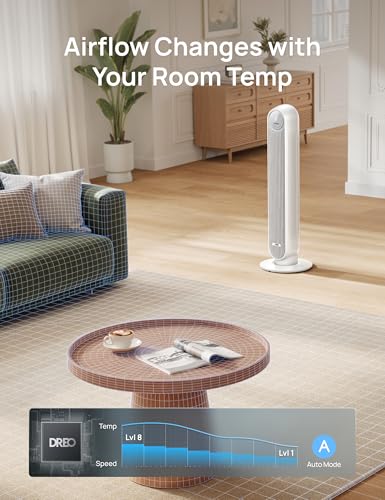
You’ll notice airflow most in how quickly a fan makes the room feel more comfortable and how far that cooling or heating effect actually reaches. Look for enough power and coverage for your space, plus useful features like multiple speeds, oscillation, or misting or heating modes if you need them, and watch out for fans that sound powerful but only move air well at close range.
For a standing fan, match the airflow pattern to the room: choose a pedestal or adjustable-head design if you need air to reach across a bed, sofa, or open room, and look for wide oscillation plus vertical tilt if you want whole-room circulation rather than a narrow blast at knee height. Check that low, medium, and high speeds feel meaningfully different; a fan that is only “strong” on max may be too harsh for sleep and too loud for close-range use. Owner feedback supports prioritizing strong but adjustable airflow: shoppers often praise fans that cool bedrooms on hot nights, reach across a room, and use oscillation to spread air instead of concentrating it in one spot.
Controls
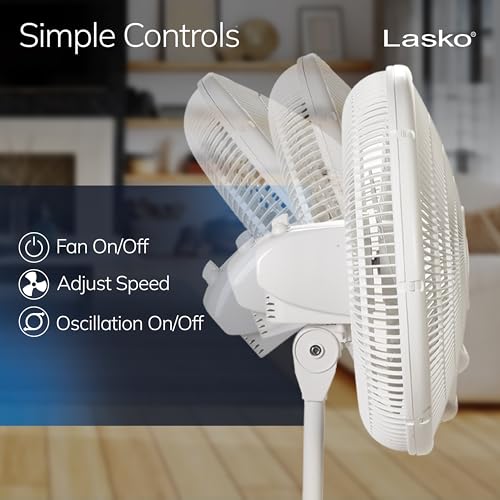
The controls determine how easily you can fine-tune airflow for comfort, noise, and convenience throughout the day or night. Look for clearly labeled buttons or a responsive remote, multiple speed settings, useful modes like sleep or timer functions, and smooth oscillation; watch out for confusing menus, tiny displays, or limited adjustments that make the fan harder to live with.
For bedroom and daily-use standing fans, prioritize controls you can operate without getting up: a remote, reachable onboard buttons, a timer, sleep mode, and independent oscillation control are more useful than a long list of novelty modes. If choosing a smart fan, confirm that core functions still work from the fan itself or remote when Wi-Fi, apps, or voice control are unavailable. Owner sentiment backs this up: buyers repeatedly value remotes, timers, adjustable speeds, oscillation settings, app or voice options, and auto shutoff because they make it easy to shift from a gentle breeze to stronger cooling from bed or across the room.
Noise
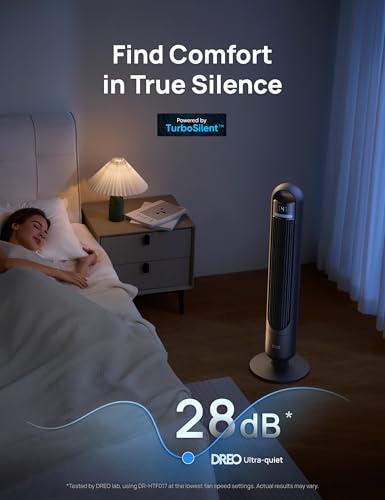
How a fan sounds can matter as much as how well it moves air, especially if you plan to use it in a bedroom, nursery, or office. Look for a fan that stays quiet at the speeds you actually use, has a smooth, consistent sound instead of rattling or clicking, and offers enough low-speed control for sleep; a fan that is only quiet on its weakest setting may still be disruptive at night.
For sleeping, working, or TV rooms, do not judge noise only by the highest speed; check whether the fan stays smooth on low and mid settings, because rattles, motor hum, bearing buzz, or oscillation clicking become more annoying overnight than steady airflow noise. Tower fans can be quiet but may produce a higher-pitched whoosh, while pedestal fans can develop grille or blade vibration if the head is poorly balanced, so look for reports of quiet operation specifically during oscillation and at bedside distances. Owner feedback strongly supports this concern: quiet operation is one of the most repeated positives, especially for bedrooms, light sleepers, and overnight use while still moving enough air to keep the room comfortable.
Build
You want a fan that feels solid, stays stable at its highest speed, and keeps working without new rattles, wobble, or motor odor after regular use. Look for sturdy housing, well-balanced blades, a secure base or mount, and parts that are easy to remove and clean, since flimsy materials and hard-to-maintain grills tend to show wear, collect dust, and shorten the fan’s useful life.
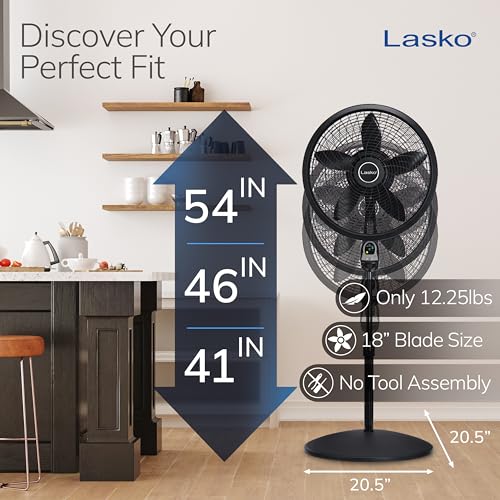
With standing fans, stability is a safety and durability issue, not just a feel-good feature: look for a weighted base, secure pole locks, a head that does not droop after tilting, tight grille attachment, and a cord long enough to avoid stretching across walkways. Avoid flimsy bases or loose telescoping sections if the fan will be near pets, children, beds, or high-traffic areas. Owner reports align with these priorities, with many buyers appreciating quick assembly, sturdy bases, tool-free setup, and finished fans that feel stable rather than wobbly or flimsy.
Value
You want a fan that feels worth what you pay, not just one that looks good on the shelf. Look for strong airflow, reliable performance, useful speed or control options, and a noise level you can live with, because a low upfront cost is not a bargain if the fan disappoints, wears out quickly, or costs more to run than expected.
The best value in a standing fan comes from reliable cooling, low noise, stable construction, and usable controls—not from extra modes you will not use. Pay attention to whether the fan solves your exact need: quiet overnight airflow, room-wide circulation, compact placement, or simple portable cooling; otherwise, a feature-heavy model may still be a poor buy. Owner sentiment supports evaluating value by performance and everyday usefulness, with shoppers often saying fans feel worthwhile when they combine strong cooling, quiet operation, sturdy build, remote control, and consistent performance.
Design
Design affects how well a fan fits your space and how easy it is to live with day to day, from its size and physical layout to whether any built-in light is actually useful or too harsh at night. Look for a fan with a stable base or secure wall mount, clear instructions, straightforward assembly, and lighting that matches your needs for brightness and placement without adding glare or awkward controls.
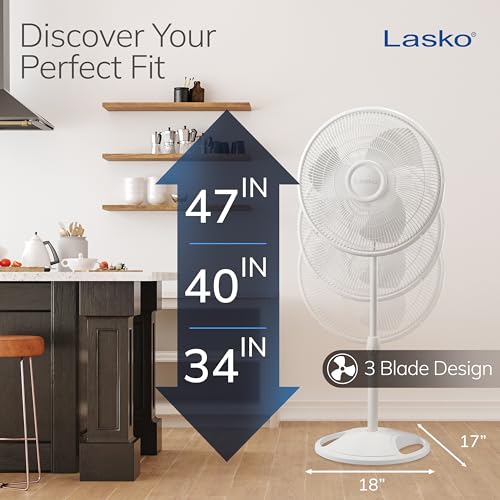
Choose the physical design around where the fan will actually stand: pedestal fans usually offer better height and directional aiming, while tower fans save floor space and blend more easily into bedrooms or living areas but can be harder to clean internally. Check footprint, height range, tilt, grille access for dust removal, handle placement, cord routing, and whether lights or displays can be dimmed or turned off for sleep. Owner feedback reinforces these practical design concerns, with buyers valuing compact footprints, modern looks, straightforward setup, sturdy assembled feel, and room-friendly extras when they do not make the fan feel overly utilitarian.
1,000,000+ shoppers use Buyer's Guide every week to find the best products and services online.

Helping millions of users make smarter purchases online.


