

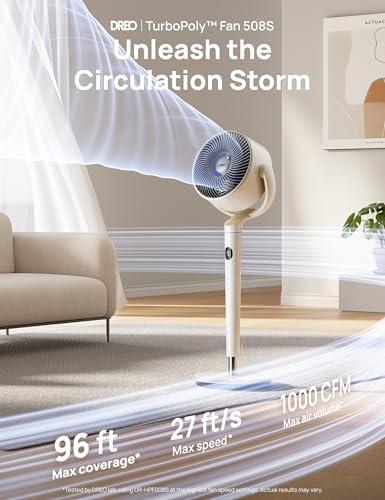





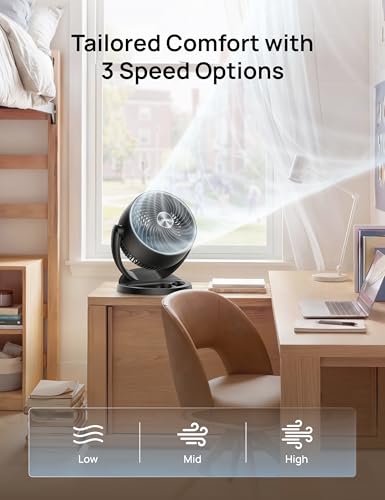


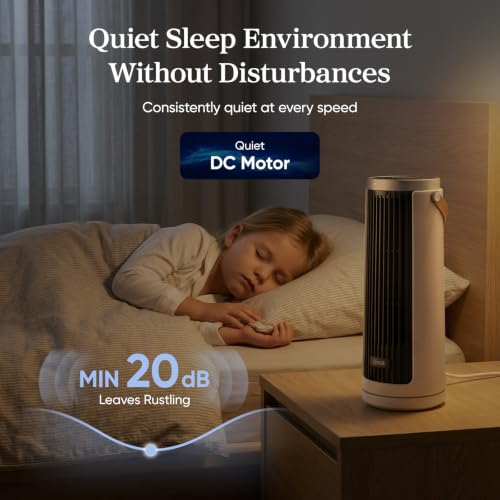



We also considered 10 others:


Our Top Choice
Compare Features


The order above is not editorial opinion, and it is not paid placement. It comes from what shoppers across our network actually do - which bedroom fans they compare, and which they ultimately buy. We re-rank as new data comes in, so the long-term favorites have to keep earning their spot against new entrants. The full method, including how we make money.
Bedroom Fans Buyer's Guide
A bedroom fan has to move enough air to cool a sleeping body or circulate AC without turning the room into a wind tunnel or a noise source. Prioritize low-speed comfort, sleep-friendly sound, bedside controls, and stable construction that will not wobble, rattle, or shine bright lights at night.
Airflow
You’ll notice airflow most in how quickly a fan makes the room feel more comfortable and how far that cooling or heating effect actually reaches. Look for enough power and coverage for your space, plus useful features like multiple speeds, oscillation, or misting or heating modes if you need them, and watch out for fans that sound powerful but only move air well at close range.
For bedroom airflow, look for usable low speeds first, not just maximum power: the best choice should create a gentle, continuous breeze across the bed, circulate cooled air from an AC vent, and still have higher settings for hot nights or medium-size rooms. Oscillation matters if two sleepers share the room or if you want room circulation instead of a direct blast; compact circulator heads work well for targeted airflow, while tower or pedestal styles can spread air more broadly. Owner feedback supports this: buyers often praise compact fans that push more air than expected, fans with clear differences between low and high speeds, and models that make bedrooms feel noticeably more comfortable overnight.
Noise
How a fan sounds can matter as much as how well it moves air, especially if you plan to use it in a bedroom, nursery, or office. Look for a fan that stays quiet at the speeds you actually use, has a smooth, consistent sound instead of rattling or clicking, and offers enough low-speed control for sleep; a fan that is only quiet on its weakest setting may still be disruptive at night.
For bedroom noise, check how the fan sounds on the exact setting you will sleep with, because a tolerable daytime fan can be too buzzy, clicky, or turbulent beside a bed. Prefer a steady low-frequency hum over rattles, bearing whine, pulsing oscillation noise, or button beeps; also assume the highest speed will be much more noticeable and should be reserved for pre-cooling the room. Owner sentiment aligns with this: many buyers say lower and mid settings are quiet enough for sleep or desk use, while higher speeds can become louder, and quiet airflow is repeatedly called out as a major bedroom strength.
Controls
The controls determine how easily you can fine-tune airflow for comfort, noise, and convenience throughout the day or night. Look for clearly labeled buttons or a responsive remote, multiple speed settings, useful modes like sleep or timer functions, and smooth oscillation; watch out for confusing menus, tiny displays, or limited adjustments that make the fan harder to live with.
For bedroom controls, prioritize adjustments you can make without getting out of bed: a reliable remote, reachable top controls, timer, sleep mode, dimmable or no display lights, and easy oscillation control are more important here than complex features you will not use at night. If choosing a smart or app-connected fan, make sure basic speed, timer, and oscillation still work from physical controls or a remote in case Wi-Fi, pairing, or a phone is unavailable. Owners reinforce this need for bedside convenience, frequently appreciating remotes, timers, oscillation settings, auto shutoff, app controls, and customizable speed or mode options for everyday bedroom use.
Value
You want a fan that feels worth what you pay, not just one that looks good on the shelf. Look for strong airflow, reliable performance, useful speed or control options, and a noise level you can live with, because a low upfront cost is not a bargain if the fan disappoints, wears out quickly, or costs more to run than expected.
For value in a bedroom fan, pay for the combination that affects sleep: quiet low-speed airflow, stable construction, useful controls, and enough oscillation or reach for your room size. Avoid judging value only by peak airflow or feature count; a cheap fan that rattles at night, lacks a timer, or has harsh lights is poor value for a bedroom, while a simpler model can be a good buy if it is quiet, sturdy, and easy to live with. Owner feedback generally supports strong price-to-performance impressions when fans feel powerful for their size, cool from several feet away, include useful features, and still feel well made.
Build
You want a fan that feels solid, stays stable at its highest speed, and keeps working without new rattles, wobble, or motor odor after regular use. Look for sturdy housing, well-balanced blades, a secure base or mount, and parts that are easy to remove and clean, since flimsy materials and hard-to-maintain grills tend to show wear, collect dust, and shorten the fan’s useful life.
For bedroom build quality, inspect the base, grille, head or tower housing, and oscillation mechanism because wobble and vibration become more obvious in a quiet room at night. Pedestal fans should have a weighted, stable base and a height lock that does not slip; tower fans should resist tipping; tabletop fans should have rubber feet; and any fan should avoid loose plastic parts that can buzz over time. Owners commonly report satisfaction when assembly is quick, the finished fan feels sturdy rather than flimsy, bases feel stable instead of wobbly, and the build seems well made for an affordable unit.
Design
Design affects how well a fan fits your space and how easy it is to live with day to day, from its size and physical layout to whether any built-in light is actually useful or too harsh at night. Look for a fan with a stable base or secure wall mount, clear instructions, straightforward assembly, and lighting that matches your needs for brightness and placement without adding glare or awkward controls.
For bedroom design, choose a form factor that fits your sleeping layout: a tower fan saves floor space beside a dresser or bed, a pedestal fan can aim over furniture, and a compact circulator is best on a nightstand, shelf, or floor angled upward. Also check nighttime livability: display brightness, status lights, RGB effects, cord placement, carry handles, grille cleaning access, and whether the fan visually blends into the room. Owner sentiment backs this up, with buyers valuing compact footprints, straightforward setup, modern or sleek looks, stable practical designs, and bedroom-friendly aesthetics that feel less utilitarian than basic fans.
1,000,000+ shoppers use Buyer's Guide every week to find the best products and services online.

Helping millions of users make smarter purchases online.


