


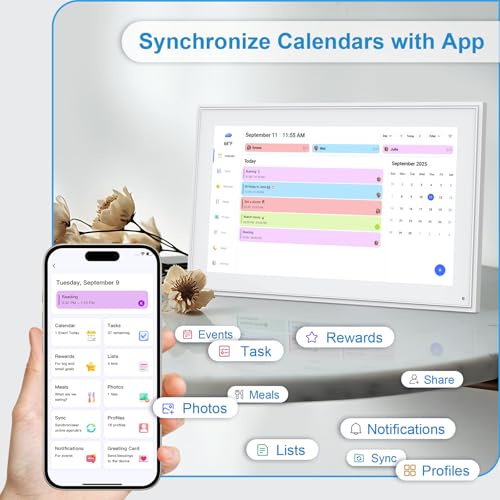


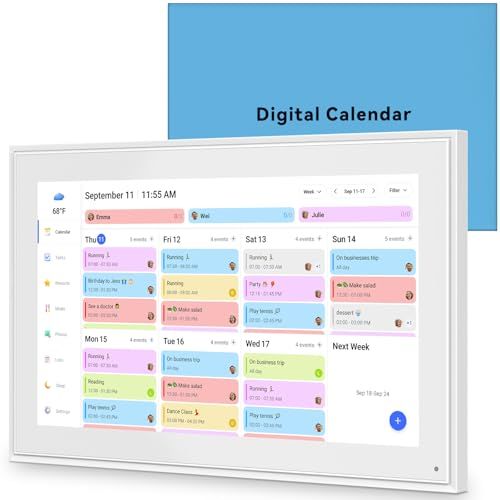
- Screen: 15.6" touchscreen
- Orientation: Landscape or portrait
- Auto Sync Calendars: Google, Yahoo, iCloud, Outlook, Cozi, and more
- Features: Digital picture frame, chore chart, meal planner
- Dimensions: 16" wide x 10" tall
.png)
.png)




BQQJDD 15.6" Digital Calendar
Overview and everyday experience

The BQQJDD 15.6" Digital Calendar is designed to solve a surprisingly common problem: keeping busy households, caregivers, and older family members on the same page without the friction of phone apps, tiny text, or missed notifications. With a large 15.6-inch display, it aims to be glanceable from across a room, turning schedules, reminders, and daily routines into something visible and shared rather than tucked away on individual devices. In practical use, the biggest appeal is that it behaves more like an always-on household hub than a personal gadget. You place it in a high-traffic area, and the day’s structure becomes part of the environment.
The screen size is a major part of the experience. At 15.6 inches, calendar entries and reminders can be displayed in larger text, which is helpful for users who struggle with small fonts or who simply want information readable at a distance. This is especially relevant for seniors, people with low vision, or families who want a centralized reference point in the kitchen, hallway, or living room. It also works well for caregivers who may need a quick confirmation of appointments, medications, or care routines without logging into a phone.
Another strength of this kind of digital calendar is the sense of calm it can bring when it’s set up well. Instead of repeatedly asking what’s happening today, or hunting through message threads, the information sits where everyone can see it. For homes with multiple schedules, this can reduce misunderstandings and last-minute surprises. The BQQJDD’s value is highest when it’s used consistently as a shared source of truth: the place where appointments, events, and reminders are maintained and checked.
That said, the everyday experience depends heavily on how you intend to manage it. Some buyers want a calendar that stays mostly static and is updated occasionally; others want something dynamic that changes throughout the day and integrates with existing calendars. Before buying, it’s worth thinking about who will update it, how often, and whether the device’s interface and account setup match your household’s comfort with technology. A device like this can feel effortless once it’s configured, but the first hour of setup often determines whether it becomes indispensable or ignored.
What to consider before buying (and what matters most)
Before purchasing the BQQJDD 15.6" Digital Calendar, consider where it will live and how it will be used. Placement is not just about aesthetics; it affects readability, interaction, and whether the calendar becomes part of the daily routine. A unit that sits in a rarely visited room won’t solve communication issues, while one placed at eye level in a central space can become a natural checkpoint. Also think about lighting and glare. Bright kitchens and sunny living rooms can wash out displays, so you’ll want a location where the screen remains clear throughout the day.
Display clarity and text size are among the most important factors, particularly if the calendar is meant for seniors or shared family use. A 15.6-inch panel is generally large enough to show day and week views comfortably, but what matters most is how cleanly the interface presents information. Look for a layout that makes the next appointment obvious, emphasizes the current day, and avoids clutter. If you anticipate multiple events per day, the calendar should still remain readable without forcing constant scrolling or reducing text to an unreadable size.
Ease of setup and ongoing management is the next major consideration. The ideal digital calendar is one that the least tech-savvy person in the home can still rely on, even if someone else handles the initial configuration. If the device supports remote updates, multiple users, or syncing with existing calendars, it can be much more practical for busy families. The most important question here is simple: who will be responsible for keeping it accurate? If you need a caregiver or adult child to update it from afar, remote access becomes essential. If updates will be done locally, an intuitive on-device interface matters more.
Connectivity and reliability are also crucial. A calendar that depends on Wi-Fi should maintain stable performance and recover gracefully after an outage or router change. Consider whether the unit has enough internal stability to remain useful even if the internet drops temporarily. Reliability matters more than flashy features because the purpose is trust. If a reminder fails or the date displays incorrectly, users will stop checking it, and the device stops being helpful.
Privacy and household comfort with a shared screen should not be overlooked. A central display can inadvertently broadcast sensitive appointments or personal reminders. If the calendar supports different views or allows you to control what appears on-screen, that can be a meaningful advantage. The most important aspect here is aligning the device with your household’s expectations: some families love radical transparency; others need a way to keep certain items discreet while still benefiting from shared scheduling.
Finally, consider build quality, power needs, and how you want it to look in your space. A device that is always visible should feel sturdy and presentable. Also think about the power cable route and whether you prefer a tabletop setup or a wall-mounted look. These practical considerations may sound minor, but they often determine whether the calendar feels like a seamless part of the home or an awkward piece of tech that’s constantly in the way.
If you prioritize the most important factors, focus first on readability and interface clarity, then on setup and update workflow, and finally on reliability. Those three elements determine whether the calendar actually changes daily behavior, which is the whole point of buying it.
Common Questions
Does a 15.6" digital calendar actually make a difference compared to a phone calendar? Yes, for shared visibility and routine. Phone calendars are excellent for personal organization, but they’re private and easy to ignore. A large digital calendar turns the schedule into a shared reference point and reduces the need for repeated check-ins, especially in families and caregiving situations.
Who is this best for? It’s best for households that benefit from a central schedule, including families coordinating school and activities, caregivers managing appointments, and seniors who prefer large, always-visible information rather than navigating apps. It can also work well in small offices or reception areas where a simple daily agenda is useful.
Will it be hard to set up for someone who isn’t tech-savvy? The day-to-day use can be simple once configured, but initial setup typically requires some comfort with Wi-Fi, accounts, and preferences. A good approach is to have a tech-comfortable person handle setup and then keep the on-screen layout as straightforward as possible for the primary user.
What should I check before buying to avoid disappointment? Check that the display is readable in your intended room lighting, confirm you’re comfortable with how updates will be made, and think through privacy. If you need remote management, make sure the workflow supports that in a way you’ll actually use. If you need large text, focus on how the interface displays dense days with many events.
Is it only useful for events, or can it help with routines? It can help with routines if you use reminders consistently. Many people get the most value by mixing appointments with recurring items like trash day, medication prompts, after-school activities, and weekly tasks. The device is most effective when it supports predictable daily structure, not just occasional events.
Conclusion: The BQQJDD 15.6" Digital Calendar is a strong fit for anyone who wants a shared, highly visible schedule that reduces miscommunication and supports daily routine. Its biggest advantages come from the large screen and the habit-forming nature of a centralized display. If you prioritize readability, a straightforward update workflow, and reliable performance in your chosen location, it can become one of those rare home devices that genuinely makes life feel more organized.