














We also considered 10 others:





Our Top Choice
Compare Features


The order above is not editorial opinion, and it is not paid placement. It comes from what shoppers across our network actually do - which small countertop microwaves they compare, and which they ultimately buy. We re-rank as new data comes in, so the long-term favorites have to keep earning their spot against new entrants. The full method, including how we make money.
Small Countertop Microwaves Buyer's Guide
Small countertop microwaves trade cooking power and interior room for a footprint that can survive a dorm, office, RV, apartment, or crowded kitchen counter. The sharpest checks are whether your actual dishes fit and rotate, whether the unit has enough ventilation clearance, and whether lower wattage will make your common foods frustratingly slow.
Quality
You want a microwave that feels solid, runs consistently, and holds up to daily door pulls, spills, heat, and vibration over time. Look for sturdy hinges and latches, well-fitted panels, easy-to-clean interior materials, and controls that don’t feel flimsy; watch out for thin construction, loose doors, peeling interior coatings, or complaints about early failures.
Look first for build details that survive cramped, daily use: a tight door latch, smooth hinge action, stable feet, an intact cavity coating, and a turntable coupler that does not feel loose. Small microwaves often live in dorms, offices, RVs, and crowded kitchens, so chipped interior paint, rust, weak door mechanisms, and noisy rattling are bigger red flags than fancy presets. Owner sentiment supports choosing a straightforward everyday unit: buyers often describe these compact models as reliable for basic reheating and simple meals, with a few watch-outs around early failures, cracked paint, and rust over time.
Size
Size matters because your microwave needs to fit both your space and the dishes you use most. Check the exterior dimensions against your countertop, cabinet, or built-in opening, and make sure there’s enough clearance for ventilation and the door swing. Also compare interior capacity and turntable size, since a compact model may fit the spot but struggle with larger plates, bowls, or casserole dishes.
Measure for the outside footprint and the required ventilation clearance, not just the advertised capacity; many countertop microwaves need open space at the sides, back, or top and should not be wedged tightly into a cabinet unless the manual allows it. Also check the usable interior: turntable diameter, cavity height, door swing, cord placement, and whether your largest dinner plate, mug, or meal tray actually rotates without hitting the walls. Owners consistently like this category because it can fit studios, apartments, dorms, RVs, shelves, and crowded counters while still handling everyday plates and small meals.
Value
A microwave’s value for money comes down to whether its everyday performance and useful features justify what you pay. Look for reliable heating, intuitive controls, the right capacity for your kitchen, and features you’ll actually use; watch out for paying extra for flashy presets, oversized designs, or premium finishes that don’t improve how well it cooks.
The best value in a small countertop microwave is usually the simplest model that matches your real workload: enough wattage for reheating without excessive cook times, enough interior space for your dishes, and controls you will actually use. Avoid paying mainly for decorative finishes or long preset lists if your use is leftovers, frozen meals, popcorn, and drinks; instead, compare usable capacity, power, warranty support, and replacement availability for parts like the glass tray. Owner feedback backs this up: shoppers tend to feel compact, basic units are a strong buy when they cover everyday tasks well without unnecessary complexity.
Usability
You’ll use a microwave in quick, repetitive moments, so controls that are clear, responsive, and logically laid out can matter as much as power. Look for simple setup, readable buttons or displays, useful presets that don’t feel confusing, and a door or drawer action that opens smoothly and feels secure. Watch out for cramped keypads, overly complex menus, or drawer operation that requires awkward reach or extra force.
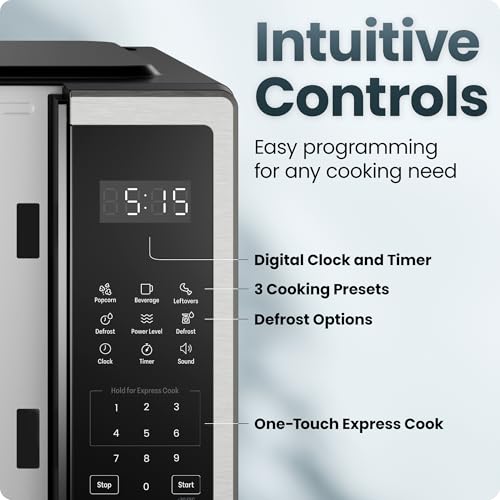
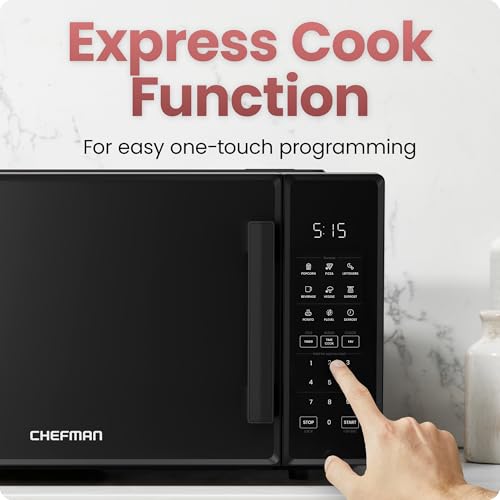
Prioritize controls that make short reheats easy: one-touch start, add-30-seconds, clear power-level adjustment, a readable display, and buttons or knobs that are easy to use in dim light. In small spaces, usability also includes a door that opens without dragging the appliance forward, a mute option if used in a dorm or office, and a child lock if the microwave sits within reach of kids. Owners commonly praise small countertop microwaves when they keep operation simple, with basic timed cooking, clear displays, straightforward buttons, and dependable routine heating.
Design
A microwave often sits in plain sight, so its appearance can affect how finished and cohesive your kitchen feels. Look for a finish, color, handle style, and control-panel layout that match your other appliances and cabinetry, and watch for glossy surfaces or dark finishes that may show fingerprints, smudges, or dust more easily.
Choose the exterior design around where the microwave will physically live: handle depth, door-swing clearance, vent placement, fingerprint visibility, and how easy the front and keypad are to wipe down matter more than looks alone. Retro colors and stainless-style finishes can be appealing, but make sure decorative styling does not trade away precise controls, interior visibility, or compact placement. Owner sentiment shows design is a real satisfaction driver in this category, with many buyers appreciating clean stainless-style looks, compact profiles, and colorful retro models that feel like part of the kitchen decor.
Features
You’ll want a microwave with functions that match how you actually cook, whether that means simple reheating, defrosting, sensor cooking, convection baking, air frying, or multi-stage programs. Look for presets that are genuinely useful and easy to adjust, and watch out for models loaded with modes you won’t use or controls that make basic tasks slower.
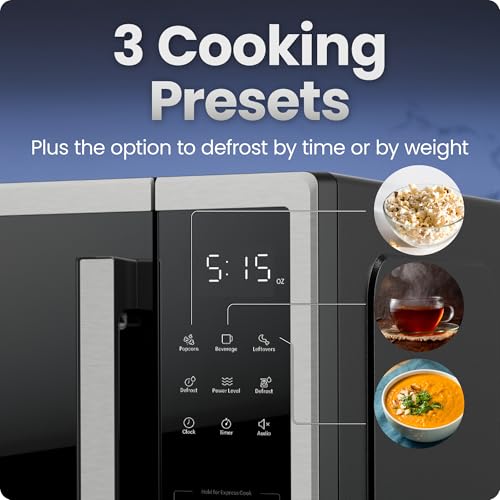
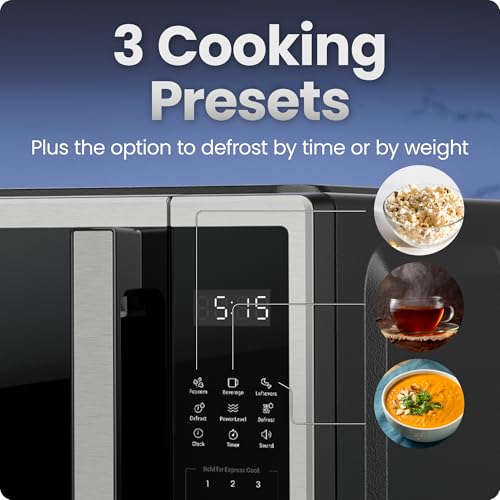
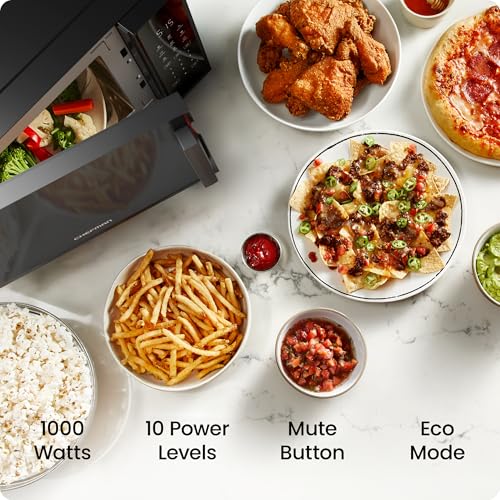
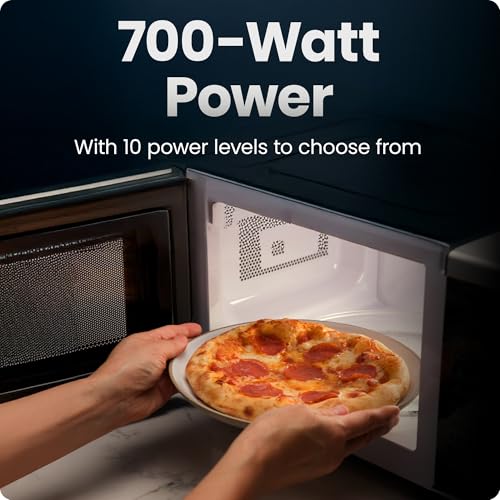
For this niche, the most useful features are practical safety and reheating aids: child lock, turntable on/off if you use square dishes, defrost by time or weight, multiple power levels, a kitchen timer, interior light, and a sound-off option. Be cautious with very low-power compact models: many 700W units can handle everyday reheating but may need longer times and more stirring for dense frozen foods. Owner feedback aligns with this practical approach—buyers like simple controls, safety locks, dependable reheating, popcorn and small-meal performance, and adequate quietness, while heating speed can be mixed on lower-wattage models.
1,000,000+ shoppers use Buyer's Guide every week to find the best products and services online.

Helping millions of users make smarter purchases online.


