



.png)
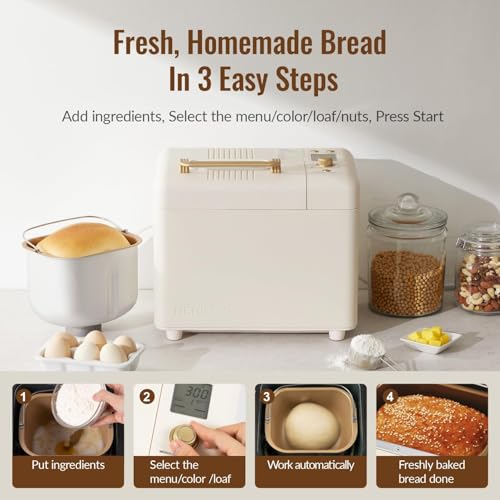
Day-to-day use is very easy, especially for set-it-and-forget-it baking where the main work is measuring ingredients and choosing a program.
The Neretva bread maker gets its strongest praise for bread quality and taste, with loaves coming out fresh, delicious, and reliably well-baked.
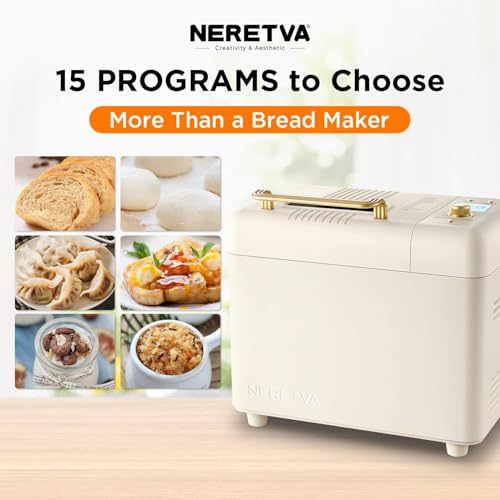
The wide set of programs and crust options makes it feel versatile for bread, dough, cake, yogurt, jam, and different loaf sizes.
Day-to-day use is very easy, especially for set-it-and-forget-it baking where the main work is measuring ingredients and choosing a program.
The Neretva bread maker gets its strongest praise for bread quality and taste, with loaves coming out fresh, delicious, and reliably well-baked.
The wide set of programs and crust options makes it feel versatile for bread, dough, cake, yogurt, jam, and different loaf sizes.
Day-to-day use is very easy, especially for set-it-and-forget-it baking where the main work is measuring ingredients and choosing a program.
The Neretva bread maker gets its strongest praise for bread quality and taste, with loaves coming out fresh, delicious, and reliably well-baked.
The wide set of programs and crust options makes it feel versatile for bread, dough, cake, yogurt, jam, and different loaf sizes.
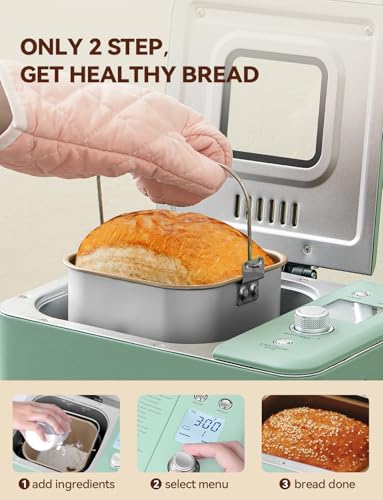
Making bread feels approachable even for beginners, with owners repeatedly describing the controls and process as simple to use.
The Neretva bread maker gets its strongest praise for producing well-baked, good-tasting loaves, including basic white and gluten-free bread with satisfying texture.
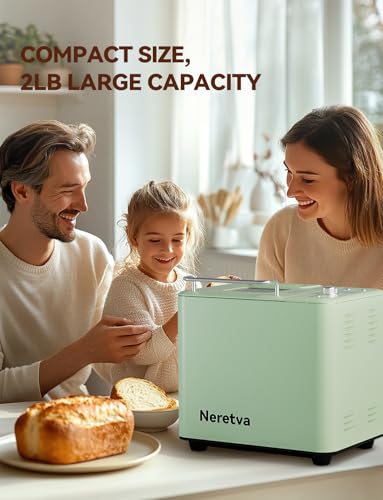
Loaf size is a real tradeoff: the compact machine fits smaller needs well, but some buyers find the finished loaves smaller than expected.
Making bread feels approachable even for beginners, with owners repeatedly describing the controls and process as simple to use.
The Neretva bread maker gets its strongest praise for producing well-baked, good-tasting loaves, including basic white and gluten-free bread with satisfying texture.
Loaf size is a real tradeoff: the compact machine fits smaller needs well, but some buyers find the finished loaves smaller than expected.


Making bread feels approachable even for beginners, with owners repeatedly describing the controls and process as simple to use.
The Neretva bread maker gets its strongest praise for producing well-baked, good-tasting loaves, including basic white and gluten-free bread with satisfying texture.
Loaf size is a real tradeoff: the compact machine fits smaller needs well, but some buyers find the finished loaves smaller than expected.


Setup and everyday operation come across as straightforward and practical, making it feel approachable even as a gift or frequent-use kitchen tool.
The SALUNA bread machine earns its strongest praise for reliable bread-making performance, with dough mixed evenly and loaves coming out well.
Build quality is viewed very positively, with buyers repeatedly describing the materials as durable, resistant, and well made.
Setup and everyday operation come across as straightforward and practical, making it feel approachable even as a gift or frequent-use kitchen tool.
The SALUNA bread machine earns its strongest praise for reliable bread-making performance, with dough mixed evenly and loaves coming out well.
Build quality is viewed very positively, with buyers repeatedly describing the materials as durable, resistant, and well made.
Setup and everyday operation come across as straightforward and practical, making it feel approachable even as a gift or frequent-use kitchen tool.
The SALUNA bread machine earns its strongest praise for reliable bread-making performance, with dough mixed evenly and loaves coming out well.
Build quality is viewed very positively, with buyers repeatedly describing the materials as durable, resistant, and well made.
The controls and settings feel straightforward enough for routine home baking, even for people who want minimal fuss.
The finished loaves get strong praise for taste, with basic white bread in particular coming out especially delicious.
Functionality is generally useful across breads, dough, cakes, rolls, and more, but the sensitive computerized screen can make operation feel a bit touchy.
The controls and settings feel straightforward enough for routine home baking, even for people who want minimal fuss.
The finished loaves get strong praise for taste, with basic white bread in particular coming out especially delicious.
Functionality is generally useful across breads, dough, cakes, rolls, and more, but the sensitive computerized screen can make operation feel a bit touchy.


The controls and settings feel straightforward enough for routine home baking, even for people who want minimal fuss.
The finished loaves get strong praise for taste, with basic white bread in particular coming out especially delicious.
Functionality is generally useful across breads, dough, cakes, rolls, and more, but the sensitive computerized screen can make operation feel a bit touchy.
The Elite Gourmet bread maker is widely liked for turning out good bread with little effort, even for first-time bread-machine owners.
Bread and dough results are often described as delicious, with buyers using the presets for everything from sandwich loaves to pizza dough.
The machine is seen as a strong value because it is affordable, has useful features, and can help cut down on store-bought bread costs.
The Elite Gourmet bread maker is widely liked for turning out good bread with little effort, even for first-time bread-machine owners.
Bread and dough results are often described as delicious, with buyers using the presets for everything from sandwich loaves to pizza dough.
The machine is seen as a strong value because it is affordable, has useful features, and can help cut down on store-bought bread costs.


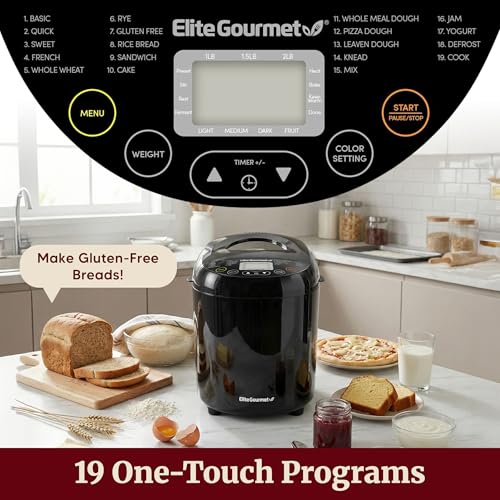
The Elite Gourmet bread maker is widely liked for turning out good bread with little effort, even for first-time bread-machine owners.
Bread and dough results are often described as delicious, with buyers using the presets for everything from sandwich loaves to pizza dough.
The machine is seen as a strong value because it is affordable, has useful features, and can help cut down on store-bought bread costs.
Making bread feels approachable even for beginners, with owners repeatedly describing the controls and process as simple to use.
The Neretva bread maker gets its strongest praise for producing well-baked, good-tasting loaves, including basic white and gluten-free bread with satisfying texture.
Loaf size is a real tradeoff: the compact machine fits smaller needs well, but some buyers find the finished loaves smaller than expected.
Making bread feels approachable even for beginners, with owners repeatedly describing the controls and process as simple to use.
The Neretva bread maker gets its strongest praise for producing well-baked, good-tasting loaves, including basic white and gluten-free bread with satisfying texture.
Loaf size is a real tradeoff: the compact machine fits smaller needs well, but some buyers find the finished loaves smaller than expected.

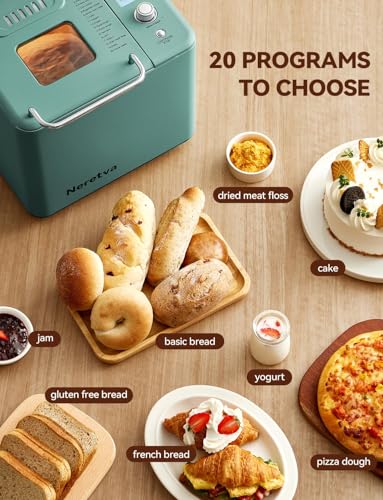


Making bread feels approachable even for beginners, with owners repeatedly describing the controls and process as simple to use.
The Neretva bread maker gets its strongest praise for producing well-baked, good-tasting loaves, including basic white and gluten-free bread with satisfying texture.
Loaf size is a real tradeoff: the compact machine fits smaller needs well, but some buyers find the finished loaves smaller than expected.
Making bread feels approachable even for beginners, with owners repeatedly describing the controls and process as simple to use.
The Neretva bread maker gets its strongest praise for producing well-baked, good-tasting loaves, including basic white and gluten-free bread with satisfying texture.
Loaf size is a real tradeoff: the compact machine fits smaller needs well, but some buyers find the finished loaves smaller than expected.
Making bread feels approachable even for beginners, with owners repeatedly describing the controls and process as simple to use.
The Neretva bread maker gets its strongest praise for producing well-baked, good-tasting loaves, including basic white and gluten-free bread with satisfying texture.
Loaf size is a real tradeoff: the compact machine fits smaller needs well, but some buyers find the finished loaves smaller than expected.


Making bread feels approachable even for beginners, with owners repeatedly describing the controls and process as simple to use.
The Neretva bread maker gets its strongest praise for producing well-baked, good-tasting loaves, including basic white and gluten-free bread with satisfying texture.
Loaf size is a real tradeoff: the compact machine fits smaller needs well, but some buyers find the finished loaves smaller than expected.
The set-it-and-forget-it process feels very easy, with the manual recipes, loaf settings, crust options, and automatic mixing, rising, and baking doing most of the work.
The Elite Gourmet bread maker is strongly liked for turning out attractive, satisfying loaves that can come out perfect even on early tries.
Frequent bakers see it as a worthwhile investment because it makes homemade bread convenient enough to replace regular store-bought loaves.
The set-it-and-forget-it process feels very easy, with the manual recipes, loaf settings, crust options, and automatic mixing, rising, and baking doing most of the work.
The Elite Gourmet bread maker is strongly liked for turning out attractive, satisfying loaves that can come out perfect even on early tries.
Frequent bakers see it as a worthwhile investment because it makes homemade bread convenient enough to replace regular store-bought loaves.


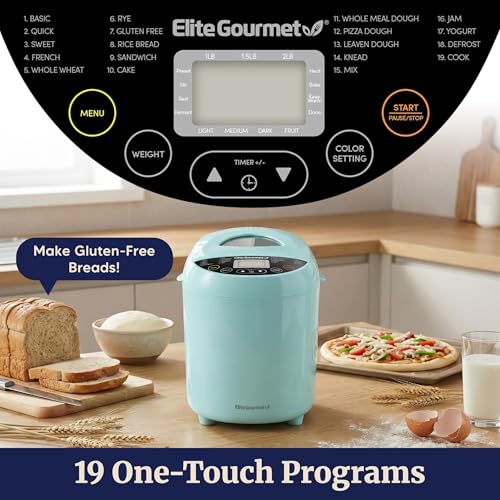
The set-it-and-forget-it process feels very easy, with the manual recipes, loaf settings, crust options, and automatic mixing, rising, and baking doing most of the work.
The Elite Gourmet bread maker is strongly liked for turning out attractive, satisfying loaves that can come out perfect even on early tries.
Frequent bakers see it as a worthwhile investment because it makes homemade bread convenient enough to replace regular store-bought loaves.


Setup and everyday baking feel beginner-friendly, with buyers describing it as easy to use even as a first bread machine.
The SUMSATY bread maker earns its strongest praise for turning out great homemade bread with consistent results.
The machine is seen as working reliably for regular bread making, including frequent use and repeat loaves.
Setup and everyday baking feel beginner-friendly, with buyers describing it as easy to use even as a first bread machine.
The SUMSATY bread maker earns its strongest praise for turning out great homemade bread with consistent results.
The machine is seen as working reliably for regular bread making, including frequent use and repeat loaves.
Setup and everyday baking feel beginner-friendly, with buyers describing it as easy to use even as a first bread machine.
The SUMSATY bread maker earns its strongest praise for turning out great homemade bread with consistent results.
The machine is seen as working reliably for regular bread making, including frequent use and repeat loaves.
The LCKSMAL bread maker is strongly liked for producing soft, fluffy, evenly baked bread with very little effort.
Day-to-day ownership feels low-hassle thanks to quiet operation, an easy-wipe non-stick pan, and an overall reliable feel.
The LCKSMAL bread maker is strongly liked for producing soft, fluffy, evenly baked bread with very little effort.
Day-to-day ownership feels low-hassle thanks to quiet operation, an easy-wipe non-stick pan, and an overall reliable feel.


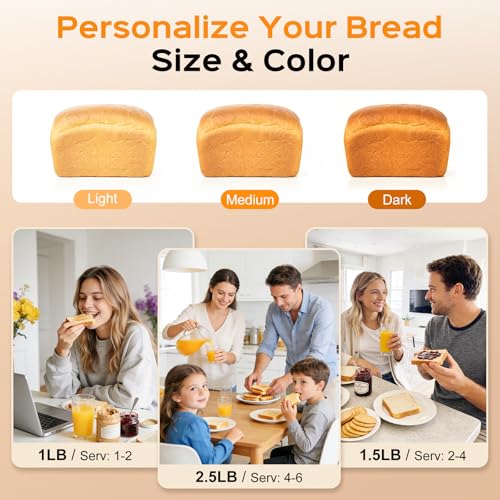


The LCKSMAL bread maker is strongly liked for producing soft, fluffy, evenly baked bread with very little effort.
Day-to-day ownership feels low-hassle thanks to quiet operation, an easy-wipe non-stick pan, and an overall reliable feel.
We also considered 10 others:


Our Top Choice
Day-to-day use is very easy, especially for set-it-and-forget-it baking where the main work is measuring ingredients and choosing a program.
The Neretva bread maker gets its strongest praise for bread quality and taste, with loaves coming out fresh, delicious, and reliably well-baked.
The wide set of programs and crust options makes it feel versatile for bread, dough, cake, yogurt, jam, and different loaf sizes.
Day-to-day use is very easy, especially for set-it-and-forget-it baking where the main work is measuring ingredients and choosing a program.
The Neretva bread maker gets its strongest praise for bread quality and taste, with loaves coming out fresh, delicious, and reliably well-baked.
The wide set of programs and crust options makes it feel versatile for bread, dough, cake, yogurt, jam, and different loaf sizes.
Day-to-day use is very easy, especially for set-it-and-forget-it baking where the main work is measuring ingredients and choosing a program.
The Neretva bread maker gets its strongest praise for bread quality and taste, with loaves coming out fresh, delicious, and reliably well-baked.
The wide set of programs and crust options makes it feel versatile for bread, dough, cake, yogurt, jam, and different loaf sizes.
Compare Features


The order above is not editorial opinion, and it is not paid placement. It comes from what shoppers across our network actually do - which small bread makers they compare, and which they ultimately buy. We re-rank as new data comes in, so the long-term favorites have to keep earning their spot against new entrants. The full method, including how we make money.
Small Bread Makers Buyer's Guide
Small bread makers are about trading batch size and crust control for a machine that can live on the counter and make a fresh loaf without taking over the kitchen. The sharpest checks are whether the pan shape and loaf-size options match how you actually eat bread, and whether the motor, programs, and cleanup routine can handle dense doughs or gluten-free recipes without becoming a hassle.
Results
You want a bread maker that consistently turns out loaves with an even rise, tender crumb, well-browned crust, and balanced flavor, because convenience means little if the bread is dense, pale, or gummy. Look for machines known for reliable kneading, steady baking temperatures, and settings that match the breads you actually make, and watch out for models that leave unmixed flour, collapse loaves, or overbake the crust.
Prioritize loaf shape, sliceability, and consistency over headline capacity: many small bread makers use compact vertical pans, which can make taller slices and leave a paddle hole, so check whether the loaf size suits sandwiches, toast, or single-household use. If you bake whole wheat, multigrain, rye, oatmeal, or gluten-free loaves, look for evidence of even kneading and full baking rather than just a basic white-bread demo, because small pans and weaker motors can struggle with dense dough. Owner feedback supports this focus: buyers are happiest when machines turn out well-shaped, properly sized, flavorful loaves, with strong praise for soft, sliceable everyday bread and consistent week-after-week results across white, wheat, rye, multigrain, oatmeal, and gluten-free styles.
Usability
A bread maker should make baking feel simpler, not add another appliance you have to decode. Look for clear instructions, intuitive controls, easy-to-read settings, and practical features like straightforward pan removal and cleanup; watch out for crowded displays, vague manuals, or too many preset programs that make everyday use more confusing than helpful.
Choose a control layout that makes the exact loaf you want without repeated manual babysitting: clear loaf-size, crust-color, delay-start, and program buttons matter more in a small machine because recipe scaling errors show up quickly. Beginners should look for clear water/flour/yeast order instructions, an audible add-in signal for raisins or nuts, and a display that makes it obvious when mixing, rising, and baking are happening; avoid models where changing loaf size or crust level is buried in confusing menus. Owner sentiment backs this up, with many users describing bread making as approachable, low-effort, and beginner-friendly: add ingredients, select a setting, press start, and let the machine handle mixing, rising, and baking.
Programs
The right programs determine how well a bread maker fits the way you actually bake, from basic white and whole wheat loaves to dough-only, gluten-free, sweet bread, jam, or cake settings. Look for presets you’ll use often plus practical adjustments like crust darkness, loaf size, delay start, and keep-warm, and be wary of machines with lots of novelty modes but little control over timing or texture.
Match programs to the recipes you will actually repeat, not the longest feature list. For this niche, the most useful presets are basic, whole wheat, gluten-free, dough-only, bake-only, quick bread/cake, and possibly jam or yogurt if you truly want a multi-use appliance; gluten-free should have a dedicated cycle because it usually needs different mixing and rise behavior than wheat bread. Also check for multiple loaf sizes and crust settings, and avoid using delay start with perishable ingredients such as milk, eggs, or fresh dairy. Owner feedback suggests that broad but practical program sets add real usefulness, with shoppers using presets for sandwich bread, pizza dough, whole wheat, cinnamon raisin, potato, brown rice, multigrain, cake, yogurt, jam, and different crust levels.
Build
A well-built bread maker matters because the motor, pan, hinges, and kneading blade take repeated strain from dense doughs and long cycles. Look for a machine that feels stable on the counter, has a secure-fitting pan and lid, and uses sturdy, well-finished parts; be wary of flimsy paddles, rattling during kneading, or coatings and moving pieces that seem likely to wear quickly.
For a small bread maker, build quality is mainly about the pan, paddle, motor, and stability under kneading load. Look for a removable nonstick pan that locks firmly, a paddle that does not wobble, a lid that seals heat well, and enough weight or nonslip feet to prevent walking during dense dough cycles; avoid flimsy-feeling pans, hard-to-replace paddles, and coatings that look easy to scratch. This matters most if you plan to bake several times a week or use dough, whole-grain, banana bread, quick bread, or roll recipes. Supporting owner reports are strongest where machines feel durable, well made, and reliable for frequent use, with dough mixed evenly and loaves coming out well even beyond basic bread.
Value
A bread maker can seem like a good deal until you factor in how well it bakes, how often you’ll use its settings, and what accessories or support are included. Look for a machine whose loaf quality, capacity, preset programs, durability, and included pan or measuring tools match your baking habits, and be wary of paying extra for features you won’t use. The best value for money is the model that reliably makes the bread you want without unnecessary complexity or shortcuts in build quality.
Judge value by usable loaf output and repeat use, not by the lowest upfront cost or the most programs. A compact machine is a better buy if its loaf size prevents waste, it can stay on the counter, and it reliably replaces bread you would otherwise buy; it is a weaker value if the pan shape annoys you, the capacity is too small for your household, or you only use one or two cycles despite paying for many extras. Recipe books, measuring accessories, and genuinely useful dough or yogurt functions can add value if they reduce trial-and-error. Owner sentiment aligns with this: buyers often see these machines as worthwhile when they are affordable, feature-rich enough for regular baking, convenient enough to reduce store-bought bread, attractive enough to keep out, and supported by helpful recipes or accessories.
Cleaning
Cleaning matters because sticky dough, baked-on crust, and a tight paddle area can turn homemade bread into a chore after every loaf. Look for a removable nonstick pan and paddle that release residue easily, with few seams or crevices where dough can collect; watch out for interiors that are hard to reach or paddles that trap bread and require soaking or scraping.
Check cleaning before you buy because small bread makers are only convenient if the pan and paddle clean up quickly after sticky dough. Look for a fully removable pan, a paddle that can be removed without prying, a nonstick interior, minimal seams where flour can collect, and clear guidance on whether the pan is dishwasher safe; even when dishwasher-safe, hand-washing can help preserve nonstick coatings. Also consider where condensation, baked-on add-ins, and escaped flour will collect around the lid and heating chamber. Owner feedback supports cleaning as a major satisfaction driver: users repeatedly praise easy cleanup, nonstick pans, simple removable-pan routines, quiet low-hassle operation, and maintenance that makes the appliance practical for regular use.
Don't miss the latest sales on Small Bread Makers and more. Get the best prime day deal today!
.png)
1,000,000+ shoppers use Buyer's Guide every week to find the best products and services online.

Helping millions of users make smarter purchases online.


