










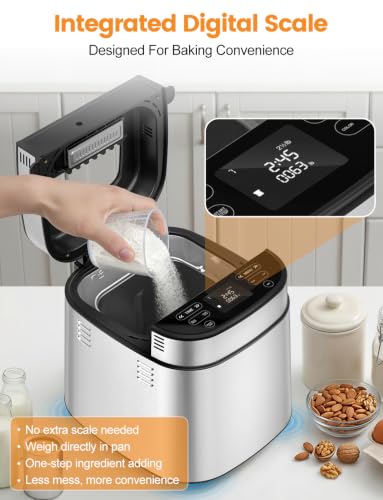


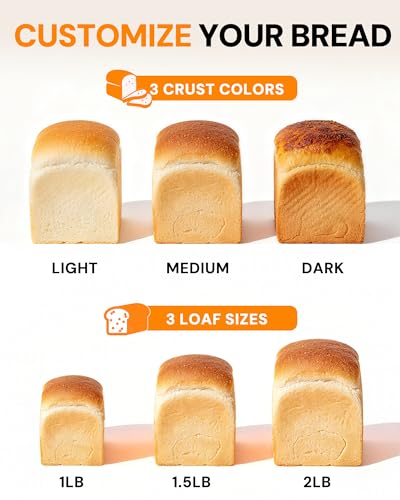
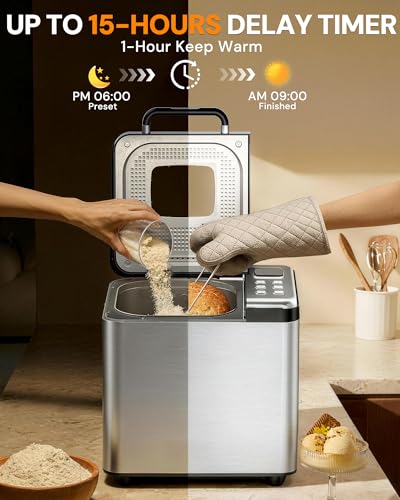


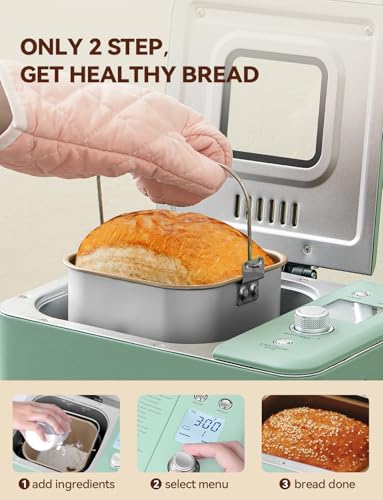


We also considered 10 others:


Our Top Choice
Compare Features


The order above is not editorial opinion, and it is not paid placement. It comes from what shoppers across our network actually do - which bread maker machines they compare, and which they ultimately buy. We re-rank as new data comes in, so the long-term favorites have to keep earning their spot against new entrants. The full method, including how we make money.
Bread Maker Machines Buyer's Guide
Bread makers promise push-button homemade loaves, but the real tradeoff is automation versus control over dough type, loaf shape, crust, and texture. The sharpest concerns are whether the kneading/heating cycle fits your bread style—especially whole grain, gluten-free, or enriched doughs—and whether the pan, paddle, and coating will hold up to regular use.
Results
You want a bread maker that consistently turns out loaves with an even rise, tender crumb, well-browned crust, and balanced flavor, because convenience means little if the bread is dense, pale, or gummy. Look for machines known for reliable kneading, steady baking temperatures, and settings that match the breads you actually make, and watch out for models that leave unmixed flour, collapse loaves, or overbake the crust.
For bread makers, judge results by whether the machine can handle the specific loaf style you will bake most: soft sandwich bread needs even kneading and controlled rise; whole grain and rye need enough mixing torque and longer programs; gluten-free needs a dedicated cycle that does not rely on a normal gluten-development knead. Also check loaf shape and pan geometry, because tall, narrow pans can make awkward sandwich slices, while weak heating can leave dense centers or pale tops. Owner feedback supports prioritizing baking performance: shoppers most often praise machines that produce flavorful, well-shaped, properly sized loaves, with especially strong satisfaction when basic white, wheat, rye, multigrain, oatmeal, and gluten-free breads come out fluffy, evenly baked, and consistent week after week.
Usability
A bread maker should make baking feel simpler, not add another appliance you have to decode. Look for clear instructions, intuitive controls, easy-to-read settings, and practical features like straightforward pan removal and cleanup; watch out for crowded displays, vague manuals, or too many preset programs that make everyday use more confusing than helpful.
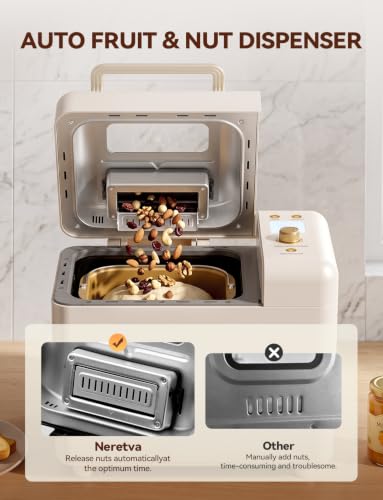
Look for a machine that makes your actual baking routine hard to mess up: clearly labeled loaf-size and crust controls, a readable display, an audible add-in signal for raisins or nuts, a delay timer if you want morning bread, and instructions that specify ingredient order by weight or volume. Beginners should avoid models with vague recipes or confusing program names, because bread machines are sensitive to liquid/flour ratios and yeast timing. Owner sentiment backs this up: buyers are happiest when the process feels genuinely add-ingredients-and-walk-away, controls are simple, first bakes are approachable, and removable pans make everyday use feel low-effort.
Programs
The right programs determine how well a bread maker fits the way you actually bake, from basic white and whole wheat loaves to dough-only, gluten-free, sweet bread, jam, or cake settings. Look for presets you’ll use often plus practical adjustments like crust darkness, loaf size, delay start, and keep-warm, and be wary of machines with lots of novelty modes but little control over timing or texture.
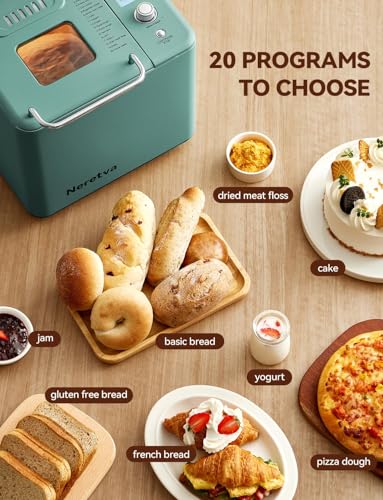
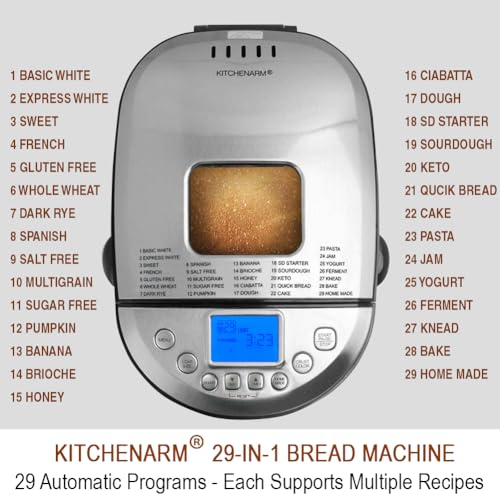
Choose programs based on dough chemistry, not just the total number of presets. A useful bread maker should have separate cycles for basic, whole wheat, gluten-free, dough-only, bake-only, quick bread/cake, and ideally customizable knead/rise/bake times if you plan to adapt sourdough, high-hydration doughs, or low-sugar recipes. Avoid paying attention to a long preset list unless it includes the cycles you will actually use and lets you adjust loaf size and crust. Owner feedback aligns with this: versatile machines earn praise when their presets reliably handle sandwich loaves, pizza dough, whole wheat, cinnamon raisin, gluten-free, potato, brown rice, multigrain, cake, yogurt, jam, and multiple loaf sizes, with flexible fermentation and baking options helping users branch out.
Build
A well-built bread maker matters because the motor, pan, hinges, and kneading blade take repeated strain from dense doughs and long cycles. Look for a machine that feels stable on the counter, has a secure-fitting pan and lid, and uses sturdy, well-finished parts; be wary of flimsy paddles, rattling during kneading, or coatings and moving pieces that seem likely to wear quickly.
The key build risks in bread makers are the parts under stress and heat: the kneading paddle, drive shaft, pan coating, lid hinge, seals, and measuring accessories. Frequent bakers should look for a sturdy removable pan, a paddle that seats securely but can still be removed, a motor that does not strain on whole-grain dough, and replacement-part availability, because a worn paddle or damaged pan can make an otherwise working machine frustrating. Owner sentiment is mostly positive on reliable weekly use, quiet operation, durable-feeling materials, and machines that handle dough, quick bread, banana bread, rolls, and more; however, the recurring cautions are exactly the ones careful shoppers should watch for, including sticking paddles, imperfect components, broader build-quality concerns, and fragile accessory pieces.
Value
A bread maker can seem like a good deal until you factor in how well it bakes, how often you’ll use its settings, and what accessories or support are included. Look for a machine whose loaf quality, capacity, preset programs, durability, and included pan or measuring tools match your baking habits, and be wary of paying extra for features you won’t use. The best value for money is the model that reliably makes the bread you want without unnecessary complexity or shortcuts in build quality.
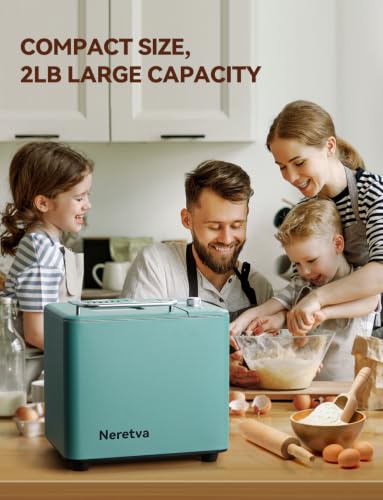
Value in a bread maker depends on how often it will replace bought bread and whether its features match your diet. A compact, simple machine can be the better buy for basic sandwich loaves, while a more flexible model is easier to justify if you regularly make gluten-free bread, dough, yogurt, jam, or multiple loaf sizes. Do not treat extra accessories or preset counts as value unless they reduce real work for your household. Owner feedback supports this practical view: buyers see strong value when a machine is convenient enough for frequent use, helps reduce reliance on store-bought loaves, includes useful accessories or a detailed recipe guide, offers broad programs, and still feels countertop-friendly rather than becoming an appliance regret.
Cleaning
Cleaning matters because sticky dough, baked-on crust, and a tight paddle area can turn homemade bread into a chore after every loaf. Look for a removable nonstick pan and paddle that release residue easily, with few seams or crevices where dough can collect; watch out for interiors that are hard to reach or paddles that trap bread and require soaking or scraping.
Cleaning matters more with bread makers than many shoppers expect because baked-on dough around the paddle hub, scratched nonstick coating, and trapped crumbs near the shaft can shorten pan life or affect future loaves. Look for a removable nonstick pan, a paddle that releases without prying, simple wipe-down surfaces, and clear guidance on whether the pan or paddle can go in a dishwasher; avoid using metal tools on coated pans. Owner feedback reinforces this priority: easy cleanup is repeatedly praised, especially when the pan is nonstick, removable, simple to wash, sometimes dishwasher safe, and paired with quiet, low-shake operation that makes the appliance practical to keep in regular rotation.
1,000,000+ shoppers use Buyer's Guide every week to find the best products and services online.

Helping millions of users make smarter purchases online.


