








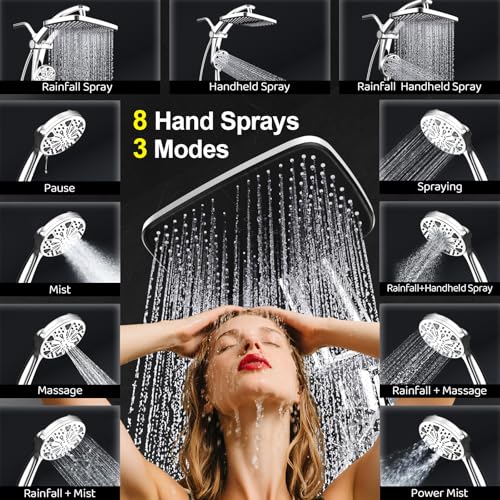





We also considered 10 others:


Our Top Choice
Compare Features


The order above is not editorial opinion, and it is not paid placement. It comes from what shoppers across our network actually do - which rainfall shower heads they compare, and which they ultimately buy. We re-rank as new data comes in, so the long-term favorites have to keep earning their spot against new entrants. The full method, including how we make money.
Rainfall Shower Heads Buyer's Guide
Rainfall shower heads trade concentrated spray force for broad, overhead coverage, so the best choice depends on whether your plumbing can support a wide spray face without making rinsing feel weak. In this niche, the sharpest concerns are pressure, leak-free multi-joint installation, and whether the head, arm, handheld wand, and hose actually fit the shower space and users.
Pressure & Coverage
Rainfall heads spread water over a larger surface area, which can make the shower feel luxurious but may reduce perceived force. A good setup balances wide coverage with usable rinse strength, especially when paired with a handheld wand or alternate spray settings.
For a rainfall head, do not judge by diameter alone: a very wide face can feel gentle or weak if your home pressure is modest, so look for a design that maintains even flow across the nozzles and includes at least one stronger rinse mode through the handheld or main head. If you need fast shampoo rinsing, pet washing, or cleaning the shower walls, avoid rainfall-only setups with no focused spray option. Silicone or easy-clean nozzles also matter because mineral buildup can gradually reduce the even rain pattern. Owner feedback strongly supports making this a top criterion: water pressure and everyday function are standout positives in the provided sentiment, especially where the rainfall head, handheld spray, and stronger settings work well for rinsing or cleaning.
Spray Control
Rainfall shower heads are often bought for comfort, but the controls determine how useful they are for real routines. A handheld wand, reliable diverter, and practical spray patterns make the system better for rinsing hair, cleaning the enclosure, bathing children, or washing pets.
Choose a rainfall combo with controls you can operate with wet hands: a smooth diverter, clearly distinct spray patterns, and a handheld wand that switches from gentle rinse to stronger cleaning spray. Check whether the system lets you use the rainfall head and handheld in the way you prefer, because some setups split flow and reduce pressure when multiple outlets run at once. Avoid flimsy holders or stiff switches, since these are common failure points in daily use. The owner sentiment backs this priority: buyers praised the rainfall head and handheld wand working smoothly, and stronger settings were specifically valued for rinsing and cleaning, while adjustability drew more mixed notes when some setups needed periodic adjustment.
Fit & Reach
A rainfall head that looks ideal online can disappoint if it sits too low, too close to the wall, or at the wrong angle. Fit and reach determine whether the spray lands naturally on the user and whether the handheld wand is actually convenient.
Measure before buying: note the height of the existing shower arm, distance to the back wall, ceiling clearance, and whether a large head will interfere with a door, curtain rod, shelf, or tall user’s headroom. For wall-arm rainfall systems, adjustable height, angle, and extension are more important than they look, because the head needs to sit far enough from the wall to feel like rain rather than a tilted wall spray. A long, flexible hose helps the handheld reach seated users, children, pets, and shower-cleaning corners. Sentiment supports this: owners praised flexible designs with adjustable height, direction, spray patterns, and a long hose, while some mixed feedback mentioned that certain setups required periodic adjustment during use.
Install & Seals
Rainfall shower combos often add more connections than a basic shower head, which creates more places for drips if the seals are poor or the install is rushed. A complete, well-documented kit reduces guesswork and makes it easier to get a leak-free result without damaging parts.
Look for a kit that includes the small parts that prevent headaches: correct washers, spare seals or O-rings, thread tape, basic tools, and clear instructions. Verify thread compatibility for your shower arm, hand-tighten first, use tape only where appropriate, and avoid overtightening because it can damage finishes, washers, or weaker fittings. After installation, run each spray mode and check every joint, including the diverter, hose ends, wall arm, and head connection. The sentiment makes installation a clear separator: buyers strongly appreciated complete kits with tools, tape, seals, and spare parts, and even first-time installers found setup quick and easy; leakage feedback was more mixed, with many leak-free installs but some needing extra tightening.
Build Quality
A rainfall shower head has more weight and leverage than many standard heads, especially in combo systems with a diverter and handheld wand. Better materials and tighter hardware help the assembly stay aligned, resist leaks, and survive repeated adjustment.
Prioritize metal or reinforced components at load-bearing points: the shower arm, diverter body, ball joint, wall bracket, hose connectors, and handheld cradle. Large rainfall heads put leverage on the joint, and a long hose gets tugged during daily use, so thin plastic threads, loose pivots, and weak brackets are warning signs. Also look for corrosion-resistant finishes and serviceable washers, because leaks and wobble often show up over time rather than on day one. Owner sentiment aligns with this: buyers liked models that felt all-metal, sturdy, solid, and well made, but long-term durability and leak performance were the main uncertainties in the feedback.
Finish & Value
Rainfall shower heads are highly visible bathroom fixtures, so finish and proportion affect the room as much as the shower experience. The best value comes when the appearance, hardware, accessories, and daily function all work together rather than forcing compromises after installation.
Match the finish to your existing fixtures and choose a design that hides water spots, resists flaking, and looks proportional in your shower; an oversized head can overwhelm a small stall even if it functions well. Value in this category comes from the whole system, not just the head: a coherent kit with sturdy hardware, a usable handheld, seals, tape, and spare parts is usually more practical than a bare head that requires extra pieces. Avoid judging only by a polished look, because the finish should be backed by solid fittings and reliable controls. The sentiment supports this balance: owners described sleek, modern rainfall-and-hand-sprayer setups as visible bathroom upgrades, while also tying strong overall value to solid build and complete accessories.
1,000,000+ shoppers use Buyer's Guide every week to find the best products and services online.

Helping millions of users make smarter purchases online.


