












We also considered 10 others:


Our Top Choice
Compare Features


The order above is not editorial opinion, and it is not paid placement. It comes from what shoppers across our network actually do - which dual head shower heads they compare, and which they ultimately buy. We re-rank as new data comes in, so the long-term favorites have to keep earning their spot against new entrants. The full method, including how we make money.
Dual Head Shower Heads Buyer's Guide
Dual head shower heads promise the best of both styles: an overhead rinse plus a handheld sprayer for targeted washing. The tradeoff is that one water supply now has to feed more outlets and more joints, so pressure balance, leak resistance, fit, and long-term switch reliability matter more than they do with a basic single head.
Flow Control
A dual-head setup has to divide one shower supply between a fixed head, a handheld head, or both at once. Strong single-head pressure does not guarantee satisfying combined flow, so the diverter and spray pattern matter as much as the head size.
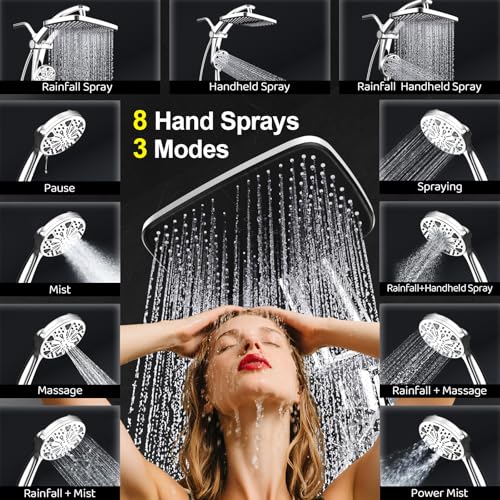
Prioritize a clear 3-way diverter that lets you run the rain head, the handheld, or both together, and check the stated flow rate against your home’s pressure and local water rules. If you want both heads on at once, avoid oversized rain faces with weak nozzles unless the design specifically maintains flow when split; a lighter second head is a common failure mode in dual systems. Owner feedback strongly praises water pressure and flexible coverage from rain, handheld, and combined modes, but also notes that some installations get excellent flow while others see the second head feel lighter.
Easy Install
Most dual-head kits are bought as retrofit upgrades, so the best one should install on an existing shower arm without opening the wall. Small parts like washers, thread tape, brackets, and adapters determine whether an easy project stays easy.
Look for compatibility with a standard shower arm connection, a complete kit with washers and sealing tape, and fittings that can be hand-tightened without special plumbing tools. Before buying, measure clearance around the existing arm, ceiling, and wall so the diverter, hose, and fixed head do not collide with tile, shelving, or a shower door. Owners repeatedly describe easy installation as a standout strength, including quick setup without plumbing experience and kits arriving with the needed parts.
Adjustable Reach
The second head is only useful if it reaches where people actually need it. Height adjustment, hose length, docking angle, and head rotation affect rinsing, bathing children or pets, and shared-shower comfort.
Choose a setup with an adjustable bracket or slide bar, a hose long enough to rinse the full enclosure, and joints that hold position after repeated movement. For households with different-height users, check whether the handheld dock can be raised, lowered, and angled independently from the fixed head; for tight stalls, avoid bulky dual assemblies that push the spray too far forward. Owner sentiment supports this: buyers like adjustable rods and included pieces that adapt to different shower heights, layouts, and uses, and they value multiple modes on each head for shared showers.
Leak Resistance
Dual-head systems create more connection points than a single shower head, so there are more places for drips to start. Connector material, gasket quality, thread alignment, and ball-joint fit often decide whether the upgrade feels solid or cheap.
Favor sturdy threaded connectors, well-seated rubber washers, smooth ball joints, and a diverter body that tightens squarely without cross-threading. Be cautious with very light plastic-feeling connectors, thin seals, or fittings that require excessive force to stop a drip; overtightening can crack parts and make leakage worse. Owners often report smooth, leak-free performance when quality is good, but leakage is also a major watch-out when connectors or seals feel cheap or fail to tighten cleanly.
Control Durability
A dual-head shower gets handled more often than a fixed head because users switch outlets and spray modes. Buttons, levers, and diverters need to work with wet hands and keep working after mineral buildup and daily use.
Inspect how the unit switches between heads and spray patterns: lever-style diverters and positive-click controls are often easier to trust than small sticky buttons. If you have hard water, look for easy-clean spray nozzles and controls that are not recessed where scale can jam them; the main long-term failure mode is a shower that works well at first but becomes hard to switch later. Owner reports make this the clearest durability caution, with some saying switching buttons can stick or stop working after the initial performance is good.
Kit Value
Dual-head kits can look feature-rich, but the real value is whether the whole system works together without extra purchases or compromises. A good bundle should balance usable modes, reliable hardware, and enough adjustability for the shower it is going into.
Judge value by the complete installed result, not just the number of spray modes: confirm you get the fixed head, handheld, hose, diverter, mount, washers, and any needed installation pieces. Avoid paying for decorative extras if the hose is short, the mount is flimsy, or the diverter cannot run the combinations you want. Buyers describe these systems as good-value upgrades when they install quickly, include the needed parts, and deliver performance and features that feel strong for the money.
1,000,000+ shoppers use Buyer's Guide every week to find the best products and services online.

Helping millions of users make smarter purchases online.


